Coral reef collapse risk before 2075 for nearly all shallow reefs, UN advisers warn
An IUCN-coordinated assessment for the United Nations finds almost every shallow-water coral reef on Earth, including the Great Barrier Reef, at high risk of coral reef collapse before 2075 under global heating.
Coral reef collapse risk before 2075 for nearly all shallow reefs, UN advisers warn
Nearly all of the world's shallow coral reefs face a high risk of ecosystem collapse before 2075 as global heating intensifies, according to an assessment coordinated by the IUCN, which advises the United Nations on nature. The findings cover the Great Barrier Reef and reefs across more than 80 countries.
From 24% to 96% endangered
The assessment found that about 24% of the planet's reefs across more than 80 countries are already critically endangered. When the expected impacts of global heating are added, that share rises to 96%. The figure would likely be higher still, but four regions lacked sufficient data to assess and the coral reefs of the western Galápagos had already collapsed.
Under the classification used, critically endangered means an "extremely high risk" of ecosystem collapse before 2075. The IUCN treats a reef ecosystem as collapsed when it cannot maintain itself because of a near or complete loss of living reef-building corals.
How the assessment was built
The study analysed 127 coral reef regions and was coordinated by the International Union for Conservation of Nature, an international group advising the United Nations. It assumed a "middle-of-the-road" emissions pathway causing about 2.7C of global heating by the end of the century compared with pre-industrial temperatures. Current climate policies and targets adopted by countries around the world are likely to cause about 2.6C of heating, according to one assessment.
The assessment also did not fully account for the fourth global mass bleaching event, which ran from early 2023 to mid-2025 and is, according to US Coral Reef Watch, the most widespread global mass bleaching event on record.
Australia's reefs, including the Great Barrier Reef
Before climate change projections were factored in, four of Australia's 17 reef regions were critically endangered, five were endangered and five more were classed as vulnerable. Once the expected impacts of climate change were accounted for, all 17 regions, including the Great Barrier Reef, were critically endangered.
Dr Ben Fitzpatrick of the University of Western Australia Oceans Institute led the Australian part of the assessment. He said rising heat "overwhelmed everything" even after coral adaptation was taken into account, and compared the reefs to Picasso paintings underwater, adding: "We have to stop burning fossil fuels."
Why reefs are at risk and what scientists say could help
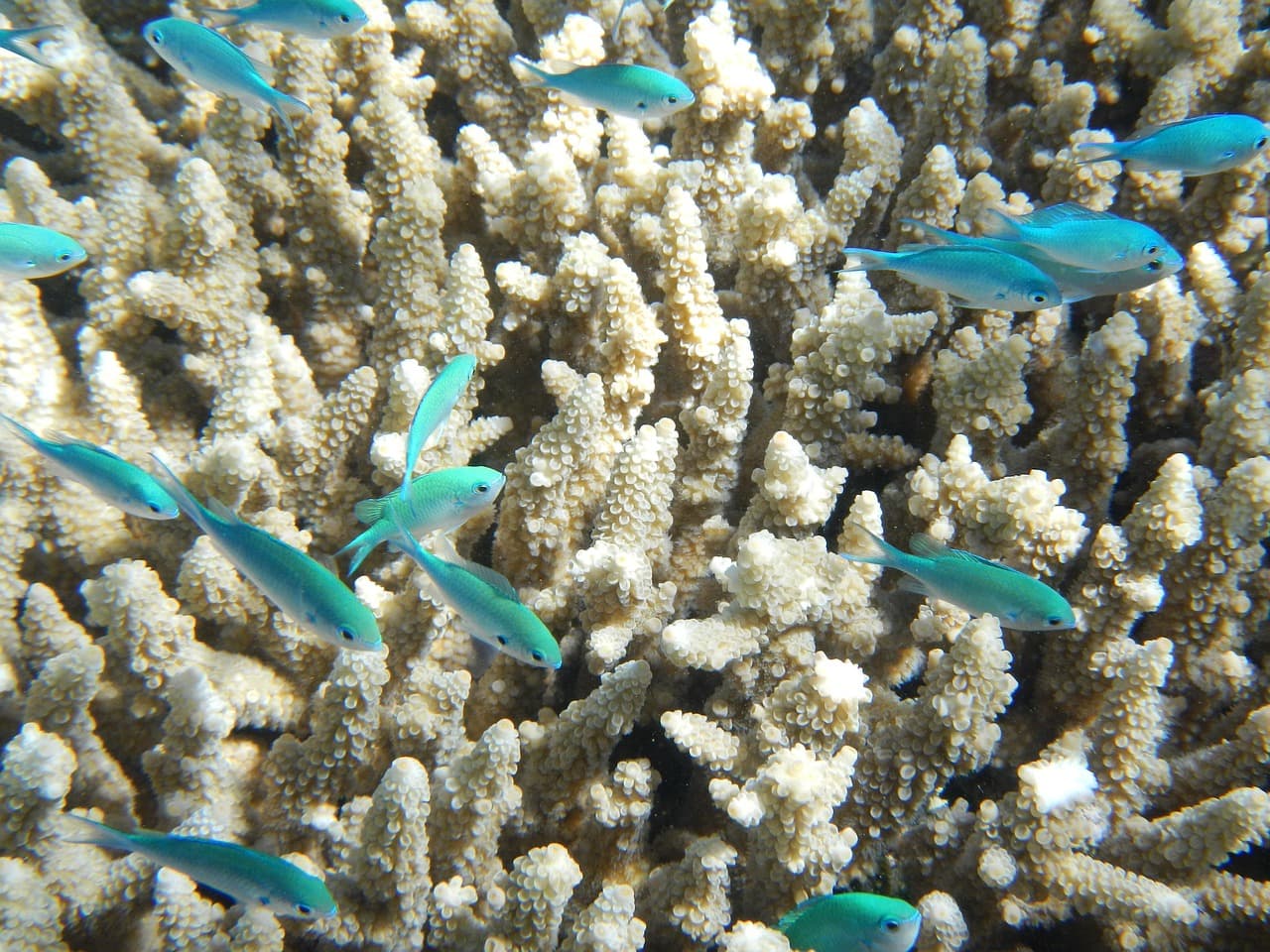
Overfishing, pollution, coastal development and global heating have caused declines in reef ecosystems over the past 50 years, measured through live coral loss and changes in fish populations. Marine heatwaves cause corals to separate from the symbiotic algae that give them colour and nutrients, and bleaching can weaken corals and make them more susceptible to disease. Reefs host a quarter of all known marine species and support hundreds of millions of people with food, shoreline protection and tourism.
Dr Mishal Gudka, research director at CORDIO East Africa and scientific lead for the assessment, called the results a "wake-up call" that were "alarming, but certainly not hopeless".
They should be seen as a call to action – an early warning sign before the worst outcomes eventuate.
The words are Gudka's, who said the findings should be treated as an early warning before the worst outcomes. IUCN director general Dr Grethel Aguilar said it is not too late for reefs to recover, but it requires decisive action to tackle climate change. Scientists said reefs could survive with rapid cuts to fossil fuel use and strong conservation action at local levels.