
New Knesset sworn in as opposition pushes bills on term limits and 7 October inquiry
Israel's new Knesset was sworn in on Tuesday, and opposition parties immediately submitted legislation including term limits for prime ministers, a state commission of inquiry into the 7 October 2023 attacks, and bills to revoke Benjamin Netanyahu's judicial overhaul.
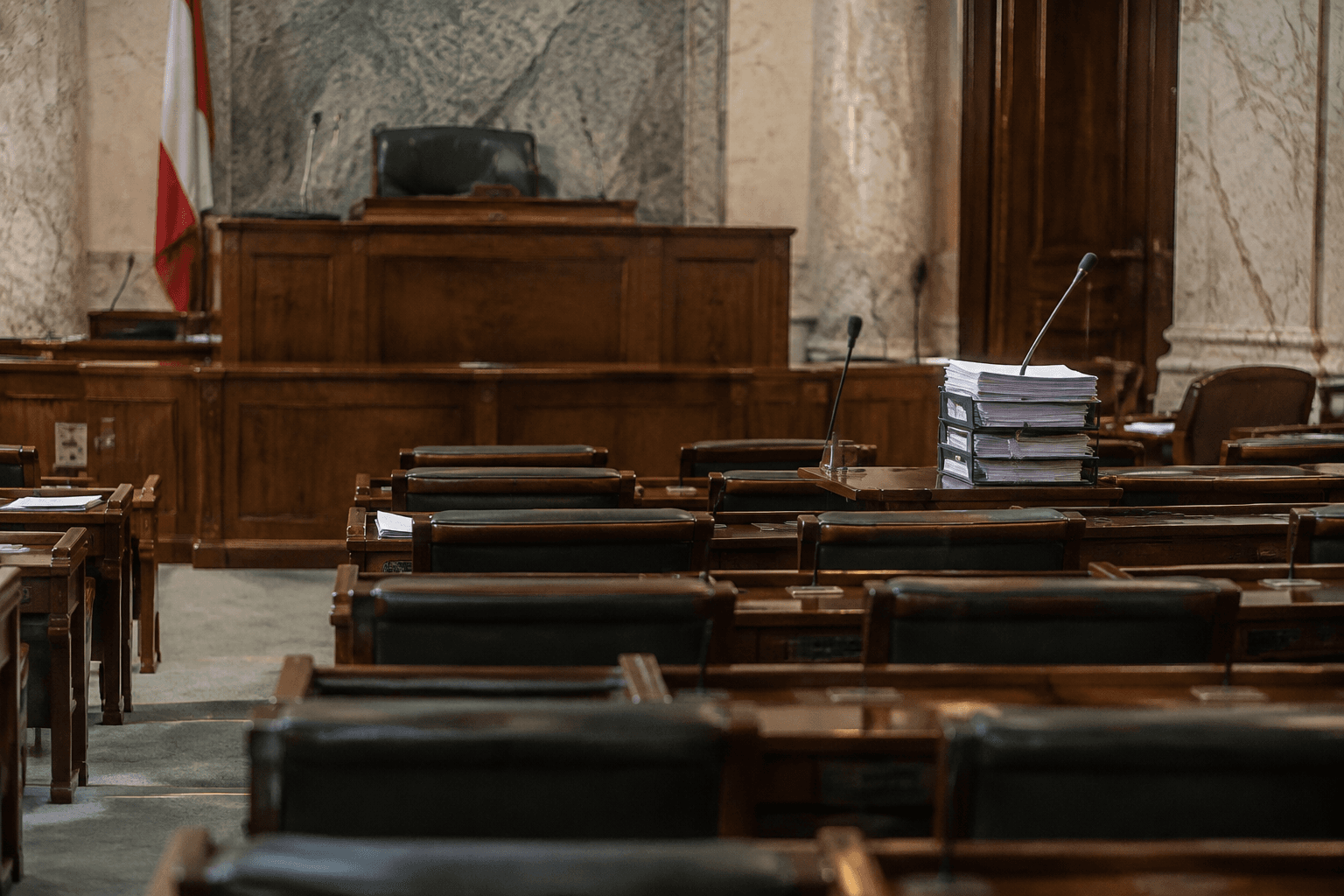
Empty rows of seats in a parliamentary chamber hall with stacked documents trays beside a microphone stand, photographed from the back of the room.
The first act of the legislature elected to break Benjamin Netanyahu's hold on power was not a speech but a stack of paperwork. Moments after the new Knesset was sworn in, opposition lawmakers used their majority to move against Netanyahu and his allies, and Gadi Eisenkot's Yashar party submitted a series of bills with the backing of other opposition parties.
The bills filed at the swearing-in
Three legislative priorities stand out among the opposition bills filed on day one:
- Term limits for prime ministers, a change that could block Netanyahu from returning to power. He has ruled Israel for 19 of the last 30 years.
- A state commission of inquiry into the 7 October 2023 attacks.
- Bills from Eisenkot's Yashar party to revoke the 'judicial overhaul' pursued by Netanyahu, which weakened the judiciary and the attorney general.
Why the speakership decides the agenda
None of this legislation can advance while the agenda is controlled by a Netanyahu loyalist. The opposition has requested a vote for a new Knesset speaker, a post that sets the legislature's agenda, even though the six opposition parties remain too divided to form a government. Replacing the incumbent speaker, Amir Ohana, would let those parties work on key legislation without any coalition deal in place.
Ohana has scheduled the vote for next Tuesday, the latest possible date. The opposition, meanwhile, has nominated candidates to take over the key defence and finance committees.
Netanyahu at the ceremony
Netanyahu used the swearing-in to attack two Palestinian-led opposition parties whose voters were key to unseating his coalition, calling their lawmakers 'terror supporters'. Palestinian citizens of Israel make up about 20% of the country's population, and attacks on these voters and their parties were central to his campaign. Since polling day he has promoted accusations of fraud in Palestinian communities, which election officials reject: they say there was no evidence of irregularities that affected the outcome or compromised the election's integrity.
Eisenkot denounced the speech as a 'delusional, divisive, hate-filled and shameful' exploitation of a state occasion, one that showed the prime minister unfit for office. Yair Golan, leader of the centre-left Democrats, and Yoav Segalovich, a former police chief who ran on the Islamist Ra'am party slate, both walked out of the speech in protest.
What happens next
Eisenkot holds the presidential mandate to try to form a government. He has admitted the path is 'extraordinarily complex' because of incompatible election promises, but called ousting Netanyahu a national emergency that could justify breaking them. If he fails within six weeks, a second candidate, probably Netanyahu, gets a chance, and further failure is likely to lead to another election.
At the ceremony, President Isaac Herzog warned lawmakers to do everything in their power to avoid a second election, telling them:
Reach out a hand for compromise, even between rivals … Look upon one another with generosity.
The arithmetic of delay cuts both ways: prolonged coalition talks or new elections would extend Netanyahu's hold on power as caretaker prime minister, while legislative progress by the opposition would weaken it.


