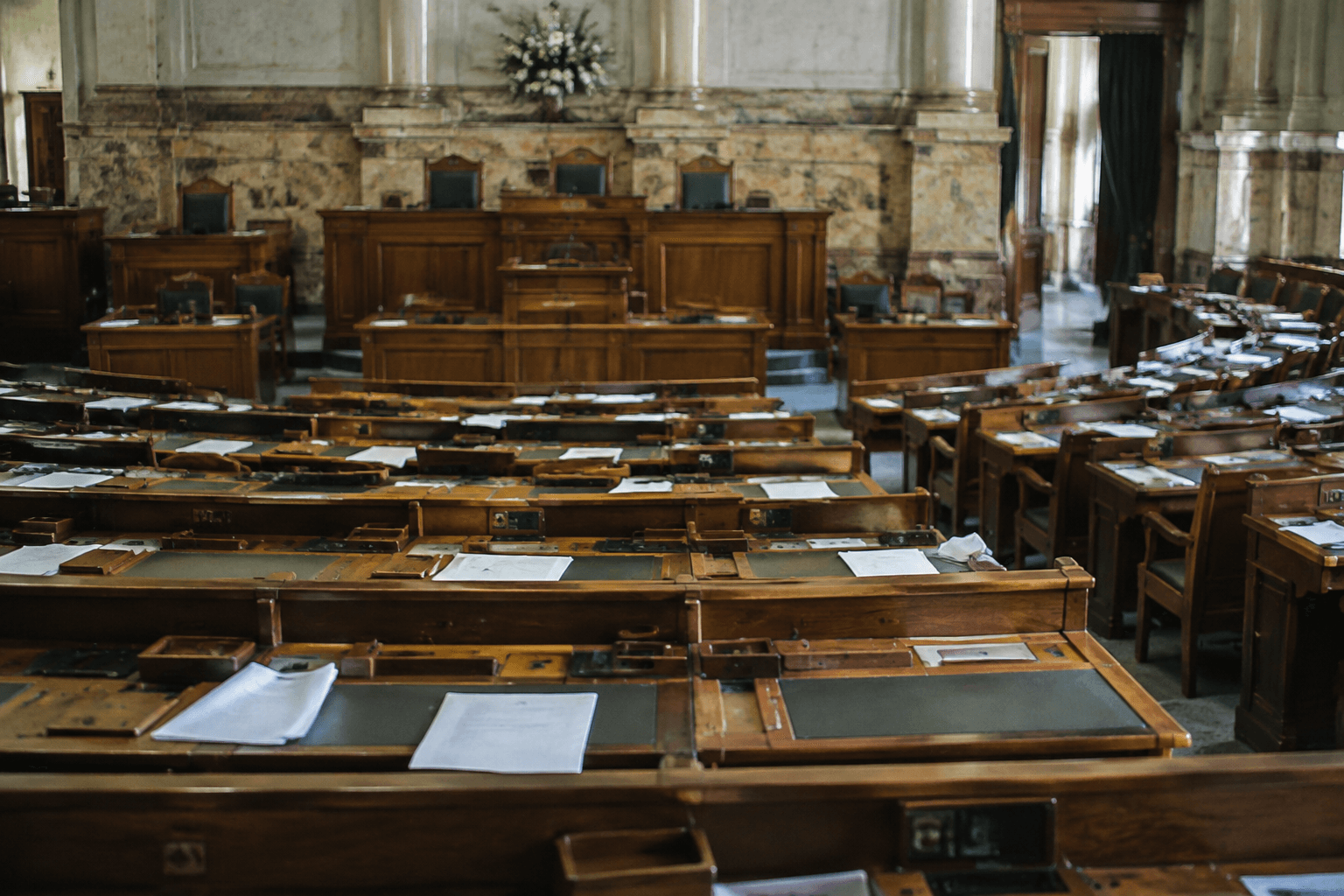
Empty tiered benches and scattered papers in a legislative chamber shortly before a swearing-in session begins, photographed from the back rows.
WORLD · ELECTIONS

Eisenkot may take Knesset speaker role himself as ouster of Netanyahu ally Ohana looms

Gadi Eisenkot, who holds the mandate to form Israel's next government, is reportedly considering taking the Knesset speaker job himself as the new Knesset is sworn in on Tuesday and the opposition moves to replace Netanyahu ally Amir Ohana.

By LiveDigestPublished Tuesday, November 10, 2026 · 06:20 GMT | 3 min read

Empty tiered benches and scattered papers in a legislative chamber shortly before a swearing-in session begins, photographed from the back rows.

01 / ELECTIONS

Why the speaker's chair matters

Israel's new Knesset is sworn in on Tuesday, handing the opposition its first real lever of power while coalition talks to unseat Benjamin Netanyahu remain deadlocked. Top of the to-do list is replacing the Knesset speaker, a post that wields influence by controlling the legislature's agenda - and which is currently held by Amir Ohana, a close Netanyahu ally.

The numbers favour the opposition:

  • Opposition parties hold 67 of the Knesset's 120 seats, enough to install a consensus speaker.
  • All the opposition parties have called Netanyahu a threat to the state, even though internal divides have blocked a coalition.
02 / ELECTIONS

Eisenkot's own options

Gadi Eisenkot, the former Israeli military chief who received the presidential mandate at the weekend to try to form a coalition, was reported by Israeli media on Monday to be weighing whether to take the chair himself. If he steps aside, opposition parties have agreed the nominee will come from his Yashar party.

Taking the speaker role first could also serve the government-building effort: Eisenkot may delay announcing a coalition deal until Netanyahu's speaker has been replaced, given Netanyahu's record of fracturing coalitions by luring defectors. Eisenkot has vowed to broker a national emergency government through what he calls creative and unconventional political acts.

03 / ELECTIONS

Warnings of disruption and delay

The swearing-in itself may be contested. More than 160 former top security officials warned that rightwing activists were planning violent disruption on the day. In a letter, the retired commanders' forum Democracy's Protective Wall wrote that "actors who oppose replacing the Knesset speaker intend to go to the Knesset on the day of the swearing-in ceremony", aiming to block MKs and their families from entering the building while encouraging tens of thousands of supporters to come and help them.

Even after a speaker is installed, procedural levers remain. Ohana could delay signing in a new government for up to a week - time some in the opposition do not want to give Netanyahu to attack the pressure points of a fragile deal.

04 / ELECTIONS

What happens next

The stakes stretch beyond the speaker's chair. If Eisenkot cannot form a government, the mandate passes to other leaders, and if they too fail Israel must hold elections again - with Netanyahu and his far-right allies staying on as caretaker government in the meantime. Netanyahu is calling on opponents to join him in a unity government, but a long limbo followed by a new vote offers him a likelier path back to power.


Empty tiered benches and scattered papers in a legislative chamber shortly before a swearing-in session begins, photographed from the back rows.
WORLD · ELECTIONS

Eisenkot may take Knesset speaker role himself as ouster of Netanyahu ally Ohana looms

Gadi Eisenkot, who holds the mandate to form Israel's next government, is reportedly considering taking the Knesset speaker job himself as the new Knesset is sworn in on Tuesday and the opposition moves to replace Netanyahu ally Amir Ohana.

By LiveDigestPublished Tuesday, November 10, 2026 · 06:20 GMT | 3 min read

Empty tiered benches and scattered papers in a legislative chamber shortly before a swearing-in session begins, photographed from the back rows.

01 / ELECTIONS

Why the speaker's chair matters

Israel's new Knesset is sworn in on Tuesday, handing the opposition its first real lever of power while coalition talks to unseat Benjamin Netanyahu remain deadlocked. Top of the to-do list is replacing the Knesset speaker, a post that wields influence by controlling the legislature's agenda - and which is currently held by Amir Ohana, a close Netanyahu ally.

The numbers favour the opposition:

  • Opposition parties hold 67 of the Knesset's 120 seats, enough to install a consensus speaker.
  • All the opposition parties have called Netanyahu a threat to the state, even though internal divides have blocked a coalition.
02 / ELECTIONS

Eisenkot's own options

Gadi Eisenkot, the former Israeli military chief who received the presidential mandate at the weekend to try to form a coalition, was reported by Israeli media on Monday to be weighing whether to take the chair himself. If he steps aside, opposition parties have agreed the nominee will come from his Yashar party.

Taking the speaker role first could also serve the government-building effort: Eisenkot may delay announcing a coalition deal until Netanyahu's speaker has been replaced, given Netanyahu's record of fracturing coalitions by luring defectors. Eisenkot has vowed to broker a national emergency government through what he calls creative and unconventional political acts.

03 / ELECTIONS

Warnings of disruption and delay

The swearing-in itself may be contested. More than 160 former top security officials warned that rightwing activists were planning violent disruption on the day. In a letter, the retired commanders' forum Democracy's Protective Wall wrote that "actors who oppose replacing the Knesset speaker intend to go to the Knesset on the day of the swearing-in ceremony", aiming to block MKs and their families from entering the building while encouraging tens of thousands of supporters to come and help them.

Even after a speaker is installed, procedural levers remain. Ohana could delay signing in a new government for up to a week - time some in the opposition do not want to give Netanyahu to attack the pressure points of a fragile deal.

04 / ELECTIONS

What happens next

The stakes stretch beyond the speaker's chair. If Eisenkot cannot form a government, the mandate passes to other leaders, and if they too fail Israel must hold elections again - with Netanyahu and his far-right allies staying on as caretaker government in the meantime. Netanyahu is calling on opponents to join him in a unity government, but a long limbo followed by a new vote offers him a likelier path back to power.

Empty tiered benches and scattered papers in a legislative chamber shortly before a swearing-in session begins, photographed from the back rows.
WORLD · ELECTIONS

Eisenkot may take Knesset speaker role himself as ouster of Netanyahu ally Ohana looms

By LiveDigest

Empty tiered benches and scattered papers in a legislative chamber shortly before a swearing-in session begins, photographed from the back rows.

01 / ELECTIONS

Why the speaker's chair matters

Israel's new Knesset is sworn in on Tuesday, handing the opposition its first real lever of power while coalition talks to unseat Benjamin Netanyahu remain deadlocked. Top of the to-do list is replacing the Knesset speaker, a post that wields influence by controlling the legislature's agenda - and which is currently held by Amir Ohana, a close Netanyahu ally.

The numbers favour the opposition:

  • Opposition parties hold 67 of the Knesset's 120 seats, enough to install a consensus speaker.
  • All the opposition parties have called Netanyahu a threat to the state, even though internal divides have blocked a coalition.
02 / ELECTIONS

Eisenkot's own options

Gadi Eisenkot, the former Israeli military chief who received the presidential mandate at the weekend to try to form a coalition, was reported by Israeli media on Monday to be weighing whether to take the chair himself. If he steps aside, opposition parties have agreed the nominee will come from his Yashar party.

Taking the speaker role first could also serve the government-building effort: Eisenkot may delay announcing a coalition deal until Netanyahu's speaker has been replaced, given Netanyahu's record of fracturing coalitions by luring defectors. Eisenkot has vowed to broker a national emergency government through what he calls creative and unconventional political acts.

03 / ELECTIONS

Warnings of disruption and delay

The swearing-in itself may be contested. More than 160 former top security officials warned that rightwing activists were planning violent disruption on the day. In a letter, the retired commanders' forum Democracy's Protective Wall wrote that "actors who oppose replacing the Knesset speaker intend to go to the Knesset on the day of the swearing-in ceremony", aiming to block MKs and their families from entering the building while encouraging tens of thousands of supporters to come and help them.

Even after a speaker is installed, procedural levers remain. Ohana could delay signing in a new government for up to a week - time some in the opposition do not want to give Netanyahu to attack the pressure points of a fragile deal.

04 / ELECTIONS

What happens next

The stakes stretch beyond the speaker's chair. If Eisenkot cannot form a government, the mandate passes to other leaders, and if they too fail Israel must hold elections again - with Netanyahu and his far-right allies staying on as caretaker government in the meantime. Netanyahu is calling on opponents to join him in a unity government, but a long limbo followed by a new vote offers him a likelier path back to power.