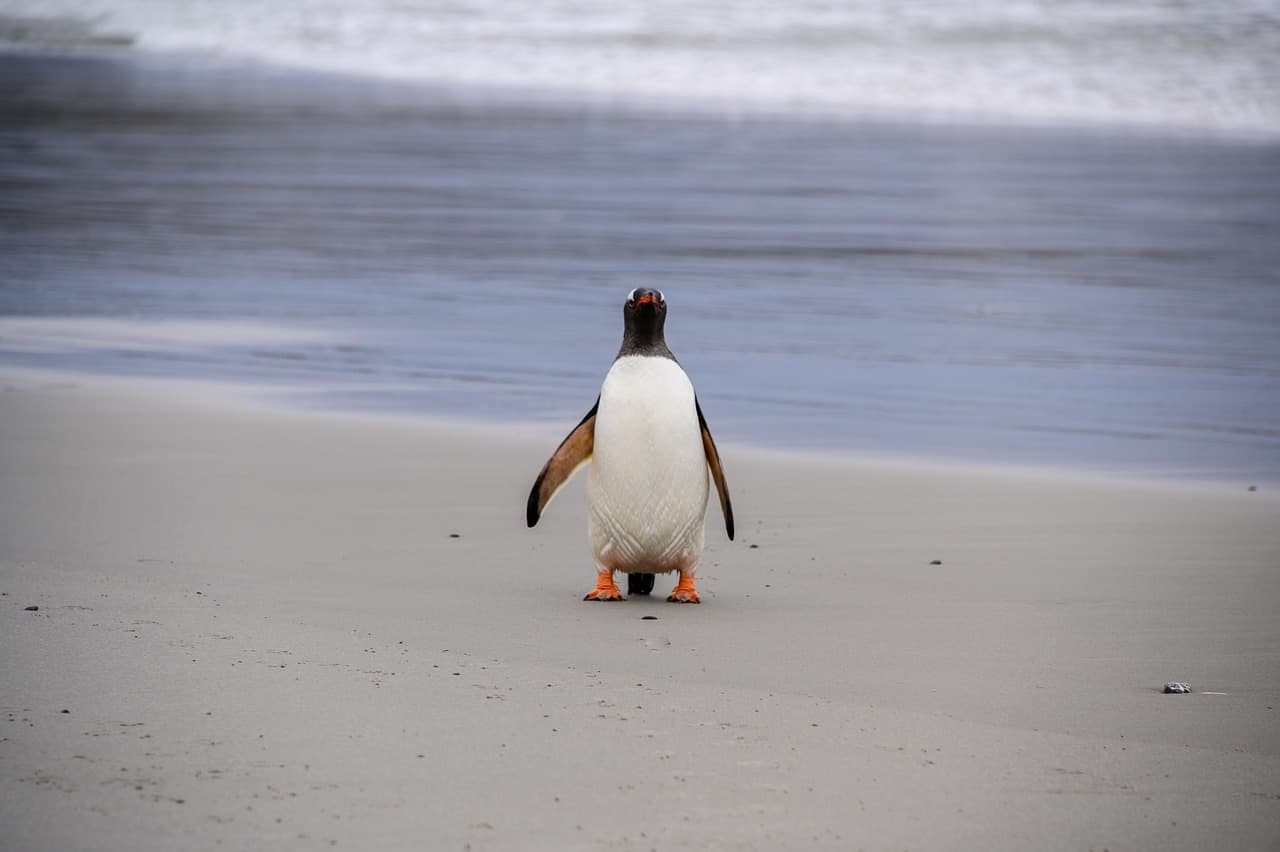
Falkland Islands under Argentina pressure again: islanders say life is better than ever, and they intend to keep it
WORLD · DIPLOMACY

Falkland Islands under Argentina pressure again: islanders say life is better than ever, and they intend to keep it

About 3,600 people live on the Falkland Islands, 300 miles east of mainland South America, where assembly member Lewis Clifton says Argentina is waging an unprecedented economic war against a community no bigger than an English village - the sharpest pressure since 1982.

By LiveDigestPublished Tuesday, October 20, 2026 · 07:41 GMT | 6 min read

Falkland Islands under Argentina pressure again: islanders say life is better than ever, and they intend to keep it

01 / DIPLOMACY

A community transformed since 1982

Four decades ago the Falkland Islands were home to 1,800 people and ran on wool, propped up by UK government handouts. Today the population stands at roughly 3,600 and has been growing at about 3% a year, drawn by a 26% top rate of tax, good pay and an economy that pays its own way.

The growth has made the islands markedly cosmopolitan for a place so remote. About 70 nationalities now live there, and the largest minority group is Filipino, arrived in the late 1980s and 90s to work in social care and the service industry. Zimbabweans came after the war to de-mine the land; South Africans came to rebuild construction. The influx has been successful enough that a permanent residency scheme, capped at 90 people a year, has been frozen for 12 months.

The practical strains of growth and remoteness are real. The islands depend on narrow freight links from the UK and South America, and shortages follow - a cabbage costs £8 at the West Store in Stanley. Children from the age of 16 are sent, at government expense, to complete secondary and university education in the UK, because director of education Sarah Stannard says home provision is impractical for such a small population.

02 / DIPLOMACY

Squid, fishing zones and a £85,000 income per head

The engine of the turnaround was squid. In 1986 the UK allowed the Falklands to establish a 200-nautical-mile exclusive fishing zone, requiring licences from the islands' government that were sold to Spanish, Korean and Taiwanese 'jigger' fleets. John Barton, chair of the fishing companies association, said all of the transformation had been made possible because of squid.

The results show in the numbers: GDP per capita rose from about £2,000 in 1982 to £85,000 in 2025, putting the islands sixth in the world, just behind Norway. Tourism adds a modest layer, with 75,000 or more people a year spilling out of cruise ships at Stanley port.

  • 1986: 200-nautical-mile exclusive fishing zone established
  • GDP per head: from £2,000 in 1982 to £85,000 in 2025, sixth in the world
  • 75,000+ cruise ship visitors a year at Stanley port

There are warning signs in the water itself. At Fortuna - the biggest fishing company on the islands, and since last year the owner of Cornwall's Ocean Fish Group - catches are falling, according to its 41-year-old chief executive James Wallace, and no cause has yet been identified. "We have commissioned a bunch of inshore work to see what is happening but the answer is that we don't," he said.

03 / DIPLOMACY

Oil wealth within reach - and pressure from Buenos Aires

About 136 miles north of the islands, the Sea Lion oil project, led by the Israeli firm Navitas with British partner Rockhopper Exploration, is progressing. Independent estimates suggest the field could triple the Falkland Islands' GDP and deliver a Norway-style sovereign wealth fund. But two major contractors recently pulled out of the project amid Argentinian pressure, though the companies remain confident drilling will start within months.

Under Argentina's president Javier Milei - whose polling has slipped with an election approaching - new legislation has made it a crime for companies and individuals to take part in the Falklands' nascent oil industry, and the fisheries industry has been named as a possible next target. Clifton, from a family that settled on the islands in the late 1870s, described the campaign as an unprecedented economic war by a country of 46 million against a community the size of an English village. The Argentinian thrust this time, he said, is at a different level.

I think, since 1982, this is probably the most serious it's been for us

That warning came from Dot Gould, an assembly member whose holding includes Pebble, a 20-mile-long island north-west of the Falklands where she lives alongside a couple who run a lodge, 5,000 sheep and 100 cattle. For all the alarm, a military threat remains largely hypothetical: the British garrison includes 1,800 personnel at Mount Pleasant airbase and on Ascension Island, four Typhoon jets, a ground-based air defence system, and HMS Medway patrolling the waters.

04 / DIPLOMACY

Memories of 1982, and the wish to be left alone

The present tension rests on older memory. The 1982 invasion ordered by the dictator General Leopoldo Galtieri killed 649 Argentinians, 255 British military personnel and three islanders. Andrea Clausen, chief executive of the Falklands government and its top civil servant, works on Thatcher Drive, opposite the room where Brig Gen Mario Menéndez signed Argentina's letter of surrender on 14 June 1982 - the letter remains on the wall.

Clausen was 10 during the invasion and sheltered with her family in Goose Green, 60 miles west of Stanley, as British Harriers attacked with cluster bombs. "Even now I struggle to cope with the sound of fast jets," she said.

She ties the islands' fierce self-reliance directly to that time. "The Falklands has since [19]82 ensured that we are financially independent – save for defence," she said, explaining that the islands had no money then and never want to be in that position again.

Buenos Aires has not always taken this shape. In the 1990s Argentina pursued a hearts-and-minds approach, sending videos of the animated series Pingu to islanders' children - a kindness that has evaporated whenever Argentinian governments lose domestic support.

On Pebble Island the wreckage of a downed Argentinian fighter jet still lies where it came down, with two airmen killed in the battle buried nearby. Islanders' resolve is unchanged. "Honestly, we are 4,000 people minding our own business, we have a history deeper and older than theirs," Clausen said. Norma Edwards, 84, whose husband Roger, 80, served as a Royal Marine attached to the SAS in 1982, keeps her own counsel about London. "I have never trusted the Foreign Office and I have been proven right," she said.

The islands remain financially independent of the UK save for defence, and Clausen said she hopes de-escalation will come.
Falkland Islands under Argentina pressure again: islanders say life is better than ever, and they intend to keep it
WORLD · DIPLOMACY

Falkland Islands under Argentina pressure again: islanders say life is better than ever, and they intend to keep it

About 3,600 people live on the Falkland Islands, 300 miles east of mainland South America, where assembly member Lewis Clifton says Argentina is waging an unprecedented economic war against a community no bigger than an English village - the sharpest pressure since 1982.

By LiveDigestPublished Tuesday, October 20, 2026 · 07:41 GMT | 6 min read

Falkland Islands under Argentina pressure again: islanders say life is better than ever, and they intend to keep it

01 / DIPLOMACY

A community transformed since 1982

Four decades ago the Falkland Islands were home to 1,800 people and ran on wool, propped up by UK government handouts. Today the population stands at roughly 3,600 and has been growing at about 3% a year, drawn by a 26% top rate of tax, good pay and an economy that pays its own way.

The growth has made the islands markedly cosmopolitan for a place so remote. About 70 nationalities now live there, and the largest minority group is Filipino, arrived in the late 1980s and 90s to work in social care and the service industry. Zimbabweans came after the war to de-mine the land; South Africans came to rebuild construction. The influx has been successful enough that a permanent residency scheme, capped at 90 people a year, has been frozen for 12 months.

The practical strains of growth and remoteness are real. The islands depend on narrow freight links from the UK and South America, and shortages follow - a cabbage costs £8 at the West Store in Stanley. Children from the age of 16 are sent, at government expense, to complete secondary and university education in the UK, because director of education Sarah Stannard says home provision is impractical for such a small population.

02 / DIPLOMACY

Squid, fishing zones and a £85,000 income per head

The engine of the turnaround was squid. In 1986 the UK allowed the Falklands to establish a 200-nautical-mile exclusive fishing zone, requiring licences from the islands' government that were sold to Spanish, Korean and Taiwanese 'jigger' fleets. John Barton, chair of the fishing companies association, said all of the transformation had been made possible because of squid.

The results show in the numbers: GDP per capita rose from about £2,000 in 1982 to £85,000 in 2025, putting the islands sixth in the world, just behind Norway. Tourism adds a modest layer, with 75,000 or more people a year spilling out of cruise ships at Stanley port.

  • 1986: 200-nautical-mile exclusive fishing zone established
  • GDP per head: from £2,000 in 1982 to £85,000 in 2025, sixth in the world
  • 75,000+ cruise ship visitors a year at Stanley port

There are warning signs in the water itself. At Fortuna - the biggest fishing company on the islands, and since last year the owner of Cornwall's Ocean Fish Group - catches are falling, according to its 41-year-old chief executive James Wallace, and no cause has yet been identified. "We have commissioned a bunch of inshore work to see what is happening but the answer is that we don't," he said.

03 / DIPLOMACY

Oil wealth within reach - and pressure from Buenos Aires

About 136 miles north of the islands, the Sea Lion oil project, led by the Israeli firm Navitas with British partner Rockhopper Exploration, is progressing. Independent estimates suggest the field could triple the Falkland Islands' GDP and deliver a Norway-style sovereign wealth fund. But two major contractors recently pulled out of the project amid Argentinian pressure, though the companies remain confident drilling will start within months.

Under Argentina's president Javier Milei - whose polling has slipped with an election approaching - new legislation has made it a crime for companies and individuals to take part in the Falklands' nascent oil industry, and the fisheries industry has been named as a possible next target. Clifton, from a family that settled on the islands in the late 1870s, described the campaign as an unprecedented economic war by a country of 46 million against a community the size of an English village. The Argentinian thrust this time, he said, is at a different level.

That warning came from Dot Gould, an assembly member whose holding includes Pebble, a 20-mile-long island north-west of the Falklands where she lives alongside a couple who run a lodge, 5,000 sheep and 100 cattle. For all the alarm, a military threat remains largely hypothetical: the British garrison includes 1,800 personnel at Mount Pleasant airbase and on Ascension Island, four Typhoon jets, a ground-based air defence system, and HMS Medway patrolling the waters.

I think, since 1982, this is probably the most serious it's been for us
04 / DIPLOMACY

Memories of 1982, and the wish to be left alone

The present tension rests on older memory. The 1982 invasion ordered by the dictator General Leopoldo Galtieri killed 649 Argentinians, 255 British military personnel and three islanders. Andrea Clausen, chief executive of the Falklands government and its top civil servant, works on Thatcher Drive, opposite the room where Brig Gen Mario Menéndez signed Argentina's letter of surrender on 14 June 1982 - the letter remains on the wall.

Clausen was 10 during the invasion and sheltered with her family in Goose Green, 60 miles west of Stanley, as British Harriers attacked with cluster bombs. "Even now I struggle to cope with the sound of fast jets," she said.

She ties the islands' fierce self-reliance directly to that time. "The Falklands has since [19]82 ensured that we are financially independent – save for defence," she said, explaining that the islands had no money then and never want to be in that position again.

Buenos Aires has not always taken this shape. In the 1990s Argentina pursued a hearts-and-minds approach, sending videos of the animated series Pingu to islanders' children - a kindness that has evaporated whenever Argentinian governments lose domestic support.

On Pebble Island the wreckage of a downed Argentinian fighter jet still lies where it came down, with two airmen killed in the battle buried nearby. Islanders' resolve is unchanged. "Honestly, we are 4,000 people minding our own business, we have a history deeper and older than theirs," Clausen said. Norma Edwards, 84, whose husband Roger, 80, served as a Royal Marine attached to the SAS in 1982, keeps her own counsel about London. "I have never trusted the Foreign Office and I have been proven right," she said.

The islands remain financially independent of the UK save for defence, and Clausen said she hopes de-escalation will come.
Falkland Islands under Argentina pressure again: islanders say life is better than ever, and they intend to keep it
WORLD · DIPLOMACY

Falkland Islands under Argentina pressure again: islanders say life is better than ever, and they intend to keep it

By LiveDigest

Falkland Islands under Argentina pressure again: islanders say life is better than ever, and they intend to keep it

01 / DIPLOMACY

A community transformed since 1982

Four decades ago the Falkland Islands were home to 1,800 people and ran on wool, propped up by UK government handouts. Today the population stands at roughly 3,600 and has been growing at about 3% a year, drawn by a 26% top rate of tax, good pay and an economy that pays its own way.

The growth has made the islands markedly cosmopolitan for a place so remote. About 70 nationalities now live there, and the largest minority group is Filipino, arrived in the late 1980s and 90s to work in social care and the service industry. Zimbabweans came after the war to de-mine the land; South Africans came to rebuild construction. The influx has been successful enough that a permanent residency scheme, capped at 90 people a year, has been frozen for 12 months.

The practical strains of growth and remoteness are real. The islands depend on narrow freight links from the UK and South America, and shortages follow - a cabbage costs £8 at the West Store in Stanley. Children from the age of 16 are sent, at government expense, to complete secondary and university education in the UK, because director of education Sarah Stannard says home provision is impractical for such a small population.

02 / DIPLOMACY

Squid, fishing zones and a £85,000 income per head

The engine of the turnaround was squid. In 1986 the UK allowed the Falklands to establish a 200-nautical-mile exclusive fishing zone, requiring licences from the islands' government that were sold to Spanish, Korean and Taiwanese 'jigger' fleets. John Barton, chair of the fishing companies association, said all of the transformation had been made possible because of squid.

The results show in the numbers: GDP per capita rose from about £2,000 in 1982 to £85,000 in 2025, putting the islands sixth in the world, just behind Norway. Tourism adds a modest layer, with 75,000 or more people a year spilling out of cruise ships at Stanley port.

  • 1986: 200-nautical-mile exclusive fishing zone established
  • GDP per head: from £2,000 in 1982 to £85,000 in 2025, sixth in the world
  • 75,000+ cruise ship visitors a year at Stanley port

There are warning signs in the water itself. At Fortuna - the biggest fishing company on the islands, and since last year the owner of Cornwall's Ocean Fish Group - catches are falling, according to its 41-year-old chief executive James Wallace, and no cause has yet been identified. "We have commissioned a bunch of inshore work to see what is happening but the answer is that we don't," he said.

03 / DIPLOMACY

Oil wealth within reach - and pressure from Buenos Aires

About 136 miles north of the islands, the Sea Lion oil project, led by the Israeli firm Navitas with British partner Rockhopper Exploration, is progressing. Independent estimates suggest the field could triple the Falkland Islands' GDP and deliver a Norway-style sovereign wealth fund. But two major contractors recently pulled out of the project amid Argentinian pressure, though the companies remain confident drilling will start within months.

Under Argentina's president Javier Milei - whose polling has slipped with an election approaching - new legislation has made it a crime for companies and individuals to take part in the Falklands' nascent oil industry, and the fisheries industry has been named as a possible next target. Clifton, from a family that settled on the islands in the late 1870s, described the campaign as an unprecedented economic war by a country of 46 million against a community the size of an English village. The Argentinian thrust this time, he said, is at a different level.

That warning came from Dot Gould, an assembly member whose holding includes Pebble, a 20-mile-long island north-west of the Falklands where she lives alongside a couple who run a lodge, 5,000 sheep and 100 cattle. For all the alarm, a military threat remains largely hypothetical: the British garrison includes 1,800 personnel at Mount Pleasant airbase and on Ascension Island, four Typhoon jets, a ground-based air defence system, and HMS Medway patrolling the waters.

I think, since 1982, this is probably the most serious it's been for us
04 / DIPLOMACY

Memories of 1982, and the wish to be left alone

The present tension rests on older memory. The 1982 invasion ordered by the dictator General Leopoldo Galtieri killed 649 Argentinians, 255 British military personnel and three islanders. Andrea Clausen, chief executive of the Falklands government and its top civil servant, works on Thatcher Drive, opposite the room where Brig Gen Mario Menéndez signed Argentina's letter of surrender on 14 June 1982 - the letter remains on the wall.

Clausen was 10 during the invasion and sheltered with her family in Goose Green, 60 miles west of Stanley, as British Harriers attacked with cluster bombs. "Even now I struggle to cope with the sound of fast jets," she said.

She ties the islands' fierce self-reliance directly to that time. "The Falklands has since [19]82 ensured that we are financially independent – save for defence," she said, explaining that the islands had no money then and never want to be in that position again.

Buenos Aires has not always taken this shape. In the 1990s Argentina pursued a hearts-and-minds approach, sending videos of the animated series Pingu to islanders' children - a kindness that has evaporated whenever Argentinian governments lose domestic support.

On Pebble Island the wreckage of a downed Argentinian fighter jet still lies where it came down, with two airmen killed in the battle buried nearby. Islanders' resolve is unchanged. "Honestly, we are 4,000 people minding our own business, we have a history deeper and older than theirs," Clausen said. Norma Edwards, 84, whose husband Roger, 80, served as a Royal Marine attached to the SAS in 1982, keeps her own counsel about London. "I have never trusted the Foreign Office and I have been proven right," she said.

The islands remain financially independent of the UK save for defence, and Clausen said she hopes de-escalation will come.