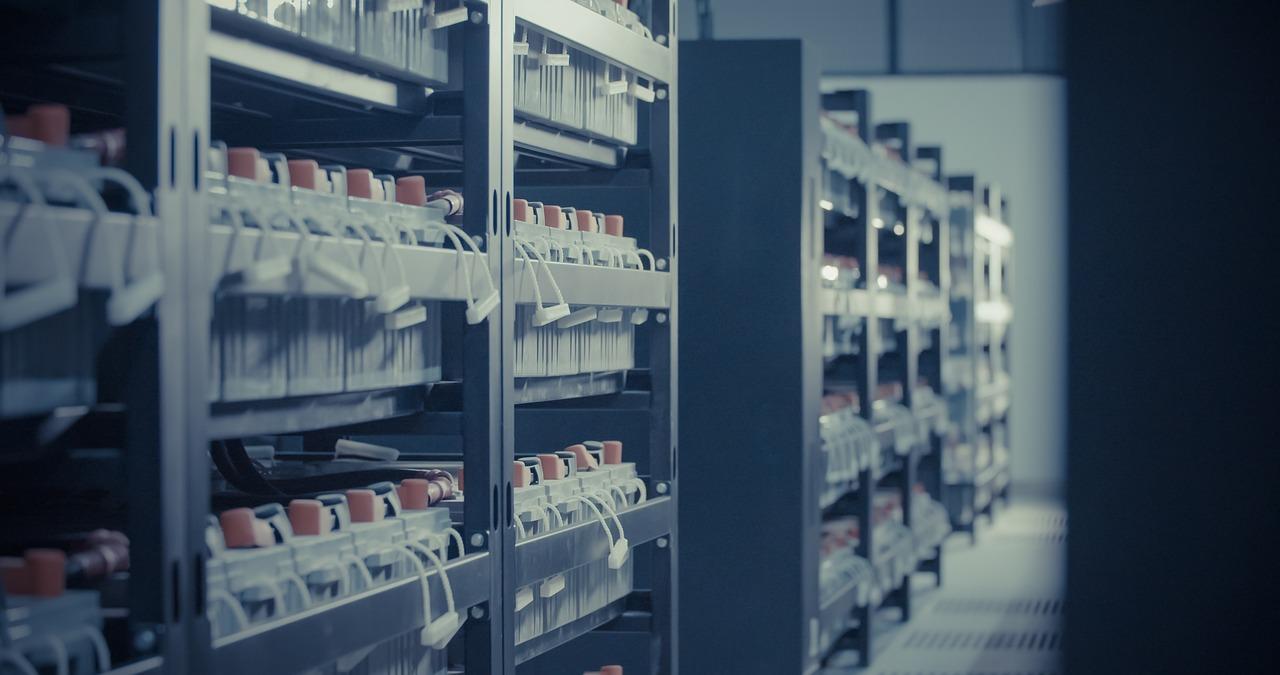
US datacenter emissions from hyperscalers match Denmark's yearly carbon output, study finds
TECHNOLOGY · TECHNOLOGY POLICY

US datacenter emissions from hyperscalers match Denmark's yearly carbon output, study finds

US hyperscaler datacenters emitted about 25.7m metric tons of carbon dioxide over a year to April 2025, roughly equal to Denmark's annual emissions, according to a study published in Nature Sustainability.

By LiveDigestPublished Monday, November 16, 2026 · 16:33 GMT | 4 min read

US datacenter emissions from hyperscalers match Denmark's yearly carbon output, study finds

The largest datacenters in the United States now produce carbon pollution on the scale of a European nation. US datacenter emissions from 403 hyperscalers – the biggest facilities, used primarily to handle the growth of artificial intelligence – reached about 25.7m metric tons of carbon dioxide over a year, roughly equivalent to the annual carbon pollution of Denmark, a country of 6 million people.

The study, published in Nature Sustainability, was led by Gianluca Guidi and relied on federal government data covering the year until April 2025.

01 / TECHNOLOGY POLICY

Study findings on scale and power use

The measurement of hyperscaler datacenters covers a rapidly expanding slice of US datacenter emissions, and the figures point both upward and downward at once: the total is far above earlier estimates, yet the researchers describe it as a lower bound. Key findings include:

  • The 403 hyperscalers emitted about 25.7m metric tons of carbon dioxide, two to three times more than a previous estimate of hyperscale emissions in 2018
  • They were responsible for about 1.8% of total US electricity consumption
  • Over the year, the facilities consumed an estimated 68 to 99 terawatt-hours of electricity
  • The estimate is based on federal government data for the year until April 2025, and researchers consider it conservative
02 / TECHNOLOGY POLICY

How the datacenters are powered

The growth in ai energy demand is concentrated geographically, with demand centered on states such as Virginia, Oregon, Ohio and Iowa.

How those facilities are fueled matters as much as how much they use. More than half of the generation used by hyperscalers came from fossil fuels, and where new capacity was needed, gas-fired generation was favored over solar and wind – sometimes built on site.

03 / TECHNOLOGY POLICY

Researchers and critics respond

Francesca Dominici, professor of biostatistics at Harvard and a study co-author, warned that the published total understates the true picture, because so many additional datacenters have come online since 2025 that the current level of emissions should be treated as a lower bound.

"There has been an explosion in these datacenters and the CO2 emissions are pretty substantial", Dominici said.

Gina McCarthy, former climate adviser to Joe Biden, said she is not surprised that the majority of hyperscale datacenters rely on fossil fuels for their power generation, and called the study an "important step".

04 / TECHNOLOGY POLICY

Local battles over datacenter growth

The national figures are playing out in specific communities, where datacenter construction has run into resistance over noise, air and water. President Donald Trump, a supporter of the AI industry, has said people who oppose the growth of datacenters will end up "backwards and poor".

In Tennessee, developments in the greater Memphis region – central to Elon Musk's AI ambitions – have faced protests and lawsuits over their noise and air pollution, and Musk's AI company has bought nearby homes.

In Utah, the planned Stratos datacenter, one of the world's largest, has drawn grassroots opposition in a drought-hit state over its vast water use, and a separate study found it would emit significant air pollution. That report, commissioned by the Natural Resources Defense Council, found:

  • Stratos could cause health-related economic costs of up to $690m each year if powered by the dirtiest fossil fuel option
  • It could release up to 3,140 tons of particulate matter affecting Utah and neighboring states
  • Pollution plumes could waft across Utah and into Idaho, Wyoming, Colorado and Illinois

John Walke, director of federal clean air at the Natural Resources Defense Council, called Stratos a "modern-day Trojan horse".

The project's developers are planning to use combined-cycle natural gas but are also reportedly considering renewables and other options under political pressure to reduce the project's scale. Last month, Stratos filed a new water application that reportedly claimed its water demands would be lower than historical agricultural uses – a claim some environmental critics have questioned.


US datacenter emissions from hyperscalers match Denmark's yearly carbon output, study finds
TECHNOLOGY · TECHNOLOGY POLICY

US datacenter emissions from hyperscalers match Denmark's yearly carbon output, study finds

US hyperscaler datacenters emitted about 25.7m metric tons of carbon dioxide over a year to April 2025, roughly equal to Denmark's annual emissions, according to a study published in Nature Sustainability.

By LiveDigestPublished Monday, November 16, 2026 · 16:33 GMT | 4 min read

US datacenter emissions from hyperscalers match Denmark's yearly carbon output, study finds

The largest datacenters in the United States now produce carbon pollution on the scale of a European nation. US datacenter emissions from 403 hyperscalers – the biggest facilities, used primarily to handle the growth of artificial intelligence – reached about 25.7m metric tons of carbon dioxide over a year, roughly equivalent to the annual carbon pollution of Denmark, a country of 6 million people.

The study, published in Nature Sustainability, was led by Gianluca Guidi and relied on federal government data covering the year until April 2025.

01 / TECHNOLOGY POLICY

Study findings on scale and power use

The measurement of hyperscaler datacenters covers a rapidly expanding slice of US datacenter emissions, and the figures point both upward and downward at once: the total is far above earlier estimates, yet the researchers describe it as a lower bound. Key findings include:

  • The 403 hyperscalers emitted about 25.7m metric tons of carbon dioxide, two to three times more than a previous estimate of hyperscale emissions in 2018
  • They were responsible for about 1.8% of total US electricity consumption
  • Over the year, the facilities consumed an estimated 68 to 99 terawatt-hours of electricity
  • The estimate is based on federal government data for the year until April 2025, and researchers consider it conservative
02 / TECHNOLOGY POLICY

How the datacenters are powered

The growth in ai energy demand is concentrated geographically, with demand centered on states such as Virginia, Oregon, Ohio and Iowa.

How those facilities are fueled matters as much as how much they use. More than half of the generation used by hyperscalers came from fossil fuels, and where new capacity was needed, gas-fired generation was favored over solar and wind – sometimes built on site.

03 / TECHNOLOGY POLICY

Researchers and critics respond

Francesca Dominici, professor of biostatistics at Harvard and a study co-author, warned that the published total understates the true picture, because so many additional datacenters have come online since 2025 that the current level of emissions should be treated as a lower bound.

"There has been an explosion in these datacenters and the CO2 emissions are pretty substantial", Dominici said.

Gina McCarthy, former climate adviser to Joe Biden, said she is not surprised that the majority of hyperscale datacenters rely on fossil fuels for their power generation, and called the study an "important step".

04 / TECHNOLOGY POLICY

Local battles over datacenter growth

The national figures are playing out in specific communities, where datacenter construction has run into resistance over noise, air and water. President Donald Trump, a supporter of the AI industry, has said people who oppose the growth of datacenters will end up "backwards and poor".

In Tennessee, developments in the greater Memphis region – central to Elon Musk's AI ambitions – have faced protests and lawsuits over their noise and air pollution, and Musk's AI company has bought nearby homes.

In Utah, the planned Stratos datacenter, one of the world's largest, has drawn grassroots opposition in a drought-hit state over its vast water use, and a separate study found it would emit significant air pollution. That report, commissioned by the Natural Resources Defense Council, found:

  • Stratos could cause health-related economic costs of up to $690m each year if powered by the dirtiest fossil fuel option
  • It could release up to 3,140 tons of particulate matter affecting Utah and neighboring states
  • Pollution plumes could waft across Utah and into Idaho, Wyoming, Colorado and Illinois

John Walke, director of federal clean air at the Natural Resources Defense Council, called Stratos a "modern-day Trojan horse".

The project's developers are planning to use combined-cycle natural gas but are also reportedly considering renewables and other options under political pressure to reduce the project's scale. Last month, Stratos filed a new water application that reportedly claimed its water demands would be lower than historical agricultural uses – a claim some environmental critics have questioned.

US datacenter emissions from hyperscalers match Denmark's yearly carbon output, study finds
TECHNOLOGY · TECHNOLOGY POLICY

US datacenter emissions from hyperscalers match Denmark's yearly carbon output, study finds

By LiveDigest

US datacenter emissions from hyperscalers match Denmark's yearly carbon output, study finds

The largest datacenters in the United States now produce carbon pollution on the scale of a European nation. US datacenter emissions from 403 hyperscalers – the biggest facilities, used primarily to handle the growth of artificial intelligence – reached about 25.7m metric tons of carbon dioxide over a year, roughly equivalent to the annual carbon pollution of Denmark, a country of 6 million people.

The study, published in Nature Sustainability, was led by Gianluca Guidi and relied on federal government data covering the year until April 2025.

01 / TECHNOLOGY POLICY

Study findings on scale and power use

The measurement of hyperscaler datacenters covers a rapidly expanding slice of US datacenter emissions, and the figures point both upward and downward at once: the total is far above earlier estimates, yet the researchers describe it as a lower bound. Key findings include:

  • The 403 hyperscalers emitted about 25.7m metric tons of carbon dioxide, two to three times more than a previous estimate of hyperscale emissions in 2018
  • They were responsible for about 1.8% of total US electricity consumption
  • Over the year, the facilities consumed an estimated 68 to 99 terawatt-hours of electricity
  • The estimate is based on federal government data for the year until April 2025, and researchers consider it conservative
02 / TECHNOLOGY POLICY

How the datacenters are powered

The growth in ai energy demand is concentrated geographically, with demand centered on states such as Virginia, Oregon, Ohio and Iowa.

How those facilities are fueled matters as much as how much they use. More than half of the generation used by hyperscalers came from fossil fuels, and where new capacity was needed, gas-fired generation was favored over solar and wind – sometimes built on site.

03 / TECHNOLOGY POLICY

Researchers and critics respond

Francesca Dominici, professor of biostatistics at Harvard and a study co-author, warned that the published total understates the true picture, because so many additional datacenters have come online since 2025 that the current level of emissions should be treated as a lower bound.

"There has been an explosion in these datacenters and the CO2 emissions are pretty substantial", Dominici said.

Gina McCarthy, former climate adviser to Joe Biden, said she is not surprised that the majority of hyperscale datacenters rely on fossil fuels for their power generation, and called the study an "important step".

04 / TECHNOLOGY POLICY

Local battles over datacenter growth

The national figures are playing out in specific communities, where datacenter construction has run into resistance over noise, air and water. President Donald Trump, a supporter of the AI industry, has said people who oppose the growth of datacenters will end up "backwards and poor".

In Tennessee, developments in the greater Memphis region – central to Elon Musk's AI ambitions – have faced protests and lawsuits over their noise and air pollution, and Musk's AI company has bought nearby homes.

In Utah, the planned Stratos datacenter, one of the world's largest, has drawn grassroots opposition in a drought-hit state over its vast water use, and a separate study found it would emit significant air pollution. That report, commissioned by the Natural Resources Defense Council, found:

  • Stratos could cause health-related economic costs of up to $690m each year if powered by the dirtiest fossil fuel option
  • It could release up to 3,140 tons of particulate matter affecting Utah and neighboring states
  • Pollution plumes could waft across Utah and into Idaho, Wyoming, Colorado and Illinois

John Walke, director of federal clean air at the Natural Resources Defense Council, called Stratos a "modern-day Trojan horse".

The project's developers are planning to use combined-cycle natural gas but are also reportedly considering renewables and other options under political pressure to reduce the project's scale. Last month, Stratos filed a new water application that reportedly claimed its water demands would be lower than historical agricultural uses – a claim some environmental critics have questioned.