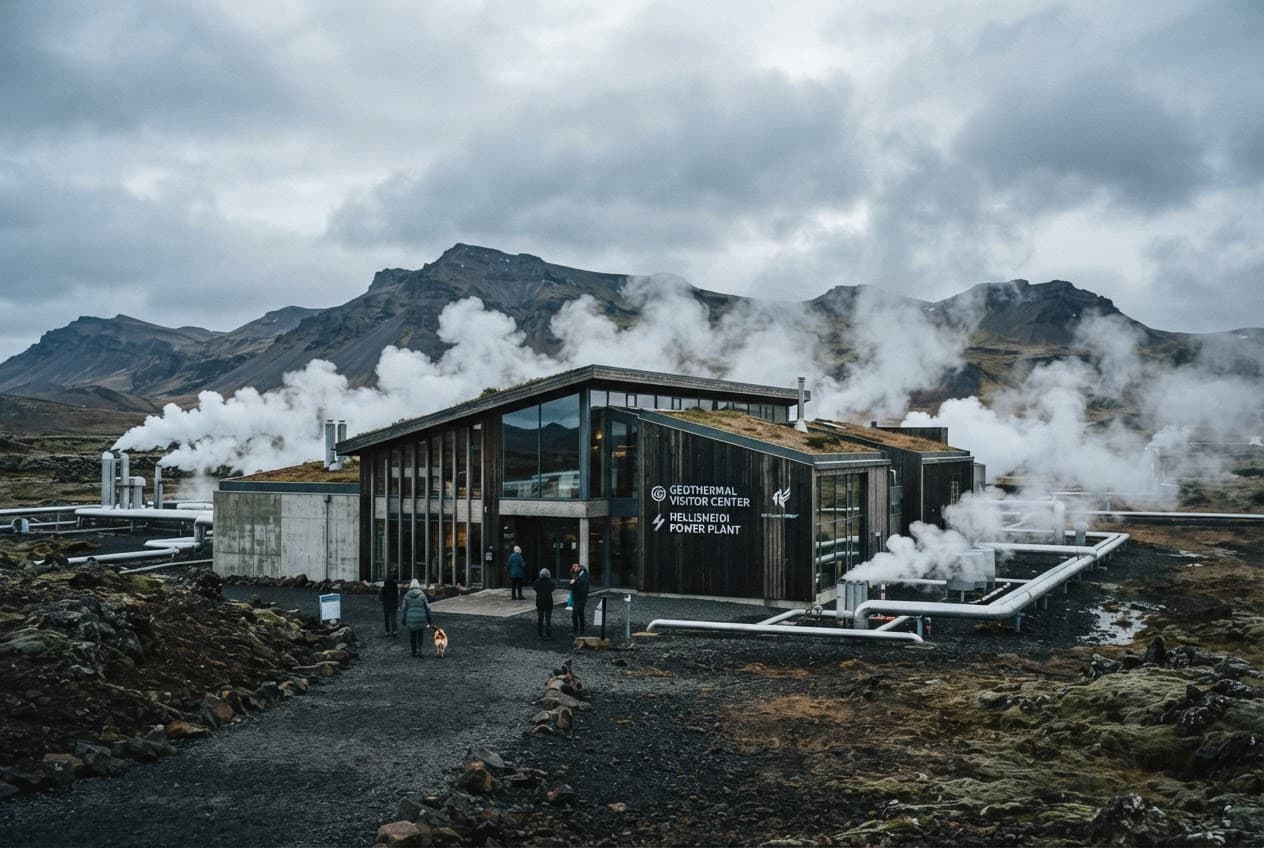
Direct air capture plant in a volcanic landscape
TECHNOLOGY · CLIMATE ENGINEERING

Iceland Expands Carbon Capture Facilities With Direct Air Filtration

A new generation of facilities is testing whether industrial-scale removal can become a credible part of the climate toolkit.

By Noah EngelbrechtPublished Tuesday, October 6, 2026 · 09:05 GMT | Updated 09:35 GMT | 7 min read

Industrial carbon-removal infrastructure in Iceland’s volcanic landscape. Illustrative image · LiveDigest

Iceland’s expanding carbon-removal sector is bringing a once-specialist idea into the landscape of climate infrastructure: taking carbon dioxide out of ordinary air, rather than capturing it at a power station or factory chimney. The country’s renewable energy resources and volcanic geology make it a notable setting for testing that approach.

The promise is straightforward, but the engineering is not. Direct air capture has to process large volumes of air to collect a relatively small amount of carbon dioxide. It then needs a durable destination for the captured gas. The climate value comes from the whole chain, not simply from the number of fans installed.

As facilities move beyond early demonstrations, the central questions are becoming more practical. How much clean energy will they require? How reliably can they operate through changing conditions? And what evidence will show that a tonne of carbon has been removed and kept out of the atmosphere?

01 / THE PROCESS

How direct air capture works

Air is drawn through equipment containing materials that bind with carbon dioxide. In one common design, a solid filter holds the gas while the rest of the air passes through. The filter is then heated, placed under a vacuum, or treated with a combination of processes to release a more concentrated stream of carbon dioxide.

Other systems use liquid solutions to capture the gas. The machinery and chemistry differ, but both approaches face the same fundamental task: separating a dilute gas from a very large flow of air. That makes energy use, material lifetime and maintenance central to the design.

Direct air capture is different from reducing emissions at their source. It can remove carbon already mixed into the atmosphere, regardless of where that carbon was originally released. That flexibility is useful, but it does not make removal a substitute for cutting fossil-fuel use.

02 / ENERGY & RESOURCES

The energy question

Fans need electricity, and many capture processes also need heat to regenerate their filters. If that energy comes from high-emitting sources, a share of the climate benefit can disappear. A credible assessment therefore counts emissions from the energy supply, construction, transport and ongoing operation.

Iceland’s geothermal resources offer both electricity and heat, helping explain its appeal to developers. Even there, clean energy is not an unlimited resource. New industrial demand must be weighed against other uses, grid capacity and the environmental impacts of additional infrastructure.

The question is not only whether a plant can secure renewable power. It is also whether the project adds useful removal without delaying other steps that could cut emissions more cheaply or quickly. That comparison becomes more important as projects grow.

03 / PERMANENT STORAGE

From captured gas to lasting storage

Capturing carbon dioxide is only the first half of the job. To count as durable removal, it must be stored in a way that keeps it out of the atmosphere for a long period. Some Icelandic projects pair air capture with storage in basalt, a volcanic rock that can react with dissolved carbon dioxide.

In mineral storage, carbon dioxide is mixed with water and injected into suitable underground formations. Reactions with the rock can turn the carbon into stable carbonate minerals. The process depends on local geology, water availability and carefully managed injection conditions.

Not every site is suitable, and underground storage still requires monitoring. Operators need to understand the movement of fluids, protect groundwater and document how much carbon is retained. A capture plant and its storage system should be evaluated as a connected project, not as separate achievements.

04 / MEASURING THE RESULT

What the evidence needs to show

A facility’s advertised capacity describes what it is designed to capture under specified conditions. It is not the same as the amount actually removed during a year of operation. Downtime, weather, filter performance and the availability of storage can all affect the final result.

The useful measure is net removal: the carbon stored after the project’s own emissions have been accounted for. Transparent reporting should explain the boundary of that calculation, the data used and the uncertainties that remain. Independent verification can help buyers and the public compare projects on a more consistent basis.

Evidence also needs to extend beyond a single successful test. Repeated operating data can show whether a system remains effective as materials age and equipment is maintained. Long-term storage records are equally important, because removal is only valuable if the captured carbon stays removed.

WHAT COUNTS
The useful measure is net removal: the carbon stored after the project’s own emissions have been accounted for.
05 / INDUSTRIAL SCALE

Scaling is more than building bigger

Larger facilities can create opportunities to share infrastructure and learn from repeated construction. But scaling also increases demand for power, heat, water, equipment and skilled workers. The costs of those inputs may not fall at the same rate as the costs of individual capture modules.

Financing adds another challenge. Some projects rely on advance purchases of future carbon removal to support construction. Those arrangements can help new technologies develop, but they also place weight on credible delivery schedules, clear contracts and dependable verification.

Public policy can support research, establish storage rules and make accounting more consistent. It also needs to distinguish durable carbon removal from temporary carbon use. Turning captured gas into a short-lived product is not equivalent to keeping it underground.

06 / THE BIGGER PICTURE

A role alongside emissions cuts

Climate assessments include carbon removal because some emissions are difficult to eliminate completely and because accumulated carbon continues to influence warming. That creates a potential role for direct air capture alongside biological and other engineered removal methods.

The scale of today’s technology remains small relative to the broader emissions challenge. Its future contribution will depend on better performance, lower costs and responsible siting—not on treating removal as permission to postpone reductions elsewhere.

Iceland offers a useful test of how capture, clean energy and mineral storage can work together. The meaningful milestone will be a growing record of verified, durable net removal. Until then, the expansion is best understood as an important engineering effort with substantial questions still to answer.

Background: IPCC assessments on carbon dioxide removal; IEA analysis of direct air capture.
Continue reading

More on the climate transition.

Direct air capture plant in a volcanic landscape
TECHNOLOGY · CLIMATE ENGINEERING

Iceland Expands Carbon Capture Facilities With Direct Air Filtration

A new generation of facilities is testing whether industrial-scale removal can become a credible part of the climate toolkit.

By Noah EngelbrechtPublished Tuesday, October 6, 2026 · 09:05 GMT | Updated 09:35 GMT | 7 min read

Industrial carbon-removal infrastructure in Iceland’s volcanic landscape. Illustrative image · LiveDigest

Iceland’s expanding carbon-removal sector is bringing a once-specialist idea into the landscape of climate infrastructure: taking carbon dioxide out of ordinary air, rather than capturing it at a power station or factory chimney. The country’s renewable energy resources and volcanic geology make it a notable setting for testing that approach.

The promise is straightforward, but the engineering is not. Direct air capture has to process large volumes of air to collect a relatively small amount of carbon dioxide. It then needs a durable destination for the captured gas. The climate value comes from the whole chain, not simply from the number of fans installed.

As facilities move beyond early demonstrations, the central questions are becoming more practical. How much clean energy will they require? How reliably can they operate through changing conditions? And what evidence will show that a tonne of carbon has been removed and kept out of the atmosphere?

01 / THE PROCESS

How direct air capture works

Air is drawn through equipment containing materials that bind with carbon dioxide. In one common design, a solid filter holds the gas while the rest of the air passes through. The filter is then heated, placed under a vacuum, or treated with a combination of processes to release a more concentrated stream of carbon dioxide.

Other systems use liquid solutions to capture the gas. The machinery and chemistry differ, but both approaches face the same fundamental task: separating a dilute gas from a very large flow of air. That makes energy use, material lifetime and maintenance central to the design.

Direct air capture is different from reducing emissions at their source. It can remove carbon already mixed into the atmosphere, regardless of where that carbon was originally released. That flexibility is useful, but it does not make removal a substitute for cutting fossil-fuel use.

02 / ENERGY & RESOURCES

The energy question

Fans need electricity, and many capture processes also need heat to regenerate their filters. If that energy comes from high-emitting sources, a share of the climate benefit can disappear. A credible assessment therefore counts emissions from the energy supply, construction, transport and ongoing operation.

Iceland’s geothermal resources offer both electricity and heat, helping explain its appeal to developers. Even there, clean energy is not an unlimited resource. New industrial demand must be weighed against other uses, grid capacity and the environmental impacts of additional infrastructure.

The question is not only whether a plant can secure renewable power. It is also whether the project adds useful removal without delaying other steps that could cut emissions more cheaply or quickly. That comparison becomes more important as projects grow.

03 / PERMANENT STORAGE

From captured gas to lasting storage

Capturing carbon dioxide is only the first half of the job. To count as durable removal, it must be stored in a way that keeps it out of the atmosphere for a long period. Some Icelandic projects pair air capture with storage in basalt, a volcanic rock that can react with dissolved carbon dioxide.

In mineral storage, carbon dioxide is mixed with water and injected into suitable underground formations. Reactions with the rock can turn the carbon into stable carbonate minerals. The process depends on local geology, water availability and carefully managed injection conditions.

Not every site is suitable, and underground storage still requires monitoring. Operators need to understand the movement of fluids, protect groundwater and document how much carbon is retained. A capture plant and its storage system should be evaluated as a connected project, not as separate achievements.

04 / MEASURING THE RESULT

What the evidence needs to show

A facility’s advertised capacity describes what it is designed to capture under specified conditions. It is not the same as the amount actually removed during a year of operation. Downtime, weather, filter performance and the availability of storage can all affect the final result.

The useful measure is net removal: the carbon stored after the project’s own emissions have been accounted for. Transparent reporting should explain the boundary of that calculation, the data used and the uncertainties that remain. Independent verification can help buyers and the public compare projects on a more consistent basis.

Evidence also needs to extend beyond a single successful test. Repeated operating data can show whether a system remains effective as materials age and equipment is maintained. Long-term storage records are equally important, because removal is only valuable if the captured carbon stays removed.

WHAT COUNTS
The useful measure is net removal: the carbon stored after the project’s own emissions have been accounted for.
05 / INDUSTRIAL SCALE

Scaling is more than building bigger

Larger facilities can create opportunities to share infrastructure and learn from repeated construction. But scaling also increases demand for power, heat, water, equipment and skilled workers. The costs of those inputs may not fall at the same rate as the costs of individual capture modules.

Financing adds another challenge. Some projects rely on advance purchases of future carbon removal to support construction. Those arrangements can help new technologies develop, but they also place weight on credible delivery schedules, clear contracts and dependable verification.

Public policy can support research, establish storage rules and make accounting more consistent. It also needs to distinguish durable carbon removal from temporary carbon use. Turning captured gas into a short-lived product is not equivalent to keeping it underground.

06 / THE BIGGER PICTURE

A role alongside emissions cuts

Climate assessments include carbon removal because some emissions are difficult to eliminate completely and because accumulated carbon continues to influence warming. That creates a potential role for direct air capture alongside biological and other engineered removal methods.

The scale of today’s technology remains small relative to the broader emissions challenge. Its future contribution will depend on better performance, lower costs and responsible siting—not on treating removal as permission to postpone reductions elsewhere.

Iceland offers a useful test of how capture, clean energy and mineral storage can work together. The meaningful milestone will be a growing record of verified, durable net removal. Until then, the expansion is best understood as an important engineering effort with substantial questions still to answer.

Background: IPCC assessments on carbon dioxide removal; IEA analysis of direct air capture.
Continue reading

More on the climate transition.

Direct air capture plant in a volcanic landscape
TECHNOLOGY · CLIMATE ENGINEERING

Iceland Expands Carbon Capture Facilities With Direct Air Filtration

By Noah Engelbrecht

Industrial carbon-removal infrastructure in Iceland’s volcanic landscape. Illustrative image · LiveDigest

Iceland’s expanding carbon-removal sector is bringing a once-specialist idea into the landscape of climate infrastructure: taking carbon dioxide out of ordinary air, rather than capturing it at a power station or factory chimney. The country’s renewable energy resources and volcanic geology make it a notable setting for testing that approach.

The promise is straightforward, but the engineering is not. Direct air capture has to process large volumes of air to collect a relatively small amount of carbon dioxide. It then needs a durable destination for the captured gas. The climate value comes from the whole chain, not simply from the number of fans installed.

As facilities move beyond early demonstrations, the central questions are becoming more practical. How much clean energy will they require? How reliably can they operate through changing conditions? And what evidence will show that a tonne of carbon has been removed and kept out of the atmosphere?

01 / THE PROCESS

How direct air capture works

Air is drawn through equipment containing materials that bind with carbon dioxide. In one common design, a solid filter holds the gas while the rest of the air passes through. The filter is then heated, placed under a vacuum, or treated with a combination of processes to release a more concentrated stream of carbon dioxide.

Other systems use liquid solutions to capture the gas. The machinery and chemistry differ, but both approaches face the same fundamental task: separating a dilute gas from a very large flow of air. That makes energy use, material lifetime and maintenance central to the design.

Direct air capture is different from reducing emissions at their source. It can remove carbon already mixed into the atmosphere, regardless of where that carbon was originally released. That flexibility is useful, but it does not make removal a substitute for cutting fossil-fuel use.

02 / ENERGY & RESOURCES

The energy question

Fans need electricity, and many capture processes also need heat to regenerate their filters. If that energy comes from high-emitting sources, a share of the climate benefit can disappear. A credible assessment therefore counts emissions from the energy supply, construction, transport and ongoing operation.

Iceland’s geothermal resources offer both electricity and heat, helping explain its appeal to developers. Even there, clean energy is not an unlimited resource. New industrial demand must be weighed against other uses, grid capacity and the environmental impacts of additional infrastructure.

The question is not only whether a plant can secure renewable power. It is also whether the project adds useful removal without delaying other steps that could cut emissions more cheaply or quickly. That comparison becomes more important as projects grow.

03 / PERMANENT STORAGE

From captured gas to lasting storage

Capturing carbon dioxide is only the first half of the job. To count as durable removal, it must be stored in a way that keeps it out of the atmosphere for a long period. Some Icelandic projects pair air capture with storage in basalt, a volcanic rock that can react with dissolved carbon dioxide.

In mineral storage, carbon dioxide is mixed with water and injected into suitable underground formations. Reactions with the rock can turn the carbon into stable carbonate minerals. The process depends on local geology, water availability and carefully managed injection conditions.

Not every site is suitable, and underground storage still requires monitoring. Operators need to understand the movement of fluids, protect groundwater and document how much carbon is retained. A capture plant and its storage system should be evaluated as a connected project, not as separate achievements.

04 / MEASURING THE RESULT

What the evidence needs to show

A facility’s advertised capacity describes what it is designed to capture under specified conditions. It is not the same as the amount actually removed during a year of operation. Downtime, weather, filter performance and the availability of storage can all affect the final result.

The useful measure is net removal: the carbon stored after the project’s own emissions have been accounted for. Transparent reporting should explain the boundary of that calculation, the data used and the uncertainties that remain. Independent verification can help buyers and the public compare projects on a more consistent basis.

Evidence also needs to extend beyond a single successful test. Repeated operating data can show whether a system remains effective as materials age and equipment is maintained. Long-term storage records are equally important, because removal is only valuable if the captured carbon stays removed.

WHAT COUNTS
The useful measure is net removal: the carbon stored after the project’s own emissions have been accounted for.
05 / INDUSTRIAL SCALE

Scaling is more than building bigger

Larger facilities can create opportunities to share infrastructure and learn from repeated construction. But scaling also increases demand for power, heat, water, equipment and skilled workers. The costs of those inputs may not fall at the same rate as the costs of individual capture modules.

Financing adds another challenge. Some projects rely on advance purchases of future carbon removal to support construction. Those arrangements can help new technologies develop, but they also place weight on credible delivery schedules, clear contracts and dependable verification.

Public policy can support research, establish storage rules and make accounting more consistent. It also needs to distinguish durable carbon removal from temporary carbon use. Turning captured gas into a short-lived product is not equivalent to keeping it underground.

06 / THE BIGGER PICTURE

A role alongside emissions cuts

Climate assessments include carbon removal because some emissions are difficult to eliminate completely and because accumulated carbon continues to influence warming. That creates a potential role for direct air capture alongside biological and other engineered removal methods.

The scale of today’s technology remains small relative to the broader emissions challenge. Its future contribution will depend on better performance, lower costs and responsible siting—not on treating removal as permission to postpone reductions elsewhere.

Iceland offers a useful test of how capture, clean energy and mineral storage can work together. The meaningful milestone will be a growing record of verified, durable net removal. Until then, the expansion is best understood as an important engineering effort with substantial questions still to answer.

Background: IPCC assessments on carbon dioxide removal; IEA analysis of direct air capture.
Continue reading

More on the climate transition.