Lloyds bank surcharge rise criticised by Lloyds CFO William Chalmers
William Chalmers, Lloyds Banking Group's chief financial officer, criticised Chancellor John Healey's plan to double the Lloyds bank surcharge-relevant levy from 3% to 6% from January, saying he sees no obvious linkage between energy prices and bank taxes.
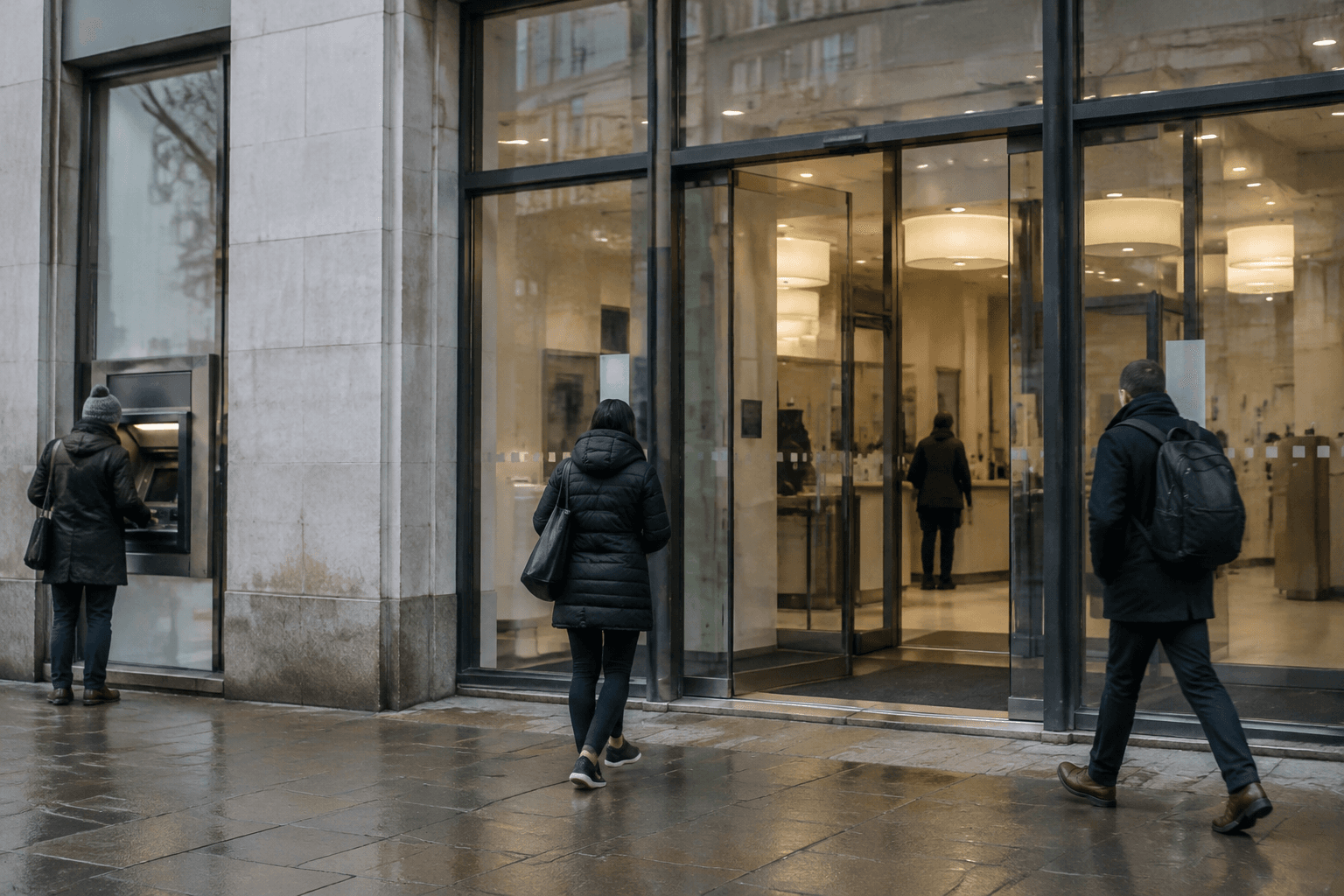
A branch of a high street bank seen from across the pavement on a grey morning, a few customers passing its glass doors.
Chalmers warns against extending the levy
A senior Lloyds Banking Group executive has attacked chancellor John Healey for tying increases in bank tax to support for household energy bills, and warned against letting the levy run past March 2028. William Chalmers, the group's chief financial officer, made the comments to journalists on an earnings call on Thursday morning, less than 24 hours after the announcement.
Chalmers said he hoped the rise would prove temporary: "We therefore very much hope that yesterday's tax increase is indeed a temporary measure." He added that he does not see an obvious linkage between energy prices and bank taxes.
"I don't see an obvious linkage between energy prices and bank taxes"
He argued the banking sector should not carry the cost because it provides loans that could fuel UK growth, and that the sector must deliver its services cost-effectively to promote growth and stay internationally competitive. Lending into the real economy and securing growth, he said, is the best defence against energy price impacts.
What Healey announced
The chancellor announced the change less than 24 hours before Chalmers spoke. The plan:
- The bank surcharge, levied on top of corporation tax, doubles from 3% to 6% from January
- Healey described it as "time limited", lasting 15 months
- The revenue is earmarked "to pay for immediate support on energy bills"
Lobbyists question the 15-month limit
The Treasury has promised to legislate for the 15-month limit in the financial bill. Bankers and lobbyists, however, privately questioned whether a further energy crisis could throw that limit out the window.
Some pointed to Spain, where a two-year windfall tax on banks introduced in 2022 was extended by three further years, with the rate increased from 4.8% to 7% for the country's largest banks.
Lloyds results on the day
The comments came as Lloyds revealed its third-quarter results on Thursday. Key figures:
- Pre-tax profits almost doubled year on year, from £1.2bn to £2.3bn
- The jump largely reflected last year's £800m charge, set aside for compensation over the motor finance scandal
- Net interest income rose 10%, showing the bank continued to benefit from higher interest rates
Net interest income has risen across the industry as inflation expectations, driven by higher fuel prices triggered by the war in the Middle East, pushed rates up. Chalmers also stressed Lloyds' contribution to the exchequer: "We are a major taxpayer," he said, noting the bank has paid around £1.8bn of corporate taxes year to date and wants a stable, predictable tax regime.
The Treasury has promised to legislate the 15-month limit in the financial bill, though bankers privately question whether a further energy crisis could extend it.