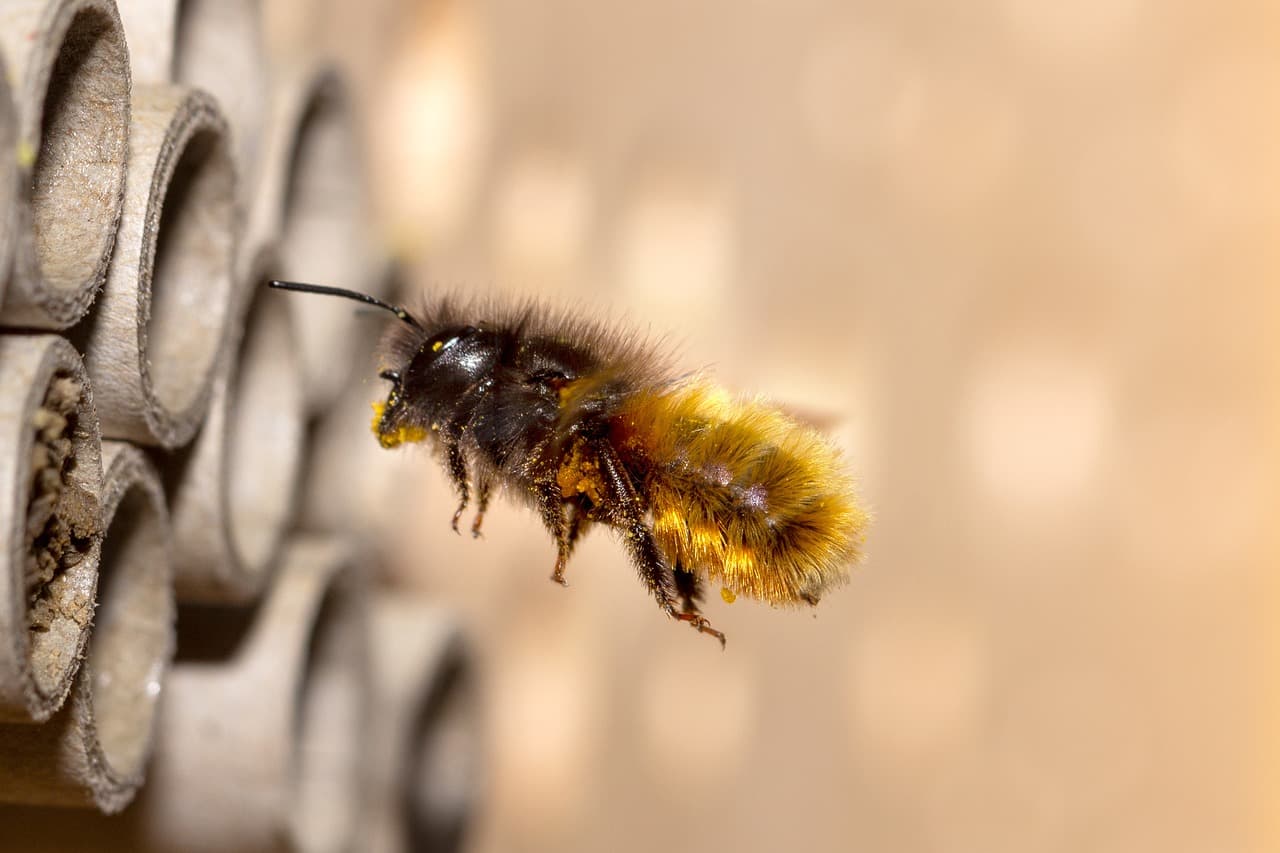
Wild bee decline Europe: study finds most species falling over past century
Most of Europe's wild bee species and about half of its hover fly species have declined over the last century, a study published as the UN biodiversity summit Cop17 opened in Yerevan, Armenia has found.
Wild bee decline Europe: study finds most species falling over past century
What the study found
Researchers tracking records back to 1921 found more bee species declining than increasing in every part of Europe except the Alpine region, according to the study. The dataset covers 88% of the continent's bee and hover fly species.
The regional picture varied:
- Bee and hover fly species richness suffered a persistent drop in the Atlantic and Continental regions.
- Other regions showed mixed or even positive trends.
- Of the species logged over the last century, 91% had also been recorded at least once in the modern period between 2001 and 2020.
- Although up to 9% of European species may have vanished, the researchers said they do not expect widespread extinctions to have occurred yet.
The study also found that the species' occupancy - the probability of being found at a given site - had mostly fallen.
A reshaped pollinator community
The scientists described pollinator communities as being reshaped by the "gradual loss of sensitive species and the rise of a resilient few", and warned of "deeper functional disruptions" if existing trends were not addressed.
The stakes reach well beyond the insects themselves. Nearly 90% of wild flowering plants, and more than three-quarters of major food crop types, depend in part on animal pollination. According to the UN's Food and Agriculture Organization, pollinator losses trigger a chain reaction: wildlife comes under threat, and ecosystems lose some of their capacity to cope with climate change and environmental stress.
'Crucial opportunity to act'
Carlos Martínez-Núñez, an ecologist at the Spanish National Research Council and lead author of the study, said biodiversity loss can stay hidden behind apparently stable species numbers, "giving us a crucial opportunity to act before further declines occur".
He also cautioned against reading the growing species as safe: "The fact that some species are increasing today does not mean they will remain winners as climate change and habitat loss intensify."
Independent reaction and Cop17
Ainhoa Magrach, an environmental researcher at the Basque Centre for Climate Change who was not involved in the study, said the findings confirm what she called a long-held suspicion: many pollinator species are losing populations, and the decline is "not affecting all of them equally".
Earlier evidence, she noted, came mostly from a handful of north-western European countries such as the UK, Belgium and the Netherlands. The new analysis, she said, shows the pattern holds across the continent, with some regional differences.
The findings landed as diplomats gather in Yerevan for the 17th UN conference on biodiversity, which will focus on the conservation and sustainable use of the natural world and the shared benefits of genetic resources. Governments have not met a single UN target on nature since the biodiversity convention was created in Rio in 1992.
Cop17 is expected to assess progress toward this decade's targets, including:
- protecting 30% of land and sea
- reforming $500bn (£375bn) of environmentally damaging subsidies
- restoring 30% of the planet's degraded ecosystems