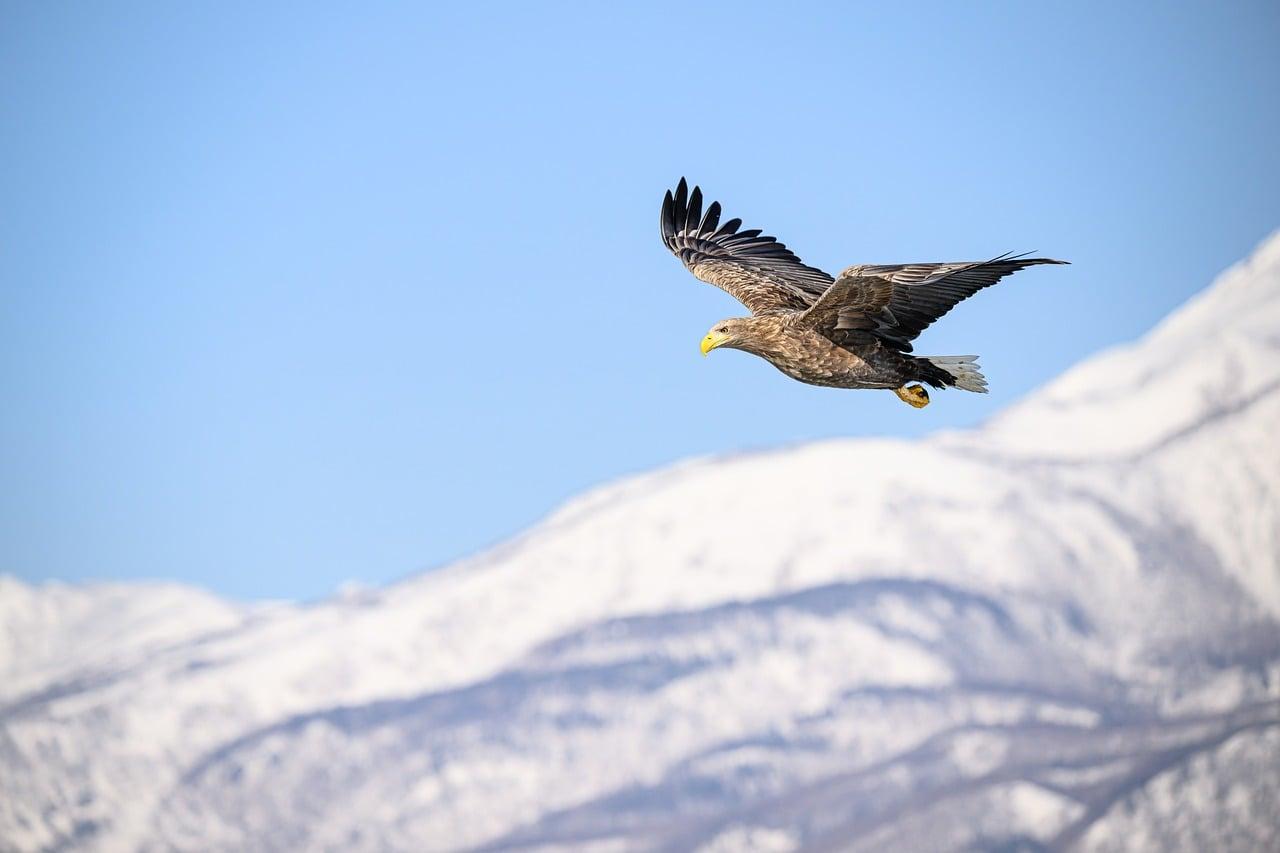
White-tailed eagle reintroduction plans spark warning that seabird colonies face wipeout
Conservationists and academics warn that white-tailed eagles reintroduced into England and Wales could wipe out some seabird colonies, as Natural Resources Wales assesses a proposal to release up to 60 eagles in Gwent, south Wales.
White-tailed eagle reintroduction plans spark warning that seabird colonies face wipeout
What the experts are warning
The white-tailed eagle reintroduction now under consideration in Wales has drawn warnings from ecologists and conservationists that the birds could imperil endangered seabird populations and wipe out some colonies. Academics point to puffins, guillemots, razorbills, fulmars and kittiwakes as species whose breeding populations could collapse if large numbers of eagles are released.
Tim Birkhead, emeritus professor of ecology and evolution at the University of Sheffield, said the danger to seabird colonies has been neglected in the debate: in his words, "these birds will probably destroy our seabird colonies" amid the excitement over the birds' return.
The release plans and the history
Two schemes are on the table or under way. Proposals would release up to 60 eagles in Gwent, south Wales, on top of 20 young birds already being released on Exmoor over the next three years. The species was driven to extinction in Britain in 1918, and its return over recent decades has been counted a conservation success:
- Chicks brought from Norway to Scotland in 1975 have produced a wild population now of 200 breeding pairs.
- Forty-five birds have been reintroduced to the Isle of Wight since 2019.
- Despite repeated illegal killing, the first English-born wild bird fledged from a nest in East Sussex in 2023.
- Wales has not yet restored the species.
The evidence from Norway and the Baltic
Critics cite research from northern Europe. A 2023 paper found that increasing eagle abundance accelerated the loss of a kittiwake colony at Røst, northern Norway, in 2020 by many years. The colony was already declining, but fewer fish compelled the kittiwakes to spend more time foraging and less time defending their young, amplifying the eagles' impact.
Study co-authors Annette Fayet and Tycho Anker-Nilssen noted that Røst had only two or three breeding pairs of eagles, yet large numbers of immature eagles gathered there and disturbed the nesting seabirds. They cautioned that Norway's situation might not repeat itself in south Wales, but said they find it "impossible to rule out that something similar could happen in time".
Other cited findings include:
- Stephen Votier, professor of seabird conservation and ecology at Heriot-Watt University, said in evidence for the Wildlife Trust of South & West Wales that eagles can severely affect seabird populations indirectly through breeding behaviour.
- Some researchers say these indirect effects may exceed direct predation, because fear of eagles makes adult seabirds temporarily desert their breeding sites, exposing chicks to gulls and corvids.
- Roger Morgan-Grenville, whose book on the species is out next spring, cited a consistent association between rising eagle numbers on the Baltic coast and reduced breeding success of the cormorant, plus impacts on gannets and kittiwakes in western Norway.
The defenders' response
Prof Geoff Hilton, head of wetland evidence at the Wildfowl and Wetlands Trust, which leads the Gwent reintroduction, said conservation always carries risk but insisted it must be assessed early. He pointed out that white-tailed eagles are generalist feeders with a varied diet including carrion, fish and small mammals, and that a 2020 study of eagles east of the Baltic Sea found birds of particular EU conservation concern made up approximately 1% of identified prey.
"We aim to establish seven to nine breeding pairs of white-tailed eagles over the next 10 years," Hilton said, adding that no significant impact on any single species is expected.
The wildlife trusts themselves are split: the Gwent Wildlife Trust supports the proposed reintroduction while the Wildlife Trust of South & West Wales (WTSWW) opposes it. Last month an eagle from the Exmoor release was sighted over Skomer, the south Wales seabird island where David Attenborough was filmed for the Wild Isles series. British seabirds have suffered the worst declines of any bird group over the last five years, falling by a fifth, but the south Wales populations are relatively healthy.
Sarah Kessell, WTSWW chief executive, said her trust is increasingly alarmed as evidence of impacts on cliff-nesting seabirds emerges, and that Skomer and Skokholm hold globally important populations already under threat. "We have an overwhelming obligation to protect the seabirds on the islands that we manage," she said.
Birkhead, who has studied Skomer's guillemots since 1972, said he would love to see white-tailed eagles but wants the Scandinavian evidence properly considered. Morgan-Grenville, a supporter of the birds' return, said all voices must be heard, arguing that the eagles are coming back into a landscape far more degraded than the one they left in 1918.
The Gwent application is now before Natural Resources Wales, which is expected to rule by the end of this year. A spokesperson said that if the authority is minded to grant a licence, there will be a public consultation process from late 2026 into early 2027 before any final decision.