Ukraine landmines: war debris on a Vietnam-era scale, and the machines and laws that could clear it
Ukraine, often described as the most mine-contaminated country in the world, faces contamination on a scale not seen since US cluster munitions on the Ho Chi Minh trail, says UN Development Programme manager Paul Heslop. Deminers like 58-year-old Olena Kabanova, who works a former Russian-occupied field in Kharkiv for the Halo Trust, are racing to clear it with new machines and AI.
Ukraine landmines: war debris on a Vietnam-era scale, and the machines and laws that could clear it
Clearing a former occupied field by hand
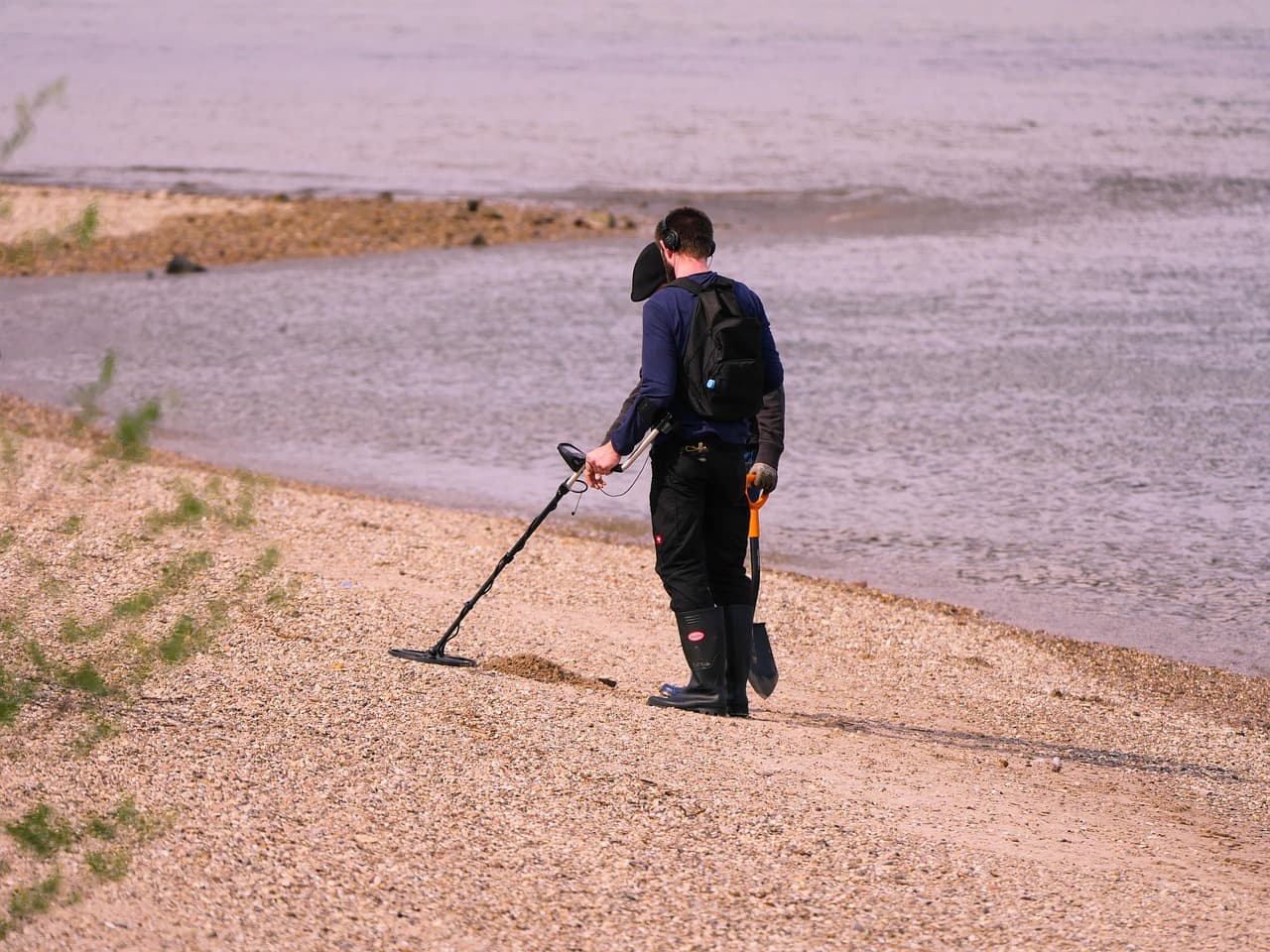
Four years ago, a field in eastern Ukraine was occupied by Russian soldiers. It is now littered with landmines, and Olena Kabanova, 58, spends her days there digging out a neat square around each spot where a mine detector senses a suspicious object. She works for the Halo Trust, the largest international humanitarian demining organisation in Ukraine, in a field in Kharkiv.
The scale of what she and other deminers face is enormous. Paul Heslop, mine action programme manager in Ukraine for the UN Development Programme, says drone-delivered munitions are spreading contamination on a scale not seen since the Americans dropped cluster munitions on the Ho Chi Minh trail.
The threat keeps changing
Among the devices deminers encounter is the POM-3, a small cylindrical Russian mine that can be mistaken for an abandoned vacuum flask. It is detonated by the vibrations of approaching footsteps.
Anda Riza, a Halo Trust unit commander, says the POM-3 means his teams completely avoid specific villages. "Specific villages that we just completely avoid," he says. Valeriia Shumska, his colleague at the Halo Trust, adds that the types of landmines are "constantly developing and evolving".
The danger is not only from the devices themselves. Humanitarian workers are sometimes directly targeted, and drone and missile attacks make outdoor work unsafe.
Machines and drones speed the work
Heslop says the humanitarian mine action sector is going through its biggest pivot in the last 30 years, driven by technology in Ukraine. Deminers across the sector agree the advances will release Ukraine's richly fertile land for civilian use at a much faster rate.
- Digging out a patch of land by hand can take up to 45 minutes; the DMR-7 machine does it in five.
- The DMR-7 is a small, tank-like vehicle fitted with a hosepipe that shoots out jet flows of compressed air, operated remotely by a human at a safe distance.
- The Halo Trust is experimenting with AI-powered image analysis, ground-penetrating radar and devices that can detect explosive material, not just metal.
- Before 2022, surveillance was done with binoculars and maps; now it is done with drones and satellite imagery, which can be analysed with the help of AI.
Not all technology helps. Drone jamming systems used by both Russian and Ukrainian forces interfere with the humanitarian work, and Halo has lost several drones to jamming and spoofing attacks.
Health and safety standards often require demining vehicles to be operated remotely, though Riza says doing it remotely is much slower than having a person in the cab.
Money, and a state standing in the way
Ukraine's demining sector has received $1.5bn in funding since the start of the full-scale invasion. The Halo Trust alone spent nearly £50m in Ukraine in the year to 31 March 2025, dwarfing the state's annual £28.6m agricultural land clearance budget.
- Responsibility for mine action is split across multiple Ukrainian government agencies, and attempts to reform the mine action law to bring it in line with international standards have faltered.
- Ihor Bezkaravainyi, the deputy economy minister leading demining work, wants one cabinet-level office to oversee the whole sector. He says some government bodies will lose responsibility, and, they think, power, under new law.
- Bezkaravainyi says Ukraine's situation is the opposite of the normal post-conflict case, because the conflict has not ended and the government does exist. "In Ukraine, it's the opposite situation," he says.
- Heslop argues Ukrainian authorities over-categorise land as mine-contaminated, risking wasted time and money. "Just because it was occupied by the Russians doesn't necessarily mean it was contaminated," he says.
One person who has worked in Ukraine's demining sector puts it more bluntly: "The biggest barrier to demining Ukraine is the government of Ukraine."
The conflict has not ended and demining continues while mine action law reform has faltered. Mykyta Shulzhenko, head of the state emergency services' mechanised demining unit, says his colleagues use drones for surveillance but cannot yet analyse imagery with AI. "I really hope this kind of technology will be implemented soon in our work," he says.
Additional research for the underlying report was done by Illia Dyadik and Artem Mazhulin.