
Trump accepts midterm results after GOP blowout despite interference fears
Donald Trump said he was “absolutely willing” to accept the 2026 midterm results and to work with Democrats, after Tuesday's elections produced a massive GOP blowout his administration had spent months laying groundwork to contest.
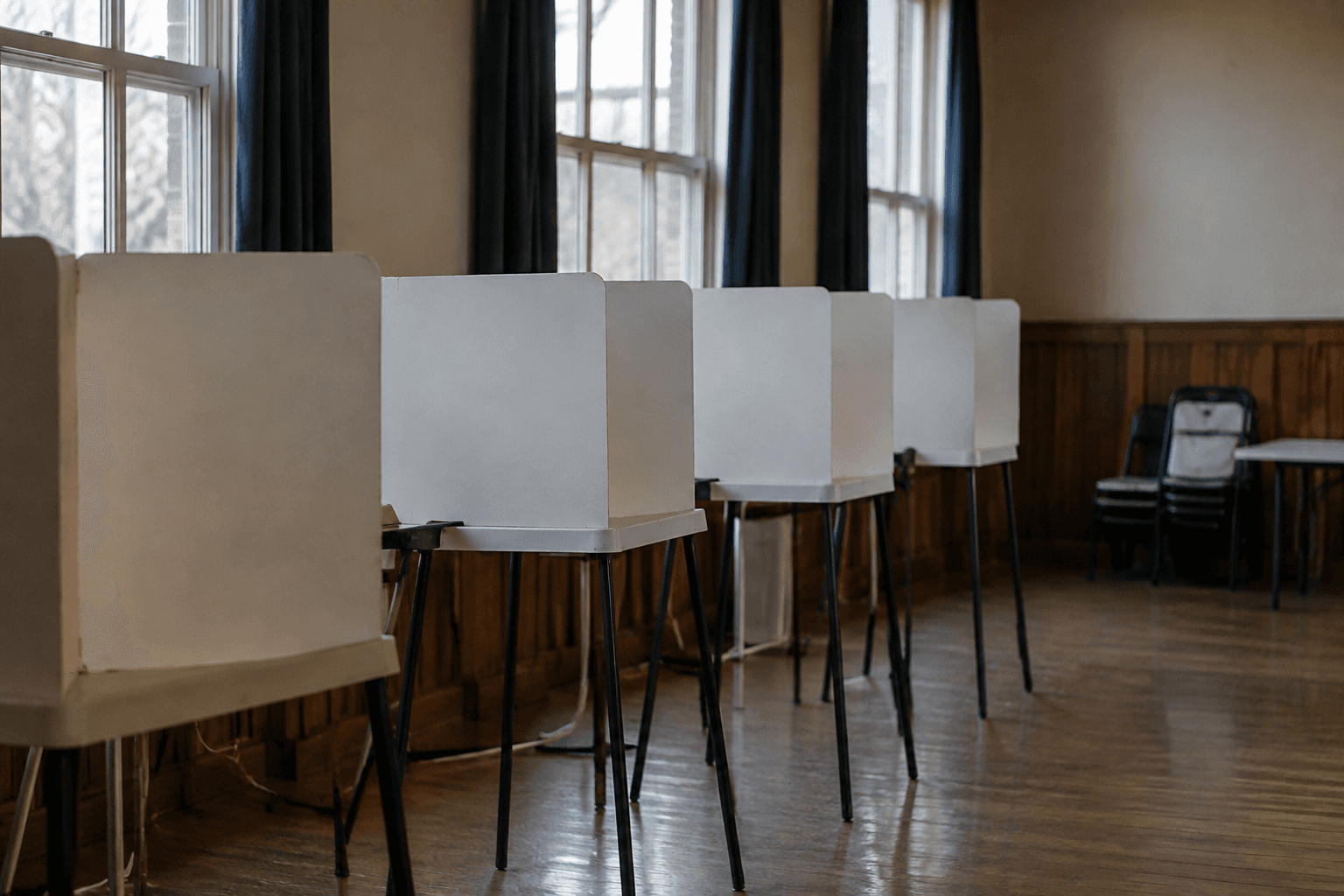
A row of used voting booths with privacy screens standing empty in a quiet community hall the morning after election day.
Months of pressure on the process
In the run-up to the midterm elections 2026, Donald Trump's administration worked to cast doubt on the results, intimidate voters and election officials, and signal that federal power could be used against the process, according to the report. It was a familiar posture: aside from the 2024 election he won, Trump has cast doubt on every presidential race and midterm since 2016.
Several specific threats hung over voting day:
- Administration officials would not rule out sending immigration agents to the polls.
- Around 1,000 justice department monitors were deployed to voting sites, raising worries they would disrupt voting.
- In the campaign's final weeks, the justice department tried to block certification of the Alaska Senate race and to stop California officials counting certain ballots.
- The department also threatened to prosecute California election officials, serving them subpoenas on Monday, the day before election day.
The feared scenarios that never came
None of the worst-case interventions materialised. Observers had feared Trump might try to seize voting machines or ballots, or that Republicans would attempt a longshot maneuver to block new members of Congress from being seated on January 3; neither happened. The certification of new members in January now looks set to go smoothly.
Doubt continues among allies
Trump himself accepted the outcome, something described as almost unprecedented, saying he looked forward to working with Democrats. One adviser downplayed any rigging risk: “It was essentially too big to rig,” an unnamed Trump adviser told CNN.
But sceptics close to him kept disputing the results. Cleta Mitchell, the Republican lawyer and prominent spreader of election doubt, fumed at Senate majority leader John Thune for failing to pass a sweeping voting restriction bill, and wrote on X that “That aliens by the hundreds of thousands are on our voter rolls” with thousands of illegal votes in the results.
Katie Miller, wife of Trump aide Stephen Miller, seized on tabulator problems in a competitive New York congressional race, posting: “This is how the left steals elections”. Mike Lawler, the Republican loser of that race, publicly assured voters there were no shenanigans with the vote and quickly conceded.
Why the system held
Sean Morales-Doyle of the Brennan Center credited the victory margins but said the larger reason was “the incredible work of pro-democracy forces in foreseeing, preparing for, and responding” over two years. Democratic attorneys general and others war-gamed responses to possible attempts by Trump to contest results or use armed force to intimidate voters, and lawyers stood ready to rush to court when justice department lawsuits came.
Down-ballot results mattered too. Democrats held the secretary of state offices overseeing elections in Arizona, Nevada and Michigan, and picked up the office in Georgia and Ohio. They also won hundreds of legislative seats and full control of state government in Wisconsin, Michigan, Minnesota, Pennsylvania and Arizona, positions from which they can pass laws protecting certification from meddling.
Others saw a shift in incentives. David Becker, executive director of the Center for Innovation and Research, said “the politics overall in the nation have changed to some degree”. UCLA election law professor Richard Hasen wrote in Slate that the mobilisation was not overkill: “thanks to the efforts of thousands of people, the system held against a powerful barrage”.
The justice department's election lawsuits and its threats against California officials continue with no immediate sign of stopping, while the January certification of new members of Congress looks set to proceed without incident.


