
Tusk vows to finish Poland constitutional court overhaul despite protests
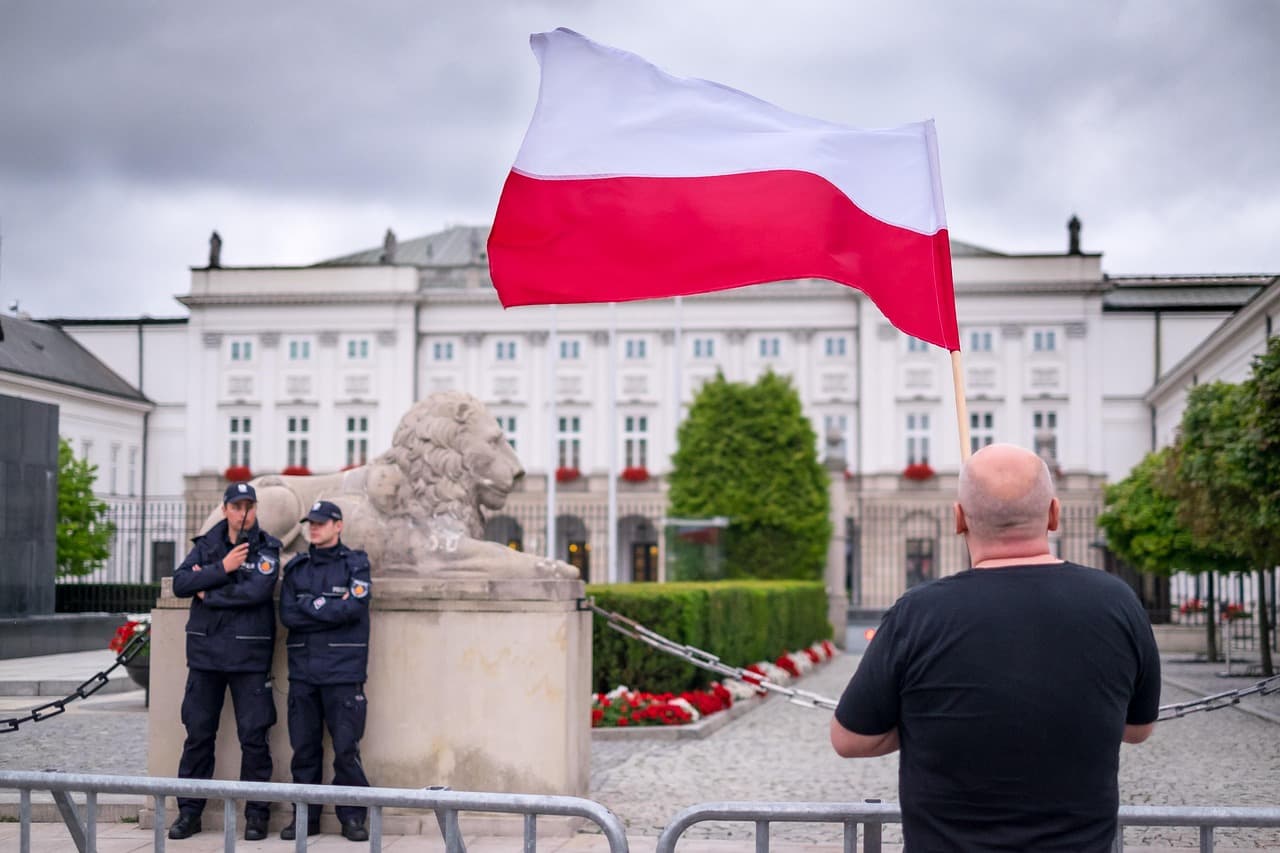
Prime Minister Donald Tusk said on Saturday night he will complete Poland's constitutional court overhaul, after overnight protests brought riot police to the court's building. He called the shake-up vital to restore a tribunal paralysed for more than a decade.
Tusk vows to finish Poland constitutional court overhaul despite protests
A court paralysed for a decade
Poland's constitutional court has been paralysed for more than a decade, and Prime Minister Donald Tusk argues that his overhaul exists to fix exactly that. In a prime-time television address on Saturday night, he was defiant, saying the shake-up was vital to restore a tribunal crippled by years of political disputes and that "in certain matters, there can be no compromise."
During the eight years in which the rightwing Law and Justice (PiS) party governed, the tribunal stood at the heart of its rule-of-law disputes with the EU. Tusk, who returned to office in 2023 as a centre-right leader, has been working to reverse PiS's judicial changes - an effort repeatedly blocked by presidents aligned with the opposition who hold wide veto powers.
Judges suspended, president at the door
Earlier in 2026, President Karol Nawrocki refused to swear in five judges approved by parliament. On Friday, judges backed by the government tried to take over the tribunal's procedures: the chief judge and his deputy, both PiS appointees, were suspended, and street protests followed.
Tusk criticised Nawrocki for his role in the night's events:
- He joined the protests on Friday night and pushed his way into the building to intervene.
- "In a democratic state, no politician can enter a court to issue orders or intimidate judges – not even the president," Tusk said.
Defiance and rival charges
He argued the tribunal as PiS left it had never been a genuine court, and pointed to rulings against it by European tribunals. To the fury of his opponents he offered a comparison: a pickpocket who grabs a bag from an old woman and, the moment he is caught, starts shouting that he is the victim of an assault. He went further, claiming that Polish organisations and politicians have long worked to tear down democracy and the rule of law, and that the pro-Russian sympathy among them was no accident.
Russia's former president Dmitry Medvedev joined the opposition outcry, accusing Warsaw of a "constitutional coup" and hounding the conservatives. "And everything is clear," Tusk replied. "We Poles have succeeded too well in building a strong state to surrender now," he added.
Nawrocki's senior aide Zbigniew Bogucki called Tusk a pathological liar who is setting Poland ablaze. Foreign Minister Radosław Sikorski conceded the events outside the court were not elegant, but said the alternative was to concede an unconstitutional transformation of Poland into a presidential republic.
Legality questioned, talks stalled
The government's next steps are far from settled:
- Experts remain divided over whether the government's procedural gambit at the court is lawful.
- The Helsinki Foundation for Human Rights said on Saturday the legal basis for the temporary suspension was "questionable" and would not contribute to restoring the court.
- Nawrocki held cross-party political talks on Saturday, with no apparent breakthrough.
The standoff now frames the contest ahead of next year's parliamentary election, which surveys suggest Tusk's broad coalition and the nationalist right could win by a narrow margin. Tusk said the government must secure the conditions the court needs to function - and that he means to carry out that obligation.


