
Morgan McSweeney quasi-judicial powers: ex-chief of staff urges rethink
Morgan McSweeney's quasi-judicial powers warning came before the House of Lords constitution committee: the former chief of staff to Sir Keir Starmer said cabinet ministers' quasi-judicial powers block cabinet discussion and the prime minister's input on national issues.
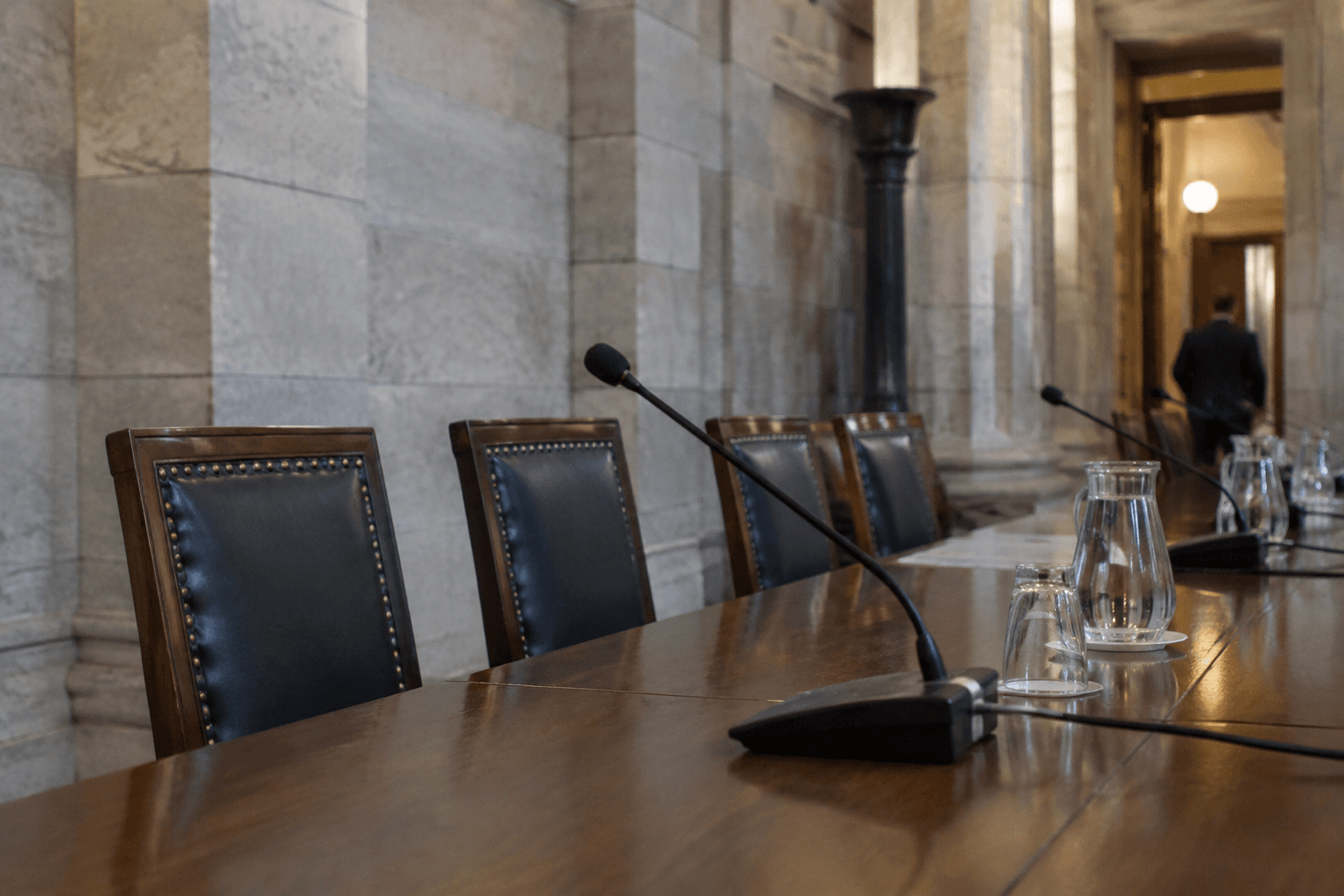
Empty committee room chairs and a microphone on a long table in a stone-walled parliamentary corridor before a hearing.
What McSweeney told the committee
Morgan McSweeney, who served as Sir Keir Starmer's chief of staff until February, told the House of Lords constitution committee that the quasi-judicial powers given to cabinet ministers should be rethought. Among the powers he questioned was the energy secretary's ability to approve future oil and gas fields.
In his evidence, McSweeney argued that quasi-judicial processes were preventing wider cabinet discussions and keeping the prime minister from giving input on issues of national importance. He said the processes were obstructing the work of government, which he linked to a broader warning that constitutional democracy is under pressure not only from the threat of abuse of power but also from governments failing to deliver the programmes they were elected on.
Examples of quasi-judicial decisions
McSweeney named no specific cases himself, but the committee's interest follows several decisions of this kind under Starmer's government:
- Ed Miliband, as energy secretary, had the role of determining the future of the Rosebank and Jackdaw oil and gas fields, a key quasi-judicial decision of the government so far. The decisions were subsequently placed in the hands of his successor as energy secretary, Miatta Fahnbulleh.
- Steve Reed, as then housing and local government secretary, held the power to decide whether to give the go-ahead to a new Chinese super-embassy in east London.
Rules holding the prime minister back
McSweeney called for the "thicket of rules" about how the prime minister operates to be cleared away. As an example, he cited Starmer being advised that he should not issue letters to cabinet ministers setting out their priorities and asking them for progress updates, because this ran against convention. The problem, McSweeney said, was not any individual issue but the accumulation of conventions weighing on the prime minister.
He did not want every rule swept aside: those preventing abuse of power should be kept, while everything else should be looked at in the round, including the cumulative effect of all of them. Some rules, he said, stopped the government operating at the speed it needed and carrying out its lawful mandate, and he suggested the prime minister's powers should be codified by being written down.
They should be identified and there should be fewer of them and they should be justified, the ones that are there.
Who McSweeney is
McSweeney helped propel Starmer to power and served as his chief of staff until February this year. He quit in February because of his closeness to the decision to appoint Peter Mandelson as US ambassador.
The party's elections guru, McSweeney was widely credited by many in the party for the size of Labour's 2024 victory. He admitted in an interview this year that the party had not been prepared enough for government, or for the volatile world it faced when Starmer took office, and lacked ideas on how to make things happen quickly for people who wanted change. Starmer himself has previously spoken openly about his frustration at not being able to pull as many levers of power as he might have wanted.
The remarks were made in evidence to the House of Lords constitution committee, with McSweeney's call resting on the rules he wants identified, reduced and justified.


