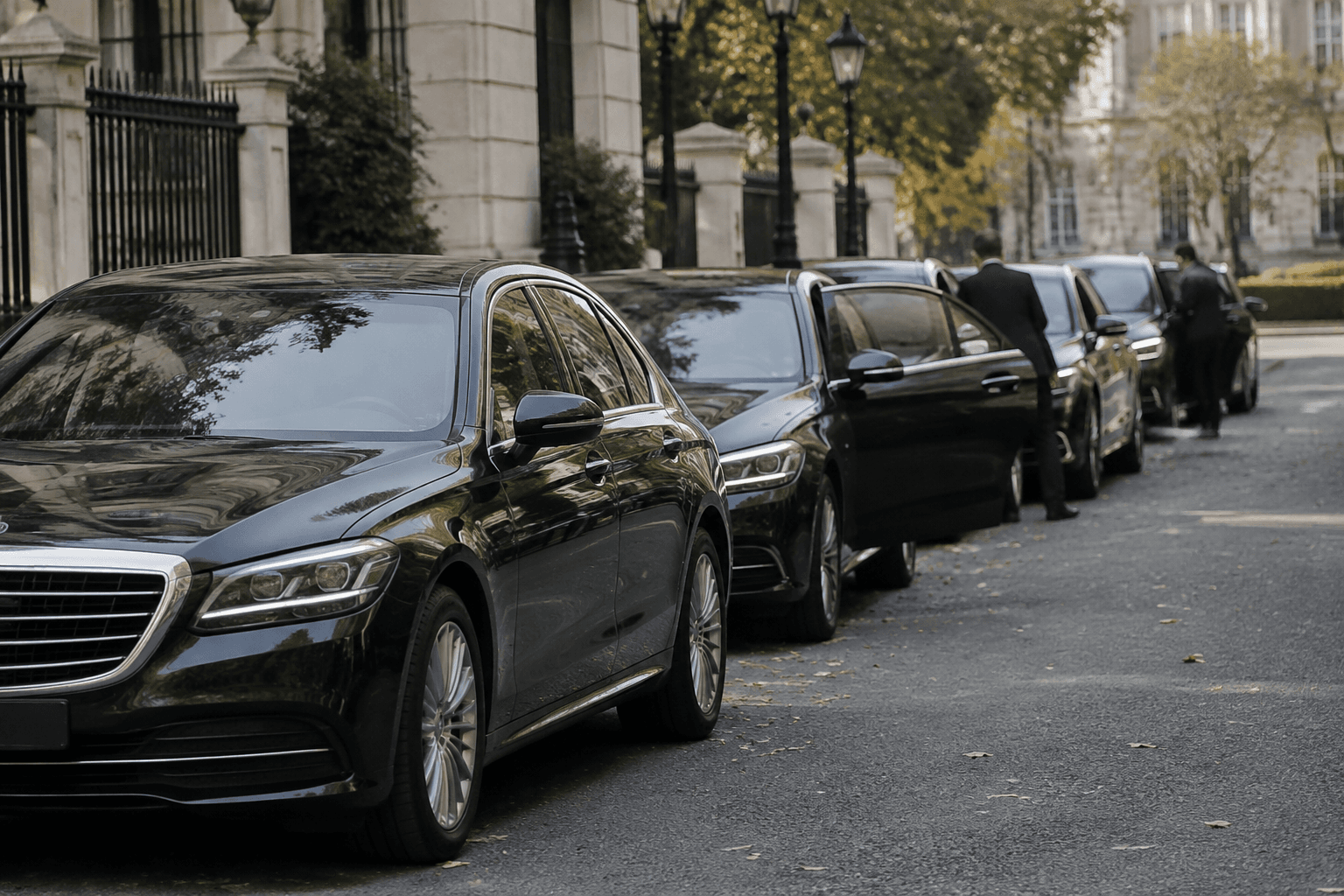
A row of black embassy cars waiting on a wide city street as staff open doors in the background
WORLD · DIPLOMACY

Marco Rubio's India visit bypasses New Delhi as tensions with Washington linger

US secretary of state Marco Rubio visited India for the second time in 2026 but skipped New Delhi and did not meet prime minister Narendra Modi, instead holding meetings in Mumbai and Jamnagar five months after his first trip as secretary of state.

By LiveDigestPublished Tuesday, October 27, 2026 · 10:24 GMT | 4 min read

A row of black embassy cars waiting on a wide city street as staff open doors in the background

01 / DIPLOMACY

An itinerary that left the capital out

Marco Rubio visited India for the second time in 2026 last week, but the trip broke with diplomatic convention: he bypassed New Delhi and did not meet the prime minister, Narendra Modi. Instead, the US secretary of state traveled to Mumbai, the financial capital, where he met India's foreign minister Subrahmanyam Jaishankar along with business leaders.

  • Rubio also traveled to Jamnagar, a small Gujarati town home to Reliance Industries' colossal oil refinery complex
  • In Jamnagar he met Mukesh Ambani, the chair of Reliance
  • The trip came just five months after his first visit to India as secretary of state

The visit lands at a low point. Bilateral ties have come under strain under the second Trump administration, particularly over tariffs and India's purchase of Russian oil.

02 / DIPLOMACY

What the venue choices signal

Milan Vaishnav, who directs the South Asia Program at the Carnegie Endowment for International Peace and has described Trump 2.0 as "unbound", argued that the itinerary was deliberately drawn up with business in mind. The venues, he told the report's authors, were chosen with intent: "I do think the choice of venues was intentional. This administration and, particularly, this president, sees foreign policy through the lens of 'deal-making'".

"I do think the choice of venues was intentional. This administration and, particularly, this president, sees foreign policy through the lens of 'deal-making'"

In his reading, one of Rubio's objectives in Jamnagar was to encourage Reliance and, by extension, India to process more Venezuelan crude oil, a push that comes amid high US petrol prices ahead of the 3 November midterms. Vaishnav cautioned that anyone claiming certainty about the administration's foreign policy is overstating the case: in his words, anyone who says they know exactly what is going on and how it fits a neat theory of the world is not being honest.

03 / DIPLOMACY

The Pakistan reversal

For Vaishnav, the biggest plot twist has been the Trump administration's embrace of Pakistan after the May 2025 conflict with India. The contrast with the recent past is stark: under Joe Biden, the US left office without the president ever having made a phone call to his counterpart in Pakistan.

  • In June, Trump welcomed Pakistan's army chief, Asim Munir, to the White House, after Munir called for the president to be nominated for the Nobel peace prize
  • Pakistan's reversal in fortunes gathered pace after the May conflict with India, which Trump took credit for ending
  • Trump also thanked Pakistan for its help in nabbing a suspect linked to a 2021 bombing in Afghanistan that killed 13 US service members

Vaishnav chalked the reversal up to a few factors: Trump's well-known strongman envy, Pakistan's savvy diplomacy, and the prospect of energy and crypto deals involving the US president's inner circle. He argued that Modi's personal rapport with Trump and 25 years of investment in the bilateral relationship offer no guarantee against a 180-degree reversal in US policy.

04 / DIPLOMACY

Strains and quiet resilience

The frictions in us india relations are concrete. Trump imposed a punitive 50% tariff on India in 2025, which was reduced to 18% earlier this year, and there is still no comprehensive trade deal.

The White House's H-1B visa and green card restrictions have disproportionately affected Indian workers in Silicon Valley, and earlier this month New Delhi branded remarks made by the US vice-president, JD Vance, about Indian professionals as "deeply offensive". In January, the US commerce secretary, Howard Lutnick, blamed the lack of an india us trade deal on Modi's failure to phone Trump, a characterisation that New Delhi has disputed.

Yet the underlying numbers tell a more complicated story:

  • Bilateral trade between India and the US reached a record high in 2025
  • Nearly $68bn worth of AI infrastructure investment in India has been pledged by US technology companies
  • The two countries have carried out a record number of joint military exercises this year

Vaishnav's Carnegie colleague Sameer Lalwani argued that the US relationship with India remains more resilient than the political rhetoric may suggest, with quiet, but nonetheless strategic, progress being made. That assessment is where the report leaves the story: record trade and pledged investment running beneath a public relationship defined by tariffs and skipped meetings.
Continue reading

More from World.

A row of black embassy cars waiting on a wide city street as staff open doors in the background
WORLD · DIPLOMACY

Marco Rubio's India visit bypasses New Delhi as tensions with Washington linger

US secretary of state Marco Rubio visited India for the second time in 2026 but skipped New Delhi and did not meet prime minister Narendra Modi, instead holding meetings in Mumbai and Jamnagar five months after his first trip as secretary of state.

By LiveDigestPublished Tuesday, October 27, 2026 · 10:24 GMT | 4 min read

A row of black embassy cars waiting on a wide city street as staff open doors in the background

01 / DIPLOMACY

An itinerary that left the capital out

Marco Rubio visited India for the second time in 2026 last week, but the trip broke with diplomatic convention: he bypassed New Delhi and did not meet the prime minister, Narendra Modi. Instead, the US secretary of state traveled to Mumbai, the financial capital, where he met India's foreign minister Subrahmanyam Jaishankar along with business leaders.

  • Rubio also traveled to Jamnagar, a small Gujarati town home to Reliance Industries' colossal oil refinery complex
  • In Jamnagar he met Mukesh Ambani, the chair of Reliance
  • The trip came just five months after his first visit to India as secretary of state

The visit lands at a low point. Bilateral ties have come under strain under the second Trump administration, particularly over tariffs and India's purchase of Russian oil.

02 / DIPLOMACY

What the venue choices signal

Milan Vaishnav, who directs the South Asia Program at the Carnegie Endowment for International Peace and has described Trump 2.0 as "unbound", argued that the itinerary was deliberately drawn up with business in mind. The venues, he told the report's authors, were chosen with intent: "I do think the choice of venues was intentional. This administration and, particularly, this president, sees foreign policy through the lens of 'deal-making'".

In his reading, one of Rubio's objectives in Jamnagar was to encourage Reliance and, by extension, India to process more Venezuelan crude oil, a push that comes amid high US petrol prices ahead of the 3 November midterms. Vaishnav cautioned that anyone claiming certainty about the administration's foreign policy is overstating the case: in his words, anyone who says they know exactly what is going on and how it fits a neat theory of the world is not being honest.

"I do think the choice of venues was intentional. This administration and, particularly, this president, sees foreign policy through the lens of 'deal-making'"
03 / DIPLOMACY

The Pakistan reversal

For Vaishnav, the biggest plot twist has been the Trump administration's embrace of Pakistan after the May 2025 conflict with India. The contrast with the recent past is stark: under Joe Biden, the US left office without the president ever having made a phone call to his counterpart in Pakistan.

  • In June, Trump welcomed Pakistan's army chief, Asim Munir, to the White House, after Munir called for the president to be nominated for the Nobel peace prize
  • Pakistan's reversal in fortunes gathered pace after the May conflict with India, which Trump took credit for ending
  • Trump also thanked Pakistan for its help in nabbing a suspect linked to a 2021 bombing in Afghanistan that killed 13 US service members

Vaishnav chalked the reversal up to a few factors: Trump's well-known strongman envy, Pakistan's savvy diplomacy, and the prospect of energy and crypto deals involving the US president's inner circle. He argued that Modi's personal rapport with Trump and 25 years of investment in the bilateral relationship offer no guarantee against a 180-degree reversal in US policy.

04 / DIPLOMACY

Strains and quiet resilience

The frictions in us india relations are concrete. Trump imposed a punitive 50% tariff on India in 2025, which was reduced to 18% earlier this year, and there is still no comprehensive trade deal.

The White House's H-1B visa and green card restrictions have disproportionately affected Indian workers in Silicon Valley, and earlier this month New Delhi branded remarks made by the US vice-president, JD Vance, about Indian professionals as "deeply offensive". In January, the US commerce secretary, Howard Lutnick, blamed the lack of an india us trade deal on Modi's failure to phone Trump, a characterisation that New Delhi has disputed.

Yet the underlying numbers tell a more complicated story:

  • Bilateral trade between India and the US reached a record high in 2025
  • Nearly $68bn worth of AI infrastructure investment in India has been pledged by US technology companies
  • The two countries have carried out a record number of joint military exercises this year

Vaishnav's Carnegie colleague Sameer Lalwani argued that the US relationship with India remains more resilient than the political rhetoric may suggest, with quiet, but nonetheless strategic, progress being made. That assessment is where the report leaves the story: record trade and pledged investment running beneath a public relationship defined by tariffs and skipped meetings.
Continue reading

More from World.

A row of black embassy cars waiting on a wide city street as staff open doors in the background
WORLD · DIPLOMACY

Marco Rubio's India visit bypasses New Delhi as tensions with Washington linger

By LiveDigest

A row of black embassy cars waiting on a wide city street as staff open doors in the background

01 / DIPLOMACY

An itinerary that left the capital out

Marco Rubio visited India for the second time in 2026 last week, but the trip broke with diplomatic convention: he bypassed New Delhi and did not meet the prime minister, Narendra Modi. Instead, the US secretary of state traveled to Mumbai, the financial capital, where he met India's foreign minister Subrahmanyam Jaishankar along with business leaders.

  • Rubio also traveled to Jamnagar, a small Gujarati town home to Reliance Industries' colossal oil refinery complex
  • In Jamnagar he met Mukesh Ambani, the chair of Reliance
  • The trip came just five months after his first visit to India as secretary of state

The visit lands at a low point. Bilateral ties have come under strain under the second Trump administration, particularly over tariffs and India's purchase of Russian oil.

02 / DIPLOMACY

What the venue choices signal

Milan Vaishnav, who directs the South Asia Program at the Carnegie Endowment for International Peace and has described Trump 2.0 as "unbound", argued that the itinerary was deliberately drawn up with business in mind. The venues, he told the report's authors, were chosen with intent: "I do think the choice of venues was intentional. This administration and, particularly, this president, sees foreign policy through the lens of 'deal-making'".

In his reading, one of Rubio's objectives in Jamnagar was to encourage Reliance and, by extension, India to process more Venezuelan crude oil, a push that comes amid high US petrol prices ahead of the 3 November midterms. Vaishnav cautioned that anyone claiming certainty about the administration's foreign policy is overstating the case: in his words, anyone who says they know exactly what is going on and how it fits a neat theory of the world is not being honest.

"I do think the choice of venues was intentional. This administration and, particularly, this president, sees foreign policy through the lens of 'deal-making'"
03 / DIPLOMACY

The Pakistan reversal

For Vaishnav, the biggest plot twist has been the Trump administration's embrace of Pakistan after the May 2025 conflict with India. The contrast with the recent past is stark: under Joe Biden, the US left office without the president ever having made a phone call to his counterpart in Pakistan.

  • In June, Trump welcomed Pakistan's army chief, Asim Munir, to the White House, after Munir called for the president to be nominated for the Nobel peace prize
  • Pakistan's reversal in fortunes gathered pace after the May conflict with India, which Trump took credit for ending
  • Trump also thanked Pakistan for its help in nabbing a suspect linked to a 2021 bombing in Afghanistan that killed 13 US service members

Vaishnav chalked the reversal up to a few factors: Trump's well-known strongman envy, Pakistan's savvy diplomacy, and the prospect of energy and crypto deals involving the US president's inner circle. He argued that Modi's personal rapport with Trump and 25 years of investment in the bilateral relationship offer no guarantee against a 180-degree reversal in US policy.

04 / DIPLOMACY

Strains and quiet resilience

The frictions in us india relations are concrete. Trump imposed a punitive 50% tariff on India in 2025, which was reduced to 18% earlier this year, and there is still no comprehensive trade deal.

The White House's H-1B visa and green card restrictions have disproportionately affected Indian workers in Silicon Valley, and earlier this month New Delhi branded remarks made by the US vice-president, JD Vance, about Indian professionals as "deeply offensive". In January, the US commerce secretary, Howard Lutnick, blamed the lack of an india us trade deal on Modi's failure to phone Trump, a characterisation that New Delhi has disputed.

Yet the underlying numbers tell a more complicated story:

  • Bilateral trade between India and the US reached a record high in 2025
  • Nearly $68bn worth of AI infrastructure investment in India has been pledged by US technology companies
  • The two countries have carried out a record number of joint military exercises this year

Vaishnav's Carnegie colleague Sameer Lalwani argued that the US relationship with India remains more resilient than the political rhetoric may suggest, with quiet, but nonetheless strategic, progress being made. That assessment is where the report leaves the story: record trade and pledged investment running beneath a public relationship defined by tariffs and skipped meetings.

Continue reading

More from World.