Miatta Fahnbulleh suggested Shabana Mahmood's migration policy will 'prolong integration'
Energy secretary Miatta Fahnbulleh told a September meeting in her Peckham constituency that a longer settlement process could affect integration, remarks later removed from her website as not a true representation of her views. The comment came as the government proposes doubling the standard qualifying period for indefinite leave to remain from five years to 10.
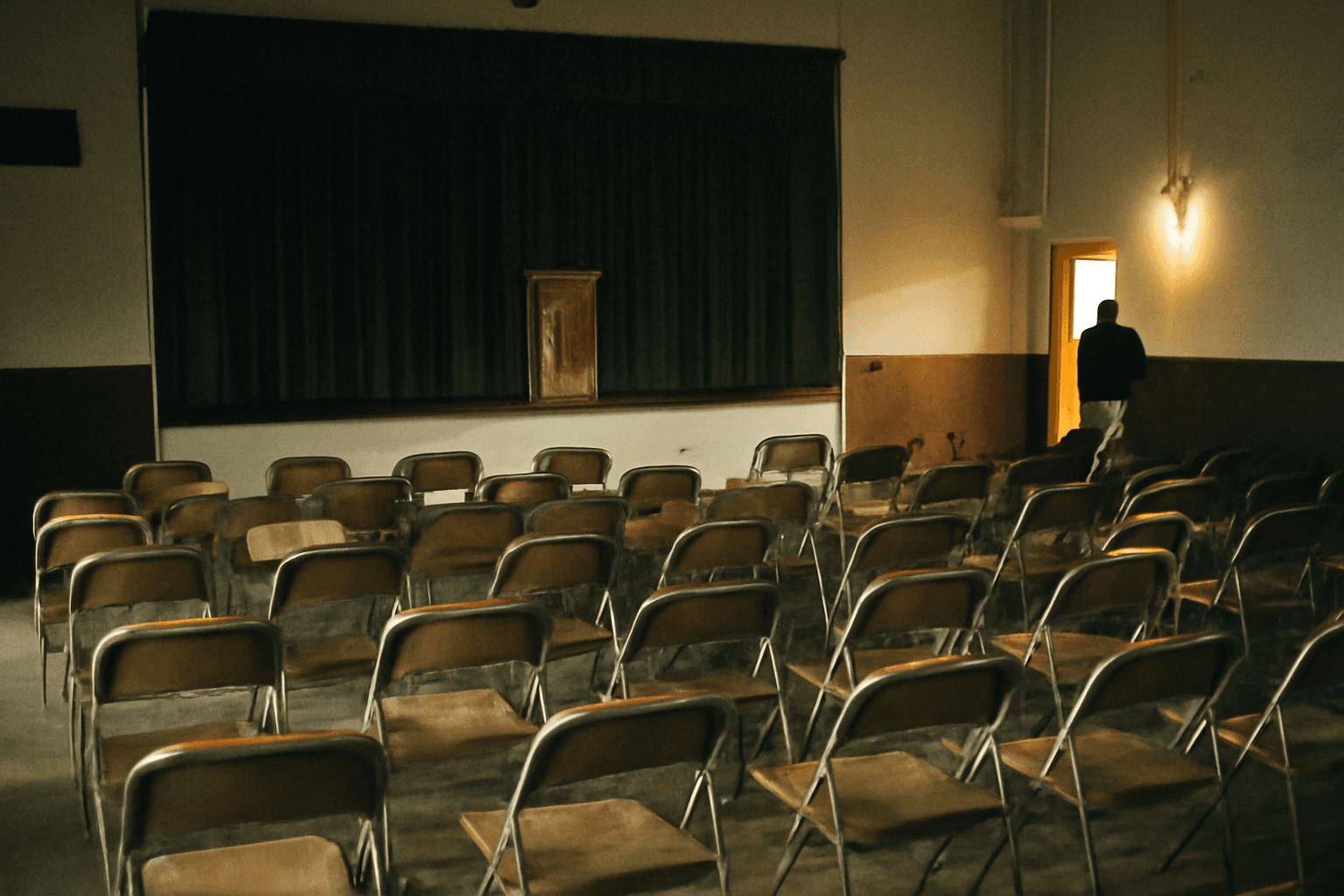
Folding chairs arranged in rows in a community hall in Peckham before a residents' meeting begins.
Miatta Fahnbulleh, the energy secretary, appeared to question Shabana Mahmood's migration policy in remarks to constituents, warning that making people wait longer for settlement could slow the building of community cohesion. The comments, made at a September town hall meeting in Peckham, later disappeared from her constituency website after her office said the write-up had not accurately captured her views.
What Fahnbulleh told residents
At the meeting in her south London constituency, Fahnbulleh was reported to have told residents that stretching out the wait for settlement carries a cost for how communities come together.
"If we continually prolong the time people have to wait for settlement, we can also prolong the process of building cohesion."
She also spoke about the state of the wider argument over immigration, telling constituents the debate had become "increasingly depressing and toxic". Fahnbulleh called for a more compassionate system, saying the asylum process is broken and needs reform, and said she wanted "a system based on control and compassion, with a much stronger focus on integration".
She held up her own constituency as proof of what that approach can deliver, saying "Peckham is a good example of what can happen when communities are built deliberately", and urged raising the level of debate by challenging divisive rhetoric and "talking about immigration with care, control and compassion".
The removed critique
The remarks surfaced in a write-up of the September community meeting posted on Fahnbulleh's constituency website, where she was said to have concerns that a longer settlement process could affect integration. What happened next:
- The write-up was first highlighted by the Telegraph.
- The critique was then removed from the website.
- Fahnbulleh said the post was not a true representation of her views.
- Her office said the remarks had been paraphrased and would be rewritten to reflect more accurately what she told residents.
Mahmood's proposed settlement rules
Fahnbulleh's comments land in the middle of a live debate over the government's settlement proposals, which Mahmood has put forward. The key changes:
- The standard qualifying period for indefinite leave to remain would rise from five years to 10.
- There are likely to be concessions for some professions, including care workers.
- The pathway to permanent settlement for refugees would be extended to up to 20 years, with reviews every 30 months.
The government has yet to publish its final response to the consultation on the proposals.
Fahnbulleh's own history and cabinet voices
Before entering politics, Fahnbulleh arrived in Britain as a child refugee from the civil war in Liberia. On the Guardian's Politics Weekly podcast last month, she said her family would have found Mahmood's changes "tough", and described representing a hugely diverse constituency of first, second and third-generation immigrants, where "how we navigate this landscape has been tough".
She argued that migrants who work and contribute to their communities, including in the health service, should be welcomed, saying "this should be a country that welcomes you", and added: "I wouldn't be here if that wasn't the way that we structured our immigration system."
Her position sits alongside others in cabinet. Housing secretary Angela Rayner said last month that the unamended proposals would unfairly penalise care staff who had "moved their lives here to look after our loved ones". The prime minister, Andy Burnham, has said he is committed to the bulk of the changes.
With the final response to the consultation still unpublished, Mahmood is believed to be considering changing her plans.