
Knesset speaker election: Matan Kahana wins with 66 votes backed by Netanyahu's opponents
Israel's parliament, the Knesset, elected Matan Kahana as its new speaker on Tuesday in a 66-52 vote, replacing Benjamin Netanyahu ally Amir Ohana with an ally of coalition formator Gadi Eisenkot.
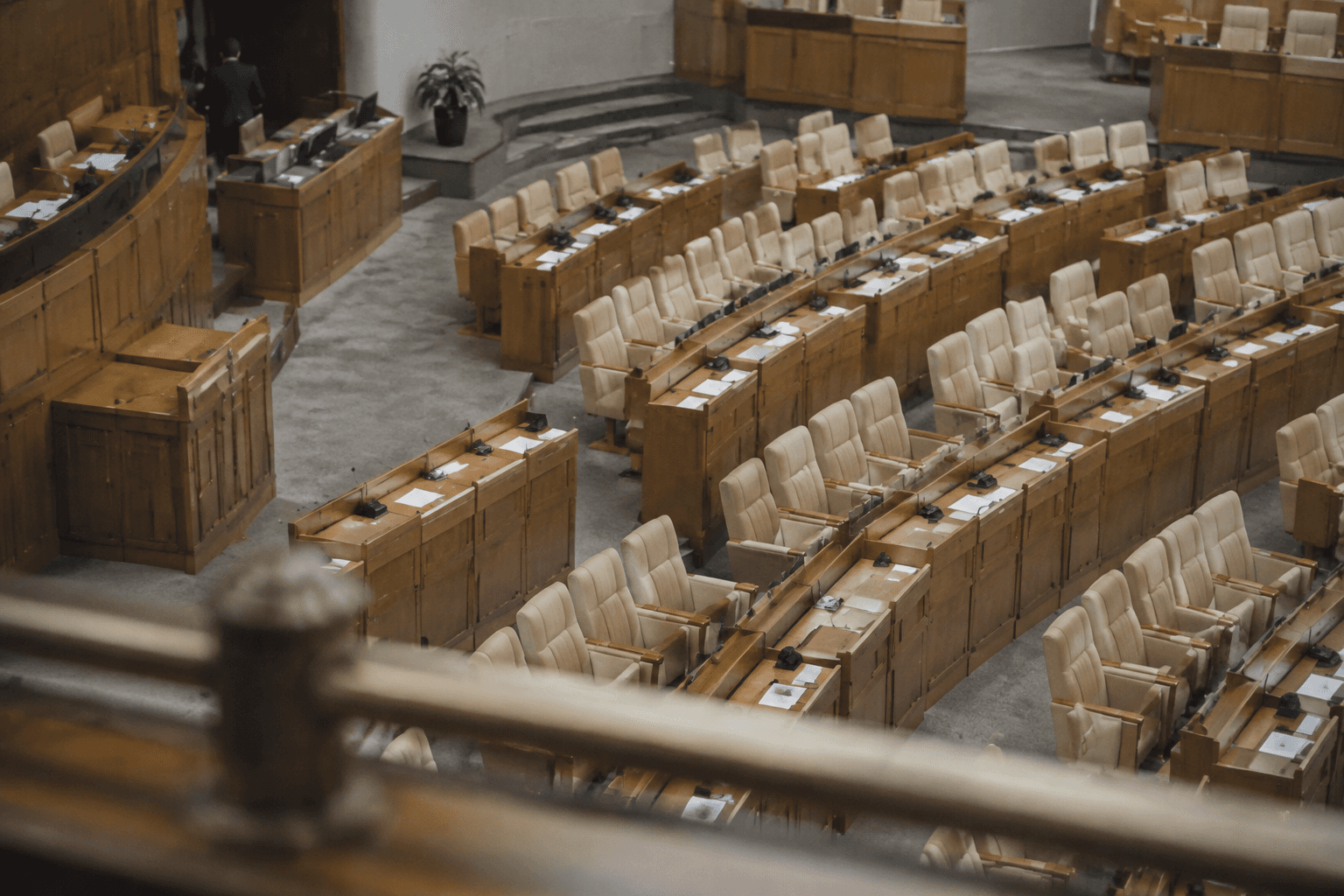
Empty rows of beige seats in a parliamentary chamber seen from the visitors' gallery during a break between votes.
Israel's parliament, the Knesset, chose a new speaker on Tuesday in a knesset speaker election that breaks with the outgoing government of Benjamin Netanyahu. Matan Kahana, an ally of Gadi Eisenkot - the party leader now working to form the next government - took the chair with 66 votes in the 120-member chamber.
A seven-hour debate, then 66 votes
The vote followed what the report calls a stormy debate that ran over seven hours. Kahana's support came from an unusual combination of blocs:
- The Jewish-led opposition parties, who backed him in the 120-member chamber
- The Arab-led parties, whose backing was also counted in his total
Netanyahu's bloc put forward Ofir Katz, who received 52 votes. Kahana replaced Amir Ohana, a Netanyahu ally, in the role. Speaking ahead of the vote, Eisenkot praised the appointment: "The appointment of Matan Kahana as Knesset speaker is a worthy democratic move that reflects the absolute majority in favour of change," he said.
What the change is meant to roll back
According to the report, the vote is a key step toward rolling back policies passed by the outgoing government led by Netanyahu. Last week, Eisenkot's bloc and unaffiliated Arab-led parties introduced bills that would set term limits on the role of prime minister, form a government-led inquiry into the Hamas-led 7 October 2023 attacks, and reverse laws limiting judicial powers.
Why the speaker's chair matters for legislation
Assaf Shapira of the Israel Democracy Institute said the role matters because of the pace it sets. "It's important because there is not much time, because the speaker of the Knesset can make the legislative process much, much faster or much slower," he said.
The procedure itself is demanding: a bill must be introduced on the floor, considered in committee and voted on several times on the floor before passing, a path that could complicate passage before time runs out.
Shapira said the bloc is likely to prioritise repealing laws that expand the government's role in appointing judges and weaken the attorney general. "It's very easy to abolish these laws because no new institution has to be created," he said. Establishing a body to investigate the 7 October attacks would be easier, he added, and carry greater legitimacy once a government is formed.
The clock on coalition talks
The vote came weeks after the parliamentary elections on 27 October 2026, in which Netanyahu and his allies lost their parliamentary majority, after which the president tasked Eisenkot with forming a coalition. Eisenkot now has up to five more weeks to secure enough alliances to form a coalition government.
If he fails, the Israeli president could give Netanyahu an opportunity to try, likely handing Likud control of the key committee - the temporary body that decides much of the Knesset's work until a government is formed, currently headed by Roy Folkman of Eisenkot's Yashar party.


