
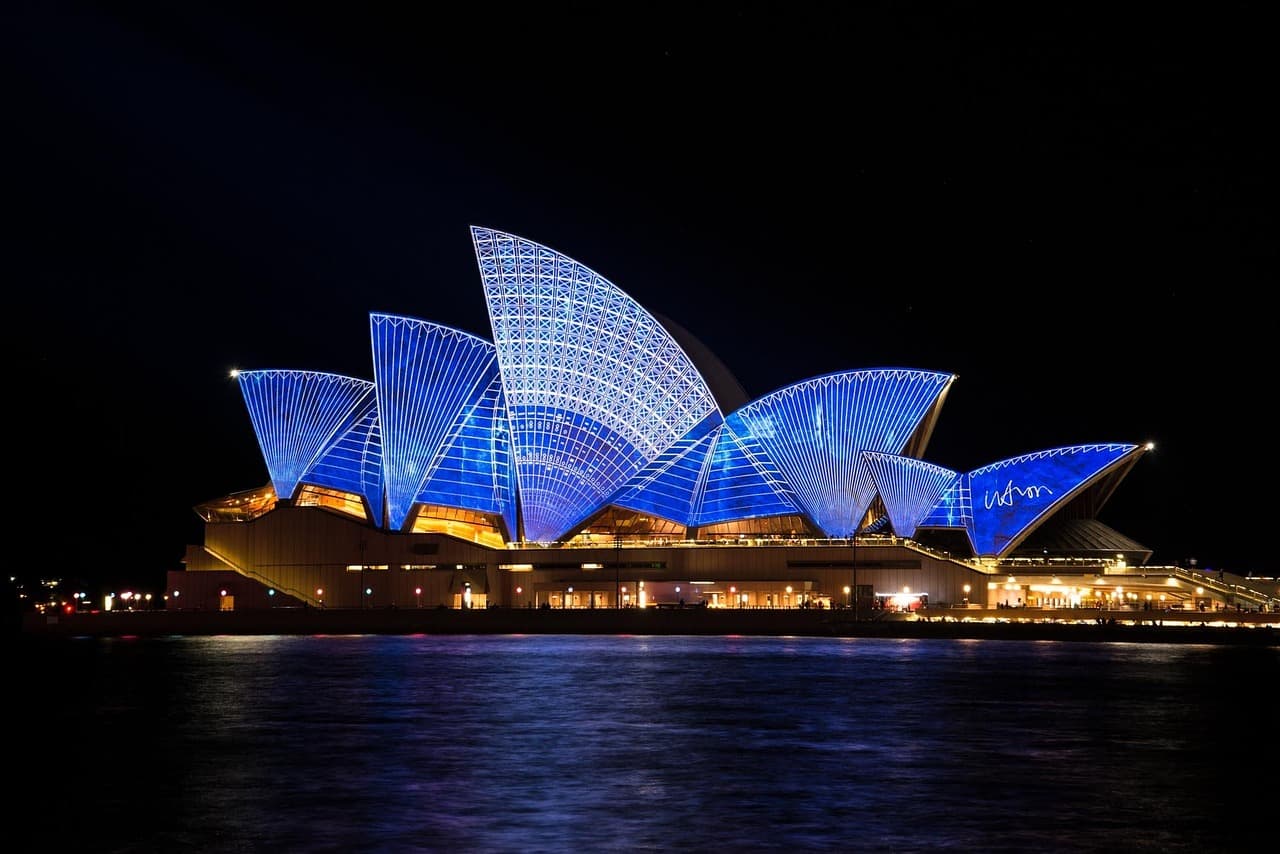
Jacinda Ardern at Sydney Opera House urges politicians to rebuild trust by building financial security
Former New Zealand prime minister Jacinda Ardern told Australian politicians from the stage of the Sydney Opera House on Sunday that they were worsening political polarisation, and advised rebuilding trust by building financial security.
Jacinda Ardern at Sydney Opera House urges politicians to rebuild trust by building financial security
Former New Zealand prime minister Jacinda Ardern delivered a message to Australian politicians from the stage of the Sydney Opera House on Sunday: they were exacerbating political polarisation within society and needed to be better. Her prescription was to rebuild trust by building financial security in a time of deep insecurity, while avoiding binary thinking and the language of violence.
A message to Australian politicians
Ardern spoke during a forum with the author Anna Funder. The event was advertised as bringing together two of the world's leading thinkers on the question of whether we can disagree without becoming divided.
On polarisation, she said there are things leaders could be doing, but that at present they are going in the wrong direction.
There are things we could be doing but, right now, we're making it worse, not better.
The talk came a fortnight after the alleged attack on independent MP Helen Haines. Ardern did not mention the incident explicitly but stressed that politicians and leaders needed to be aware of the tone they set.
Insecurity, blame and binary thinking
Ardern traced rising insecurity to globalisation, saying people began attacking institutions like the World Trade Organization. Mistrust, she argued, has been building for years, and politicians failed to address its core - instead weaponising it with blame and distrust of others.
In her account, responses that offered blame rather than answers cleared the path for leaders like Donald Trump, with Brexit an example of what she described as a "here's what you blame" answer.
The result, she told the audience, runs deeper than public scepticism:
- Mistrust has built up over years without the core problem being fixed
- Politicians weaponised it with blame and distrust of others
- The world now faces not just a crisis of trust but a crisis of leadership
Social media and a changed view
Ardern entered the New Zealand parliament in 2008 as its youngest sitting MP - and the first to arrive with an existing social media account. She admitted she was naive not to think about the fact that this meant the manipulation of information.
She also argued that social media makes it harder for people to change their views, because opinions are recorded and held in time.
Her view of the online world changed on 15 March 2019, the day of the Christchurch mosque shootings. She described how the attacker was radicalised on YouTube and used Facebook to broadcast and incite violence.
That's when I fully understood the weaponisation.
Tone, humility and empathy
Ardern warned that deep moral certainty in one's own views makes engagement harder: once you decide others hold unacceptable positions, you couldn't possibly engage with them anymore, and she said it has made problem-solving much more difficult.
Against that, she set empathy in politics. It brings humility, she said, and it brings curiosity - qualities she argued politics is short of.
If we had more humility in politics – what a difference that would make.
Ardern, 46, moved to Australia earlier this year and purchased a house on Sydney's northern beaches in September. Last week she revealed she would be lecturing and mentoring at the University of Sydney.


