
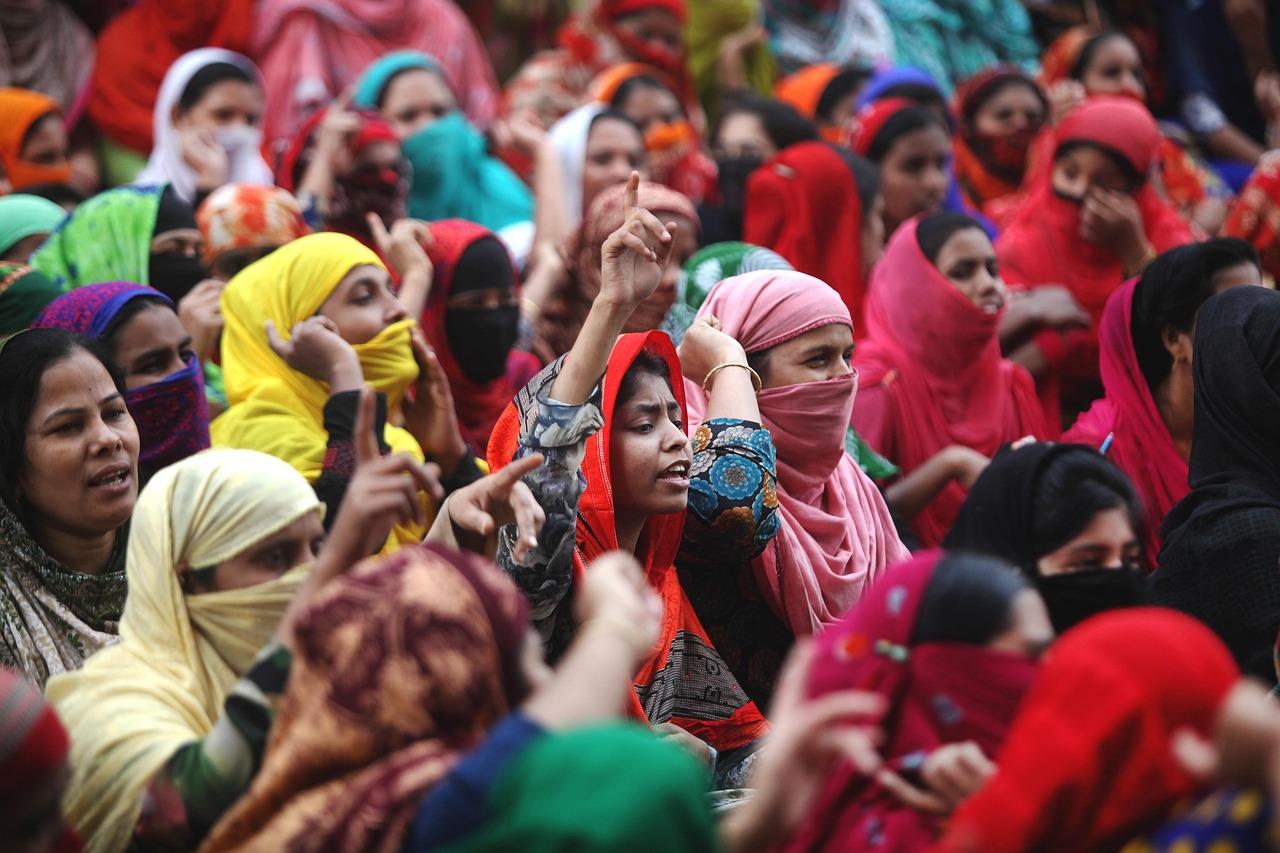
Gen Z protests sweep the world, from Dhaka to Serbia to Brazil
Researchers have documented at least 25 gen Z protests worldwide, in which the generation aged roughly 14 to 29 - about a third of the world's population - has driven political upheaval from Bangladesh's 2024 revolution to recent election wins in Serbia and Brazil.
Gen Z protests sweep the world, from Dhaka to Serbia to Brazil
The scale of the wave is now documented: researchers count at least 25 protests around the world in which gen Z - roughly those between the ages of 14 and 29 - has played a role, from a revolution in Bangladesh to election victories in Serbia and Brazil. The generation accounts for about a third of the world's population, and its political activity is no longer isolated to any one region.
"Gen Z may be experiencing a global political awakening," Erica Chenoweth, a political scientist at Harvard Kennedy School, wrote in a recent essay.
What the protests are about
The demands vary by country, but the targets repeat: corruption and an unequal playing field, alongside calls for more investment in education, affordable housing and action on the climate crisis. Chenoweth's diagnosis is that the generation is rising and tired of political systems failing them.
Arancha González, dean of the Paris School of International Affairs, told Corriere della Sera that the shared spark is institutional. "The reasons are different, but they share the same spark: the breakdown of the social contract," she said.
The generation has come of age amid conflicts such as the Israel-Gaza war, the escalating climate crisis and the rise of nationalism. The cases span continents: school students in France demanding better working conditions, protesters in Spain pitching tents to rally for affordable housing, and in Germany a movement organised by a group calling themselves Gen Z regelt!, or Gen Z will sort this, which drew thousands to protest the cost of living and call for more education, health and climate investment.
Bangladesh, Serbia and Brazil: from streets to power
The clearest examples of youth-led movements converting protest into power come from three countries:
- In 2024, students in Dhaka, Bangladesh, staged what was described as the world's first successful gen Z-led revolution, which began over a quota law. The protests snowballed into discontent against prime minister Sheikh Hasina, who resigned and fled the country by helicopter two months later.
- In Serbia, students mounted a challenge to a government that had taken increasing control of the media and placed party loyalists throughout state institutions. Late last month, the students' movement moved from street protest into government when it unseated Aleksandar Vučić in elections, ending his party's 14 years in power. Serbian youth cycled across Europe and ran ultramarathons to make their voices heard.
- In Brazil, the combination of street protest and social media helped drive Luiz Inácio Lula da Silva's comeback to win the presidential election last month. Lula lost the first round to rightwing senator Flávio Bolsonaro before students from the Fluminense Federal University mobilised in a pro-Lula march, setting off a wave of similar actions across the country. Congressman and Lula ally André Janones, 42, created a WhatsApp channel called "Lula's Army" that attracted millions to boost pro-Lula content.
On his victory night, Lula credited the streets. "I want to thank the generosity of Brazil's young people who took to the streets to defend democracy," he said.
How the movements organise
Analysts Cait Dallaire and Sebastian Dittgen wrote that the unique feature of the current movement is its mobilisation infrastructure. TikTok and X amplify and accelerate grievances; Discord servers and group chats enable decentralised planning, alongside VPNs and mirrored content.
That infrastructure shows up in newer campaigns:
- In India, the Cockroach movement began as online satire and grew into a show of force against Narendra Modi's government; this summer, Cockroach-led protests forced the resignation of the country's education minister.
- In the US, roughly 50,000 volunteers, with young people at their heart, powered Zohran Mamdani's New York mayoral campaign alongside its social media savvy. According to the New York Times, "volunteering for Mr Mamdani's campaign became a salve" for young New Yorkers.
- Hundreds in North Carolina marched in the heat to the polls last month after their historically Black university was denied a polling site, and thousands across the country have responded to the Cornell 7 case by skipping class, protesting and launching occupations.
A heavy-handed response
The movements frequently meet force. Research suggests youth-led protests tend to be met with higher levels of repression, despite the fact that they are no more likely to use violence than others.
"Because they question the distribution of economic and political power, gen Z-led protests have invariably been met with state violence," according to Civicus.
The costs have been severe. After the 2024 Bangladesh protests, UN human rights experts said as many as 1,400 people had been killed, mostly by security forces, with thousands more severely injured.
In India, security forces have responded by detaining thousands, unleashing teargas and beating people with lathis, or wooden clubs; in October, authorities barricaded roads and shut down the internet and public transport in central Delhi.
Morocco's 2025 movement, known as Gen Z-212, targeted corruption, neglected public services and the lack of opportunities. In its aftermath, more than 2,000 people were charged and many received harsh prison sentences.
In Mexico, youth-led protests over corruption and crime led to clashes with police in which dozens of people were arrested. In France, lawyers and rights groups say several teenagers have suffered war-like injuries from police weapons. In the US, the pro-Palestine student movement that shaped much youth organising saw thousands of arrests, expulsions and suspensions, and many schools instated anti-protest policies.
For one participant, the grievance is simple. Bilal Narjissi, a 17-year-old high school student in a suburb north of Paris, told the Associated Press: "We all agree on one point. That young people are treated like children, far too much, and that they aren't listened to enough."
Chenoweth's assessment is that the wave may mark the beginning of a "profound generational transformation in world affairs" - one that could be capable of countering the global trend of democratic backsliding. The movements remain active, from the occupations over the Cornell 7 case in the US to the protest wave in India.


