France protests: police fire teargas as tens of thousands march nationwide
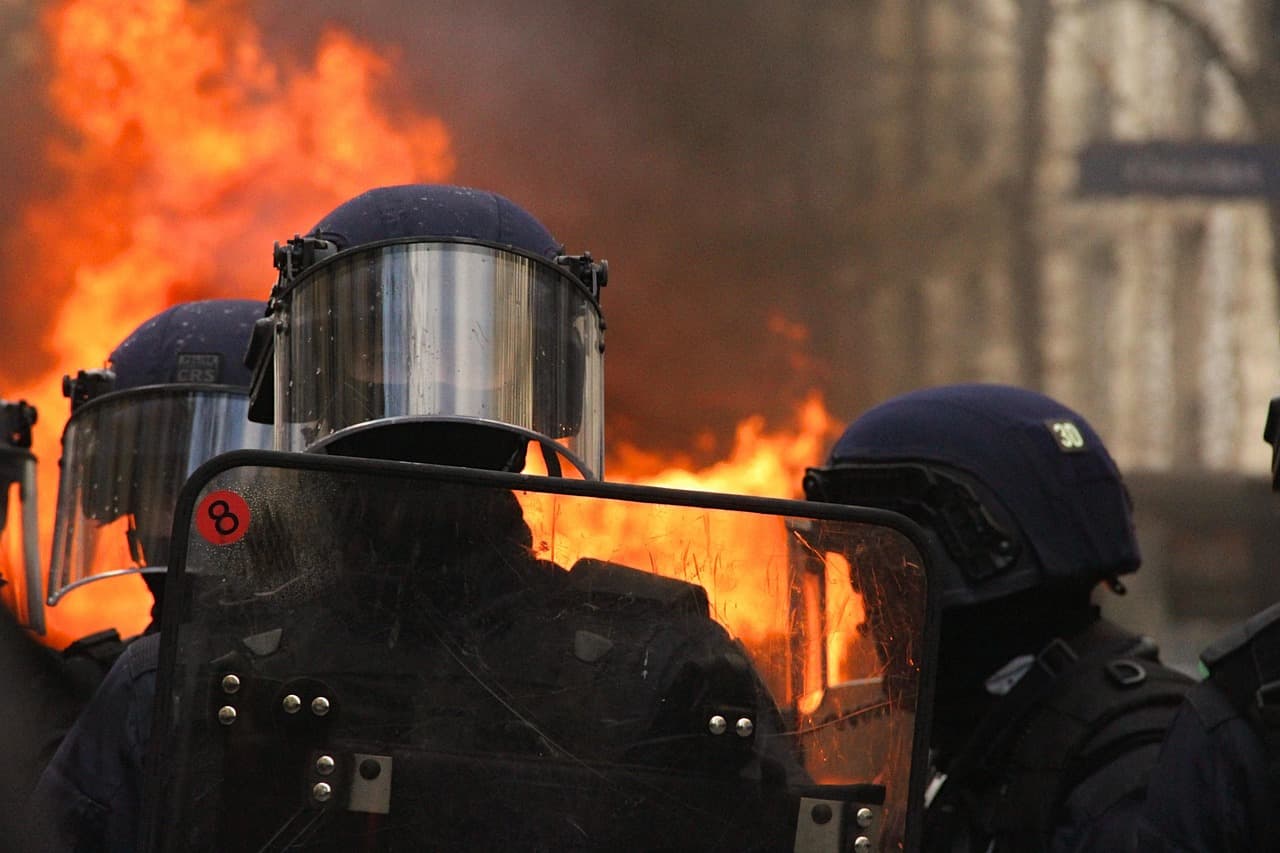
Tens of thousands joined France protests across the country on Saturday, with police firing teargas and clashing with demonstrators supporting student grievances, high price anger and welfare grievances.
France protests: police fire teargas as tens of thousands march nationwide
From schools to a nationwide movement
Saturday's mobilisation grew out of demonstrations that began last month at schools in the poor northern suburbs of Paris, where anger centred on teacher absences and shabby facilities. Since then, the student protests have widened into a nationwide movement against inequality, weak public spending and falling standards.
Organisers on Saturday called for teachers and students, labourers, pensioners and farmers to join and widen the protests further. The CGT union backed the movement, calling for "higher wages and pensions, lower prices and the protection of public services that meet people's needs". The cost-of-living anger behind the call is measurable: about 45% of French people are worried about the rising cost of living, according to a 2,000-person survey conducted in October.
- The movement followed social media calls to revive the gilets jaunes, the yellow vests movement that emerged in 2018 against social injustice
- Protesters in hi-vis vests blocked streets, an echo of the unrest that dogged President Emmanuel Macron's previous term, and rubbish bins were set alight in Marseille
- French authorities said 140 protests involving 32,800 people had been recorded outside Paris by midday, blaming the violence on the "ultra-left"
Violence in Marseille and Paris
The day's sharpest flashpoint came in Marseille. There, demonstrators used security barriers taken from the street as a ram to force the town hall door and got inside briefly; one of them marked a wall inside with a sprayed "A" for anarchy before officers cleared the building.
Around Place de la République in central Paris, a peaceful march turned violent. Masked rioters in black threw fireworks and paving stones, attacked a bank and looted a sports shop, and police responded with teargas. Wheelie bins, firecrackers and a lorry were set on fire; flames from the lorry spread to a nearby building, and residents shut their windows as teargas rose to roof level.
Lola, a 19-year-old demonstrator in Paris, put her reasons in plain terms:
"We are fighting because the cost of living is too harsh, because the price of fuel is too high."
French authorities detained dozens of protesters across the country, with more arrests expected.
Political fault lines and Macron's appeal
Political parties took sides ahead of the day: the left positioned itself on the side of the protesters while the right backed the police. Jean-Luc Mélenchon, the leader of the far-left France Unbowed party, marched in a demonstration on Tuesday and has expressed support for the student protesters.
On Friday, President Emmanuel Macron appealed for calm and respect for people and property as officials warned of possible violence. He said: "There is a constitutional right to protest and to express oneself, and I have always been vigilant and attentive that that right is fully respected." At the same time, he denounced as "unacceptable" the potential presence of people "solely to cause damage and create unrest".
Interior minister Laurent Nuñez had warned beforehand that hundreds of protest actions and more than 80 marches were expected nationwide, from spontaneous gatherings to street demonstrations and blockades. Police banned some proposed gatherings in central Paris, and at their request numerous Métro stations shut on Saturday - among them stops around the Champs-Élysées and close to the presidential palace, parliament and government offices.
Officers were out in force in central Paris, notably by the Avenue des Champs-Élysées and the Arc de Triomphe, both kept off the routes of the two official demonstrations.
A movement with echoes of the yellow vests
The hi-vis street blockades of Saturday carried the revival calls of a movement born in 2018. In recent weeks, the nationwide student protests have brought thousands of arrests, hundreds of injuries and schools set on fire, and the unrest has pushed into the presidential election campaign. The prime minister said more than 900 police officers had been injured.
- After a 15-year-old lost a hand, Nuñez suspended one type of police stun grenade against the young demonstrators, yet said it could still be used on Saturday
- On Tuesday, climate and social justice activist Greta Thunberg joined students at a school in the Paris suburb of Saint-Denis
- The police watchdog is investigating at least two dozen allegations of police violence
Macron is entering the final stretch of his presidency, leaving behind a polarised electorate and a badly fragmented political landscape. Authorities held dozens of protesters with more arrests expected, while the police watchdog examines at least two dozen allegations of police violence.