
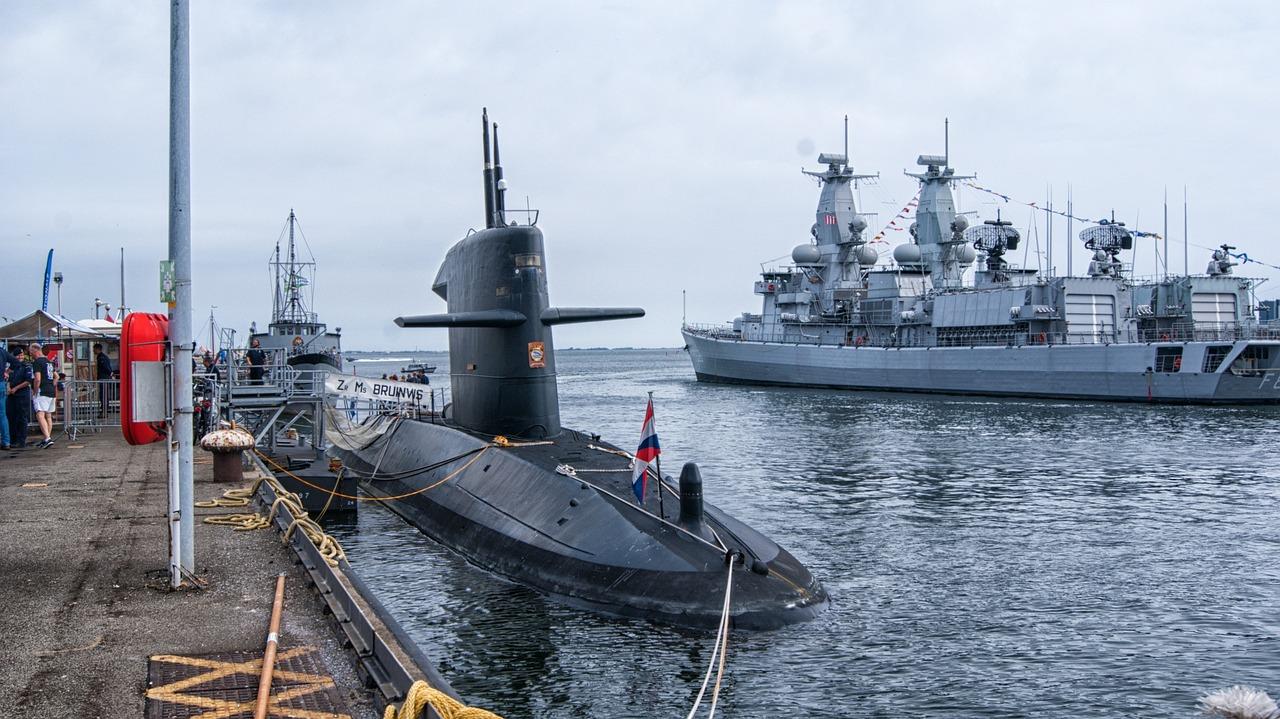
Aukus submarines would weaken US fleet for years, Congressional Budget Office warns
A report for the US Congress released on Friday by the Congressional Budget Office warned that selling Virginia-class nuclear-powered submarines to Australia under Aukus would reduce the US Navy's own attack submarine numbers for many years.
Aukus submarines would weaken US fleet for years, Congressional Budget Office warns
A report for the US Congress released on Friday morning by the Congressional Budget Office warned that selling Virginia-class nuclear-powered submarines to Australia under Aukus would reduce the US Navy's own attack submarine numbers for many years. The analysis also questioned whether vessels flying the Australian flag could be compelled into service in a conflict with China.
What the CBO found
The report's central warning was stark: the sale of attack submarines to Australia would leave the Navy with fewer of them for many years.
- Under Pillar One of Aukus, the US agreed to sell between three and five in-service Virginia-class submarines to Australia, beginning in 2032.
- The CBO found the US submarine industrial base is currently struggling to meet the Navy's demand for submarines.
- Increasing production further to replace attack submarines sold to Australia would add to the difficulties facing the Navy and its shipyards, the report found.
- The analysis also asked whether China would be less deterred if the United States cut its own attack submarine numbers to help Australia build a force of its own.
The report did offer a counterweight. It argued that boosting Australia's submarine fleet could offset, and might more than offset, the potential loss of US capability, because Australian submarines would be based in the Western Pacific region and could therefore respond more quickly to a conflict with China over Taiwan or South China Sea issues.
The Navy's newest shipbuilding plan leaves the Aukus agreement out of its projections altogether; a footnote concedes that handing any Virginia-class boat to Australia is not counted in its numbers.
A struggling industrial base
The reason the US cannot easily spare boats lies in its shipyards' output.
- US shipyards are producing Virginia-class submarines at a rate of 1.13 a year. Two a year are needed for US needs, and 2.33 a year to also transfer boats to Australia.
- Submarine-building rates have slowed over the past two decades, and Virginia-class submarines have been delayed between 24 and 36 months.
- Construction that took five to six years in the 2000s now takes an average of 10 to 11 years according to current schedules.
Who commands the boats
The CBO report noted that Australia would control its own submarines, and their participation in any particular conflict would not be guaranteed. That position has a history: in 2023, Australian defence minister Richard Marles said Australia would make no promises to deploy its submarines in a US conflict with China, and that future Australian submarines would be under the complete control of the Australian government of the day.
Earlier this month, Marles was unequivocal about the pact's future: "Aukus is happening, our alliance is happening, and all of that continues unimpeded."
Supporters, critics and alternatives
In Washington, US secretary of defense Pete Hegseth affirmed support for Aukus at a meeting with Marles in September, citing the two countries' commitment to advance the alliance and strengthen deterrence in the Pacific.
Critics remain unconvinced. They have said the US is overwhelmingly unlikely to be able to spare any in-service boats for Australia. Former Australian foreign affairs minister Bob Carr went further, saying both countries were "living a lie" in upholding the fiction that the deal would happen. "It's now conventional wisdom in Washington as well as in Canberra that we're not going to get the subs," Carr said.
The Congressional Research Service, in its latest report on Aukus issued in January, considered an "alternative division of labour" under which no Virginia-class submarines are ever transferred to Australian control. In that scenario, submarines earmarked for sale would be retained under US command and sailed out of Australian bases. The report argued that in a conflict or crisis with China over Taiwan, submarines under Australian command could not be ordered into operation, whereas US-commanded vessels from Australian bases could be deployed immediately.
US law governing Aukus states the president can only transfer a submarine to Australia if losing it will not degrade US undersea capabilities - and under the terms of the agreement, the US can refuse to transfer any submarines to Australia without penalty.


