Aukus submarines need hundreds more crew, retired admiral Peter Briggs warns
WORLD · SECURITY

Aukus submarines need hundreds more crew, retired admiral Peter Briggs warns

Retired admiral Peter Briggs has warned Australia will struggle to recruit and train enough sailors for its planned Aukus submarines, saying the submarine arm must grow toward 3,000 personnel from roughly 850 qualified submariners today.

By LiveDigestPublished Sunday, November 1, 2026 · 13:11 GMT | 3 min read

Aukus submarines need hundreds more crew, retired admiral Peter Briggs warns

Australia faces an uphill battle to recruit and train the crews its planned Aukus submarines will need, according to retired admiral Peter Briggs. He says the submarine arm must roughly triple in size as the Royal Australian Navy moves from diesel-electric boats to nuclear-powered ones.

01 / SECURITY

The scale of the crewing gap

Briggs's warning is stark: the navy has about 850 submariners qualified on the Collins class today, while the force he describes needs a far larger headcount, trained in nuclear skills as well as conventional ones.

We have got to triple the size of the submarine arm and we've got to train them in nuclear skills

"You are heading toward needing a submarine arm of 3,000, that's the hill you have to climb," Briggs said. He added that personnel is a huge issue, but not the only one: running two different submarine types would also complicate training, logistics, maintenance and spare-parts arrangements.

02 / SECURITY

Bigger boats, bigger crews

The recruitment challenge is driven largely by the size of the boats Australia is buying. Under the $368bn Aukus deal, Australia will acquire between three and five Virginia-class nuclear-powered submarines from the United States to replace its five diesel-electric Collins-class vessels, which are becoming obsolete.

  • A Virginia-class submarine requires up to 134 crew - almost three times the number needed for a Collins-class boat.
  • The Virginia-class boats bridge the transition from the Collins class to the future SSN-AUKUS submarine, an even bigger design being developed by Australia and the UK.

Manning the larger boats also draws on a wide skills base. Recruitment spans more than a dozen different trades, from radio and sonar operators to cooks and electricians.

03 / SECURITY

Training pipeline and the navy's response

The Royal Australian Navy says it already has 230 personnel in various stages of the US nuclear-powered submarine training pipeline. A navy spokesperson said approximately 145 have completed US Naval nuclear power training and are now building experience training on US Navy SSNs.

By 2030, we expect to have 400 Royal Australian Navy officers and sailors trained and ready to serve

The Australian government did not respond to questions about recruitment targets and a workforce development program.

04 / SECURITY

USS Colorado visit shows what is coming

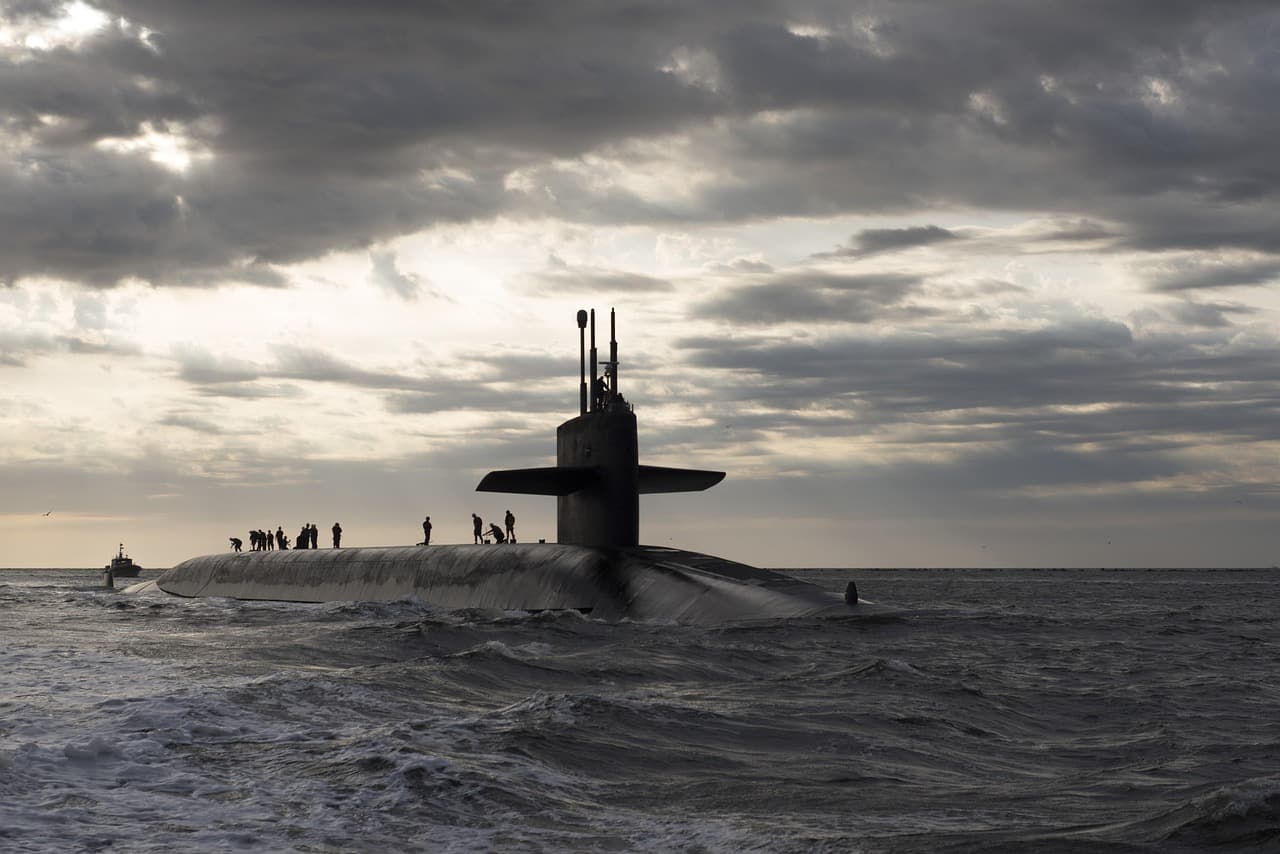
The crewing warning lands as a Virginia-class boat is already in Australian waters. The USS Colorado arrived at HMAS Stirling south of Perth on Tuesday for a month of routine maintenance and to build Australian expertise. It will return to the city's waters again in late 2027, when the Submarine Rotational Force-West program begins: from 2027, up to four US and one UK nuclear-powered submarines will rotate through HMAS Stirling.

Commodore Paul Johnson said the maintenance period would be used to "practise and test our procedures across a range of nuclear-related operational scenarios". Officials said no radiological material would be transferred during the maintenance period, and nuclear exercises would be simulated.


Aukus submarines need hundreds more crew, retired admiral Peter Briggs warns
WORLD · SECURITY

Aukus submarines need hundreds more crew, retired admiral Peter Briggs warns

Retired admiral Peter Briggs has warned Australia will struggle to recruit and train enough sailors for its planned Aukus submarines, saying the submarine arm must grow toward 3,000 personnel from roughly 850 qualified submariners today.

By LiveDigestPublished Sunday, November 1, 2026 · 13:11 GMT | 3 min read

Aukus submarines need hundreds more crew, retired admiral Peter Briggs warns

Australia faces an uphill battle to recruit and train the crews its planned Aukus submarines will need, according to retired admiral Peter Briggs. He says the submarine arm must roughly triple in size as the Royal Australian Navy moves from diesel-electric boats to nuclear-powered ones.

01 / SECURITY

The scale of the crewing gap

Briggs's warning is stark: the navy has about 850 submariners qualified on the Collins class today, while the force he describes needs a far larger headcount, trained in nuclear skills as well as conventional ones.

"You are heading toward needing a submarine arm of 3,000, that's the hill you have to climb," Briggs said. He added that personnel is a huge issue, but not the only one: running two different submarine types would also complicate training, logistics, maintenance and spare-parts arrangements.

We have got to triple the size of the submarine arm and we've got to train them in nuclear skills
02 / SECURITY

Bigger boats, bigger crews

The recruitment challenge is driven largely by the size of the boats Australia is buying. Under the $368bn Aukus deal, Australia will acquire between three and five Virginia-class nuclear-powered submarines from the United States to replace its five diesel-electric Collins-class vessels, which are becoming obsolete.

  • A Virginia-class submarine requires up to 134 crew - almost three times the number needed for a Collins-class boat.
  • The Virginia-class boats bridge the transition from the Collins class to the future SSN-AUKUS submarine, an even bigger design being developed by Australia and the UK.

Manning the larger boats also draws on a wide skills base. Recruitment spans more than a dozen different trades, from radio and sonar operators to cooks and electricians.

03 / SECURITY

Training pipeline and the navy's response

The Royal Australian Navy says it already has 230 personnel in various stages of the US nuclear-powered submarine training pipeline. A navy spokesperson said approximately 145 have completed US Naval nuclear power training and are now building experience training on US Navy SSNs.

The Australian government did not respond to questions about recruitment targets and a workforce development program.

By 2030, we expect to have 400 Royal Australian Navy officers and sailors trained and ready to serve
04 / SECURITY

USS Colorado visit shows what is coming

The crewing warning lands as a Virginia-class boat is already in Australian waters. The USS Colorado arrived at HMAS Stirling south of Perth on Tuesday for a month of routine maintenance and to build Australian expertise. It will return to the city's waters again in late 2027, when the Submarine Rotational Force-West program begins: from 2027, up to four US and one UK nuclear-powered submarines will rotate through HMAS Stirling.

Commodore Paul Johnson said the maintenance period would be used to "practise and test our procedures across a range of nuclear-related operational scenarios". Officials said no radiological material would be transferred during the maintenance period, and nuclear exercises would be simulated.

Aukus submarines need hundreds more crew, retired admiral Peter Briggs warns
WORLD · SECURITY

Aukus submarines need hundreds more crew, retired admiral Peter Briggs warns

By LiveDigest

Aukus submarines need hundreds more crew, retired admiral Peter Briggs warns

Australia faces an uphill battle to recruit and train the crews its planned Aukus submarines will need, according to retired admiral Peter Briggs. He says the submarine arm must roughly triple in size as the Royal Australian Navy moves from diesel-electric boats to nuclear-powered ones.

01 / SECURITY

The scale of the crewing gap

Briggs's warning is stark: the navy has about 850 submariners qualified on the Collins class today, while the force he describes needs a far larger headcount, trained in nuclear skills as well as conventional ones.

"You are heading toward needing a submarine arm of 3,000, that's the hill you have to climb," Briggs said. He added that personnel is a huge issue, but not the only one: running two different submarine types would also complicate training, logistics, maintenance and spare-parts arrangements.

We have got to triple the size of the submarine arm and we've got to train them in nuclear skills
02 / SECURITY

Bigger boats, bigger crews

The recruitment challenge is driven largely by the size of the boats Australia is buying. Under the $368bn Aukus deal, Australia will acquire between three and five Virginia-class nuclear-powered submarines from the United States to replace its five diesel-electric Collins-class vessels, which are becoming obsolete.

  • A Virginia-class submarine requires up to 134 crew - almost three times the number needed for a Collins-class boat.
  • The Virginia-class boats bridge the transition from the Collins class to the future SSN-AUKUS submarine, an even bigger design being developed by Australia and the UK.

Manning the larger boats also draws on a wide skills base. Recruitment spans more than a dozen different trades, from radio and sonar operators to cooks and electricians.

03 / SECURITY

Training pipeline and the navy's response

The Royal Australian Navy says it already has 230 personnel in various stages of the US nuclear-powered submarine training pipeline. A navy spokesperson said approximately 145 have completed US Naval nuclear power training and are now building experience training on US Navy SSNs.

The Australian government did not respond to questions about recruitment targets and a workforce development program.

By 2030, we expect to have 400 Royal Australian Navy officers and sailors trained and ready to serve
04 / SECURITY

USS Colorado visit shows what is coming

The crewing warning lands as a Virginia-class boat is already in Australian waters. The USS Colorado arrived at HMAS Stirling south of Perth on Tuesday for a month of routine maintenance and to build Australian expertise. It will return to the city's waters again in late 2027, when the Submarine Rotational Force-West program begins: from 2027, up to four US and one UK nuclear-powered submarines will rotate through HMAS Stirling.

Commodore Paul Johnson said the maintenance period would be used to "practise and test our procedures across a range of nuclear-related operational scenarios". Officials said no radiological material would be transferred during the maintenance period, and nuclear exercises would be simulated.