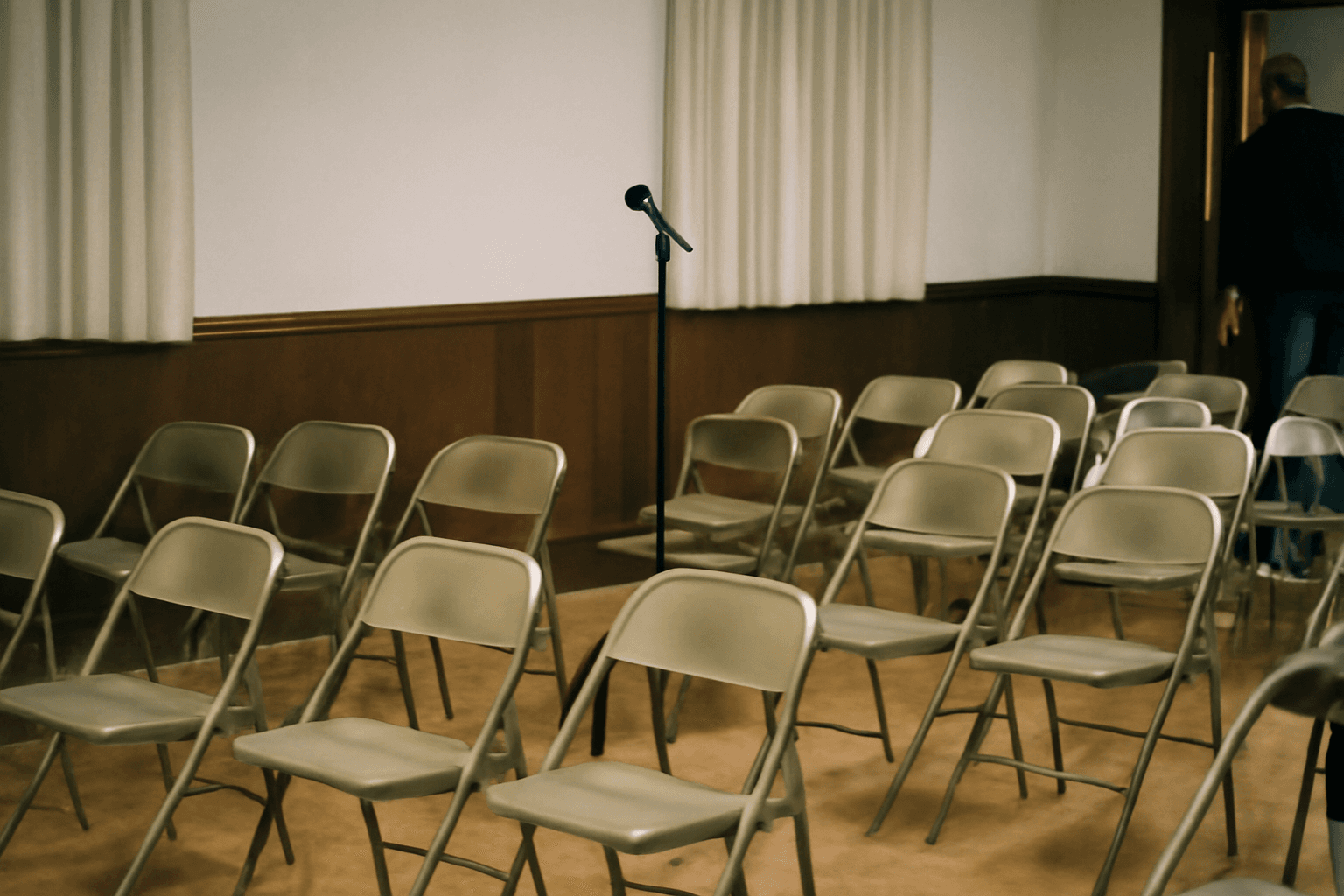
Folding chairs and a microphone stand at the front of a community hall after a crowded evening town hall has emptied out.
WORLD · ELECTIONS

Abdul El-Sayed answers Muslim Brotherhood attacks with a direct refusal to play along

Abdul El-Sayed, the Democratic Senate candidate in Michigan, has spent the weeks since his primary win pushing back directly against Muslim Brotherhood questions from town hall questioners, cable hosts and network interviewers, amid what researchers call the worst Islamophobic attacks since 9/11.

By LiveDigestPublished Wednesday, October 21, 2026 · 10:38 GMT | 4 min read

Folding chairs and a microphone stand at the front of a community hall after a crowded evening town hall has emptied out.

01 / ELECTIONS

The town hall moment

Abdul El-Sayed, the Democratic candidate for US Senate in Michigan, sits at the center of what researchers describe as the worst Islamophobic attacks seen since the aftermath of 9/11. His response style was on full display at a town hall the weekend before the report, an exchange that spread online to more than 50 million views.

When a man demanded he disavow the Muslim Brotherhood, El-Sayed agreed without hedging - then turned the question around.

"What are you implying? Do you assume that I wouldn't?"

For five minutes he compared the question to the doubts once raised about JFK's Catholicism and pressed the man on whether he would disavow reading religious doctrine into American law. The man said he would not. El-Sayed told him he was the one who needed to understand the constitution, and the room cheered.

02 / ELECTIONS

Saying no to the 'gotcha game'

The town hall was not an outlier. Across broadcast interviews, El-Sayed has answered the loyalty questions directly and then challenged the framing itself:

  • On CNN, Kasie Hunt asked him three times during the primary whether Israel has a right to exist. He replied: "I'm not going to play this gotcha game," adding that nobody had ever asked him whether Palestine has a right to exist.
  • He suggested the real question was whether Israel has a right to "our tax dollars".
  • On Fox, Jesse Watters spent 25 minutes after the primary on Ice, Sharia and transgender issues. "You want to bring up all this culture war," El-Sayed told him, steering the conversation back to prices.
  • On Meet the Press, asked whether he or his family had ties to the Brotherhood, he said no, twice.

The questioning traces to 2012 posts by his half-sister about their mother's activism in the Muslim Brotherhood in the 1970s; there is no evidence El-Sayed took part. His answer to NBC was blunt: "I wasn't raised by my mother". He called the Brotherhood questions "not serious" and asked the Meet the Press host whether he was "insinuating that somehow I was lying".

03 / ELECTIONS

The attacks behind the questions

The volume of hostility around the Michigan Senate race is documented as well as felt:

  • Islamophobic posts naming El-Sayed jumped almost 1,900% in the week after his primary win, according to the Center for the Study of Organized Hate.
  • Senator Tuberville called him a terrorist within hours of the win, and Donald Trump has called him a "jihadist".
  • A Rutgers report released on Tuesday, covering more than 30 cases since 2001, finds the same playbook has been used repeatedly against Muslim candidates.

CBS's Jan Crawford praised the town hall questioner and described El-Sayed's response as a "self-own", then deleted the post and apologized. CBS editor-in-chief Bari Weiss has reportedly encouraged the network's journalists to pursue story angles related to El-Sayed's supposed sympathy toward the Muslim Brotherhood; a CBS News spokesperson said: "We'll let our journalism – not baseless accusations – speak for itself".

04 / ELECTIONS

A direct style, and his own party's distance

The confrontational style has earned him a nickname alongside New York mayor Zohran Mamdani, whose warmer manner it contrasts with: "Mean Mamdani", or "Meandami". House minority leader Hakeem Jeffries, for his part, played down the New York primary wins by Mamdani-backed challengers.

El-Sayed has faced distance within his own party as well. Michigan governor Gretchen Whitmer and senator Gary Peters backed his rival for the Democratic nomination, Haley Stevens, toward whom more than $60m in outside money flowed, mostly from pro-Israel groups. He won the primary by about a point and a half, after daring the American Israel Public Affairs Committee to "come for me".

The attacks continue as El-Sayed campaigns in the Michigan Senate race, with researchers documenting the pattern against Muslim candidates and no sign the Brotherhood questioning has stopped.

Continue reading

More from World.

Folding chairs and a microphone stand at the front of a community hall after a crowded evening town hall has emptied out.
WORLD · ELECTIONS

Abdul El-Sayed answers Muslim Brotherhood attacks with a direct refusal to play along

Abdul El-Sayed, the Democratic Senate candidate in Michigan, has spent the weeks since his primary win pushing back directly against Muslim Brotherhood questions from town hall questioners, cable hosts and network interviewers, amid what researchers call the worst Islamophobic attacks since 9/11.

By LiveDigestPublished Wednesday, October 21, 2026 · 10:38 GMT | 4 min read

Folding chairs and a microphone stand at the front of a community hall after a crowded evening town hall has emptied out.

01 / ELECTIONS

The town hall moment

Abdul El-Sayed, the Democratic candidate for US Senate in Michigan, sits at the center of what researchers describe as the worst Islamophobic attacks seen since the aftermath of 9/11. His response style was on full display at a town hall the weekend before the report, an exchange that spread online to more than 50 million views.

When a man demanded he disavow the Muslim Brotherhood, El-Sayed agreed without hedging - then turned the question around.

For five minutes he compared the question to the doubts once raised about JFK's Catholicism and pressed the man on whether he would disavow reading religious doctrine into American law. The man said he would not. El-Sayed told him he was the one who needed to understand the constitution, and the room cheered.

"What are you implying? Do you assume that I wouldn't?"
02 / ELECTIONS

Saying no to the 'gotcha game'

The town hall was not an outlier. Across broadcast interviews, El-Sayed has answered the loyalty questions directly and then challenged the framing itself:

  • On CNN, Kasie Hunt asked him three times during the primary whether Israel has a right to exist. He replied: "I'm not going to play this gotcha game," adding that nobody had ever asked him whether Palestine has a right to exist.
  • He suggested the real question was whether Israel has a right to "our tax dollars".
  • On Fox, Jesse Watters spent 25 minutes after the primary on Ice, Sharia and transgender issues. "You want to bring up all this culture war," El-Sayed told him, steering the conversation back to prices.
  • On Meet the Press, asked whether he or his family had ties to the Brotherhood, he said no, twice.

The questioning traces to 2012 posts by his half-sister about their mother's activism in the Muslim Brotherhood in the 1970s; there is no evidence El-Sayed took part. His answer to NBC was blunt: "I wasn't raised by my mother". He called the Brotherhood questions "not serious" and asked the Meet the Press host whether he was "insinuating that somehow I was lying".

03 / ELECTIONS

The attacks behind the questions

The volume of hostility around the Michigan Senate race is documented as well as felt:

  • Islamophobic posts naming El-Sayed jumped almost 1,900% in the week after his primary win, according to the Center for the Study of Organized Hate.
  • Senator Tuberville called him a terrorist within hours of the win, and Donald Trump has called him a "jihadist".
  • A Rutgers report released on Tuesday, covering more than 30 cases since 2001, finds the same playbook has been used repeatedly against Muslim candidates.

CBS's Jan Crawford praised the town hall questioner and described El-Sayed's response as a "self-own", then deleted the post and apologized. CBS editor-in-chief Bari Weiss has reportedly encouraged the network's journalists to pursue story angles related to El-Sayed's supposed sympathy toward the Muslim Brotherhood; a CBS News spokesperson said: "We'll let our journalism – not baseless accusations – speak for itself".

04 / ELECTIONS

A direct style, and his own party's distance

The confrontational style has earned him a nickname alongside New York mayor Zohran Mamdani, whose warmer manner it contrasts with: "Mean Mamdani", or "Meandami". House minority leader Hakeem Jeffries, for his part, played down the New York primary wins by Mamdani-backed challengers.

El-Sayed has faced distance within his own party as well. Michigan governor Gretchen Whitmer and senator Gary Peters backed his rival for the Democratic nomination, Haley Stevens, toward whom more than $60m in outside money flowed, mostly from pro-Israel groups. He won the primary by about a point and a half, after daring the American Israel Public Affairs Committee to "come for me".

The attacks continue as El-Sayed campaigns in the Michigan Senate race, with researchers documenting the pattern against Muslim candidates and no sign the Brotherhood questioning has stopped.

Continue reading

More from World.

Folding chairs and a microphone stand at the front of a community hall after a crowded evening town hall has emptied out.
WORLD · ELECTIONS

Abdul El-Sayed answers Muslim Brotherhood attacks with a direct refusal to play along

By LiveDigest

Folding chairs and a microphone stand at the front of a community hall after a crowded evening town hall has emptied out.

01 / ELECTIONS

The town hall moment

Abdul El-Sayed, the Democratic candidate for US Senate in Michigan, sits at the center of what researchers describe as the worst Islamophobic attacks seen since the aftermath of 9/11. His response style was on full display at a town hall the weekend before the report, an exchange that spread online to more than 50 million views.

When a man demanded he disavow the Muslim Brotherhood, El-Sayed agreed without hedging - then turned the question around.

For five minutes he compared the question to the doubts once raised about JFK's Catholicism and pressed the man on whether he would disavow reading religious doctrine into American law. The man said he would not. El-Sayed told him he was the one who needed to understand the constitution, and the room cheered.

"What are you implying? Do you assume that I wouldn't?"
02 / ELECTIONS

Saying no to the 'gotcha game'

The town hall was not an outlier. Across broadcast interviews, El-Sayed has answered the loyalty questions directly and then challenged the framing itself:

  • On CNN, Kasie Hunt asked him three times during the primary whether Israel has a right to exist. He replied: "I'm not going to play this gotcha game," adding that nobody had ever asked him whether Palestine has a right to exist.
  • He suggested the real question was whether Israel has a right to "our tax dollars".
  • On Fox, Jesse Watters spent 25 minutes after the primary on Ice, Sharia and transgender issues. "You want to bring up all this culture war," El-Sayed told him, steering the conversation back to prices.
  • On Meet the Press, asked whether he or his family had ties to the Brotherhood, he said no, twice.

The questioning traces to 2012 posts by his half-sister about their mother's activism in the Muslim Brotherhood in the 1970s; there is no evidence El-Sayed took part. His answer to NBC was blunt: "I wasn't raised by my mother". He called the Brotherhood questions "not serious" and asked the Meet the Press host whether he was "insinuating that somehow I was lying".

03 / ELECTIONS

The attacks behind the questions

The volume of hostility around the Michigan Senate race is documented as well as felt:

  • Islamophobic posts naming El-Sayed jumped almost 1,900% in the week after his primary win, according to the Center for the Study of Organized Hate.
  • Senator Tuberville called him a terrorist within hours of the win, and Donald Trump has called him a "jihadist".
  • A Rutgers report released on Tuesday, covering more than 30 cases since 2001, finds the same playbook has been used repeatedly against Muslim candidates.

CBS's Jan Crawford praised the town hall questioner and described El-Sayed's response as a "self-own", then deleted the post and apologized. CBS editor-in-chief Bari Weiss has reportedly encouraged the network's journalists to pursue story angles related to El-Sayed's supposed sympathy toward the Muslim Brotherhood; a CBS News spokesperson said: "We'll let our journalism – not baseless accusations – speak for itself".

04 / ELECTIONS

A direct style, and his own party's distance

The confrontational style has earned him a nickname alongside New York mayor Zohran Mamdani, whose warmer manner it contrasts with: "Mean Mamdani", or "Meandami". House minority leader Hakeem Jeffries, for his part, played down the New York primary wins by Mamdani-backed challengers.

El-Sayed has faced distance within his own party as well. Michigan governor Gretchen Whitmer and senator Gary Peters backed his rival for the Democratic nomination, Haley Stevens, toward whom more than $60m in outside money flowed, mostly from pro-Israel groups. He won the primary by about a point and a half, after daring the American Israel Public Affairs Committee to "come for me".

The attacks continue as El-Sayed campaigns in the Michigan Senate race, with researchers documenting the pattern against Muslim candidates and no sign the Brotherhood questioning has stopped.

Continue reading

More from World.