La Pérouse expedition love letters found hidden in book before Paris auction
Love letters by Jean-André Mongez, a scientist on the 1785 La Pérouse expedition, were found hidden in a book of engravings and go under the hammer at the Hôtel Drouot in Paris on 17 November.
La Pérouse expedition love letters found hidden in book before Paris auction
Letters hidden in a book of engravings
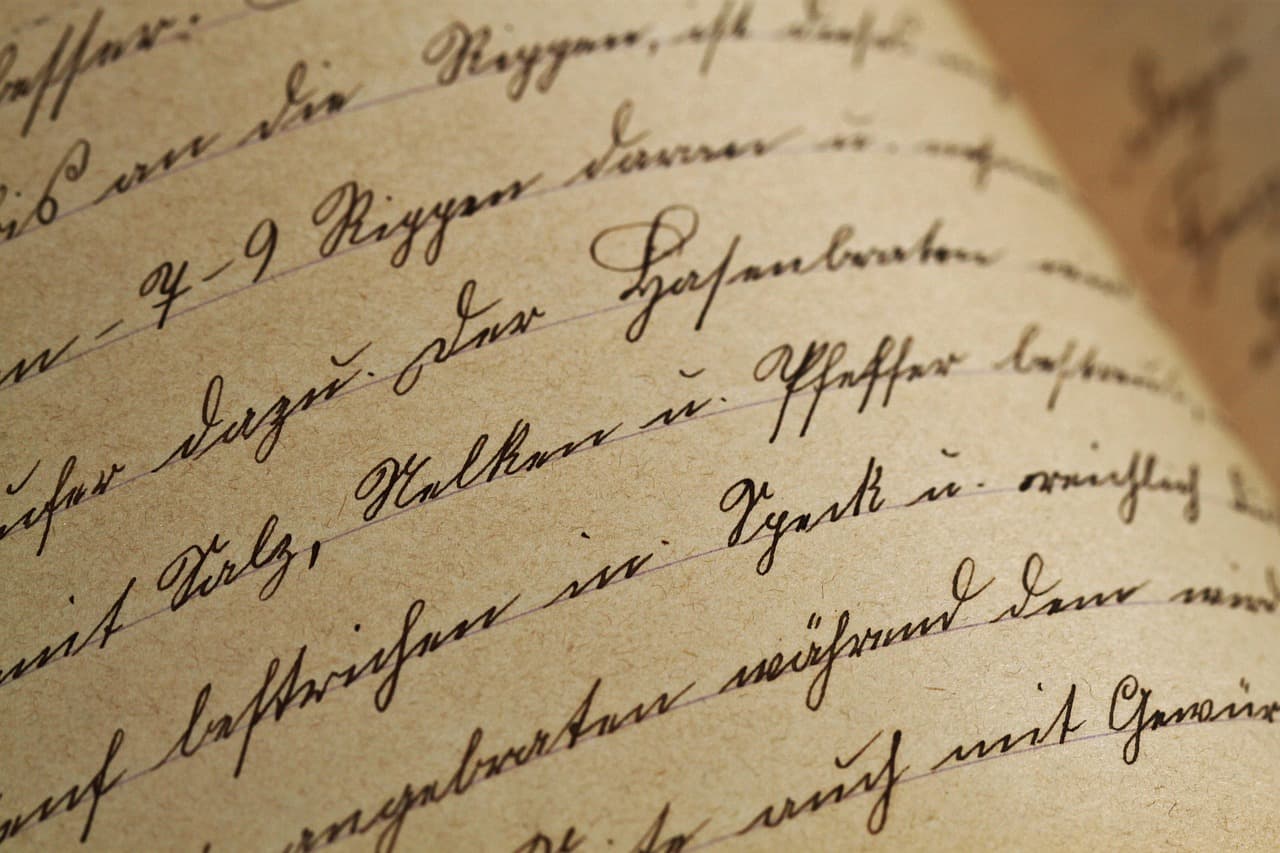
While examining a book of engravings ahead of an auction, auctioneer Benoît Derouineau came across a set of personal papers hidden inside: love letters by Jean-André Mongez, a scientist who sailed with La Pérouse and died in 1788. The book itself Derouineau described as unremarkable, a 19th-century volume, but the papers inside had been carefully saved and hidden.
What the letters are, according to the auction house:
- Veiled love letters written by Mongez during the La Pérouse expedition
- Addressed to the married daughter of an aristocratic family
- Valued at €30,000-€50,000 and offered as a single lot
"That Louis XVI is said to have asked about La Pérouse shows how much was invested in this expedition," Derouineau said.
A scientist's words to Louise Victoria Le Cloustier
Mongez was, by the account of book and manuscript expert Ludovic Miran, a brilliant scientist, director of an illustrious science revue and a church canon. The recipient of his letters was Louise Victoria Le Cloustier, daughter of a minor noble family from Rouen in Normandy.
Miran said Mongez wrote several times: "I will be back, I will be another man, a better man" - words that suggest he regretted past behaviour towards her. He also explained why he had joined the voyage at all, writing that he left "a bit for the love of fame and the desire to acquire new knowledge", even though scientific glory was already his and he knew the dangers from Captain Cook's published works.
His last letter strikes a darker note: the expedition has taken a sad turn, and he wants only to come home, because such unhappiness is not compensated for by the meagre scientific results they have.
Le Cloustier died in 1821 without ever learning Mongez's fate, but she kept the letters, and Miran noted that they show signs of being read, and reread.
The vanished voyage of La Boussole and L'Astrolabe
Jean-François de Galaup, count of Pérouse, was the French naval officer whom Louis XVI dispatched in 1785 on a round-the-world scientific mission rivaling the discoveries of Captain James Cook. His two frigates, La Boussole and L'Astrolabe, sailed from Brest on 1 August 1785, carrying 225 crew officers and scientists, and sent reports from stopovers including Alaska, California, Asia, Russia and Samoa.
The voyage carried losses along the way:
- At Samoa, the captain of the Astrolabe and 11 men were killed
- The expedition launched amid intense Anglo-French rivalry, with intelligence that Britain planned a permanent base at Botany Bay
- Captain Arthur Phillip and Britain's First Fleet beat La Pérouse to the Australian coast by just six days
After leaving Botany Bay in March 1788, three years into the voyage, the frigates were never heard from again. They are believed to have foundered on coral reefs at Vanikoro, east of the Solomon Islands, during a tornado a few months later. When Louis XVI went to the scaffold on 21 January 1793, there had been no news of the ships since their Australian departure; he reportedly asked, "Is there news of Monsieur de la Pérouse?"
Why the letters matter
The wrecks were only formally identified in 2005, and what actually happened remains a mystery. Wreckage had been discovered twice before, in 1826 and 1964, before that formal identification.
Against that silence, the Mongez letters stand out. "We have a certain number of documents from the expedition but they are almost all scientific," Miran said, calling the find a miracle and noting that personal letters of this kind are extremely rare. "They throw a completely new light on what is in France an extraordinary scientific and historical event."
Beyond the romance, Miran said the letters show how the young men endured three years of navigation around the world - including a massacre on one stop. "He recounts how his friend and others were massacred on one stop."
The letters are being sold as one lot by Daguerre at the Hôtel Drouot in Paris on 17 November, with an estimate of €30,000-€50,000.